Overview
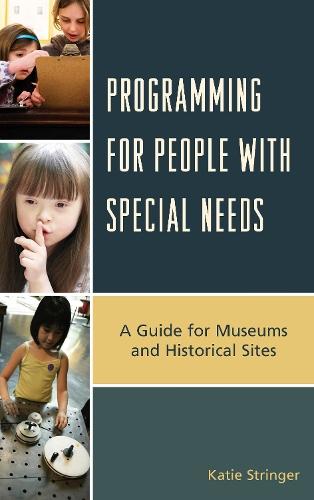
Programming for People with Special Needs: A Guide for Museums and Historic Sites will help museums and historic sites become truly inclusive educational experiences. The book is unique because it covers education and inclusion for those with both intellectual and learning disabilities. The book features the seven key components of creating effective programming for people with special needs, especially elementary and secondary students with intellectual disabilities: Sensitivity and awareness trainingPlanning and communicationTimingEngagement and social/life skillsObject-centered and inquiry-based programsStructureFlexibility In addition, this book features and discusses programs such as the Museum of Modern Art‘s Meet Me program and ones for children with autism at the Transit Museum in Brooklyn as models for other organizations to adapt for their use. Its focus on visitors of all ages who have cognitive or intellectual disabilities or special needs makes this title essential for all museum and historic site professionals, especially educators or administrators, but also for museum studies students and those interested in informal education.
Full Product Details
Author: Katie Stringer
Publisher: Bloomsbury Publishing Plc
Imprint: Rowman & Littlefield
Dimensions:
Width: 15.30cm
, Height: 0.90cm
, Length: 22.80cm
Weight: 0.181kg
ISBN: 9781442227613
ISBN 10: 1442227613
Pages: 110
Publication Date: 10 July 2014
Audience:
Professional and scholarly
,
Professional & Vocational
Format: Paperback
Publisher's Status: Active
Availability: Manufactured on demand

We will order this item for you from a manufactured on demand supplier.
Reviews
Programming for People with Special Needs is an invaluable manual with clear, concise examples of museums benefit when they open their doors, exhibits, and programing to all audiences in a community. A commitment to common-sense universal design principles opens the dialogue about what matters in our history and culture to every citizen, thus enriching our communities through better education and community engagement. AASLH History News Programming for People with Special Needs is an invaluable manual with clear, concise examples of how museums benefit when they open their doors, exhibits, and programming to all audiences in a community. A commitment to common-sense universal design principles opens the dialogue about what matters in our history and culture to every citizen, thus enriching our communities through better education and community engagement. -- Carroll Van West, director of the Center for Historic Preservation at Middle Tennessee University, and Tennessee State Historian Programming for People with Special Needs is an important new resource for any museum or historic site serious about expanding their current audience base and preparing for tomorrow's visitors. While the ADA already requires us to accommodate visitors' physical needs, it is equally important that our programs consider the needs of visitors experiencing various forms of learning and intellectual disabilities, including memory loss, especially since their numbers are expected to increase dramatically over the next several decades. This thorough and practical volume can help your institution accomplish this goal and, in turn, become a museum or historic site better prepared for the future. -- Karen Graham Wade, director, Homestead Museum, City of Industry, California
Programming for People with Special Needs is an invaluable manual with clear, concise examples of how museums benefit when they open their doors, exhibits, and programming to all audiences in a community. A commitment to common-sense universal design principles opens the dialogue about what matters in our history and culture to every citizen, thus enriching our communities through better education and community engagement. -- Carroll Van West, director of the Center for Historic Preservation at Middle Tennessee University, and Tennessee State Historian
Programming for People with Special Needs is an invaluable manual with clear, concise examples of how museums benefit when they open their doors, exhibits, and programming to all audiences in a community. A commitment to common-sense universal design principles opens the dialogue about what matters in our history and culture to every citizen, thus enriching our communities through better education and community engagement. -- Carroll Van West, director of the Center for Historic Preservation at Middle Tennessee University, and Tennessee State Historian Programming for People with Special Needs is an important new resource for any museum or historic site serious about expanding their current audience base and preparing for tomorrow's visitors. While the ADA already requires us to accommodate visitors' physical needs, it is equally important that our programs consider the needs of visitors experiencing various forms of learning and intellectual disabilities, including memory loss, especially since their numbers are expected to increase dramatically over the next several decades. This thorough and practical volume can help your institution accomplish this goal and, in turn, become a museum or historic site better prepared for the future. -- Karen Graham Wade, director, Homestead Museum, City of Industry, California
Author Information
Katie Stringer has performed research focusing on museum education, especially programs for people with disabilities and children in special education classes. She has worked in museums and historic sites in various capacities including education director, curator, collections manager, director of interpretation, and more.