Overview
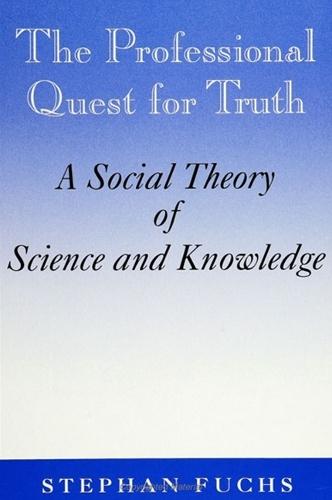
This book argues that the power of science as the most respected and authoritative world view is based on its superior material and organizational resources, not on its superior rationality. Fuchs approaches science as a social construct, and utilizing a theory of scientific organizations, he analyzes knowledge production in scientific fields-how they differ in their resources and how these differences affect how science is conducted. The book explains why certain fields produce science and facts, while others engage in hermeneutics and conversation; why certain specialities change through cumulation rather than fragmentation; and why some fields are relativistic while others are positivist in their self-understanding. This general theory of knowledge is applicable not only to science, but to all varieties of professional groups engaged in knowledge production.
Full Product Details
Author: Stephan Fuchs
Publisher: State University of New York Press
Imprint: State University of New York Press
Dimensions:
Width: 15.20cm
, Height: 2.50cm
, Length: 22.90cm
Weight: 0.544kg
ISBN: 9780791409237
ISBN 10: 0791409236
Pages: 272
Publication Date: 01 July 1992
Audience:
College/higher education
,
Professional and scholarly
,
Undergraduate
,
Postgraduate, Research & Scholarly
Format: Hardback
Publisher's Status: Active
Availability: Out of stock

The supplier is temporarily out of stock of this item. It will be ordered for you on backorder and shipped when it becomes available.
Reviews
"""Fuchs shows how scientific activity, revealed in micro-detail, is embedded in particular kinds of organizational contexts; that the research methods and social structures of interaction in scientific communities affect the degree of uncertainty of scientists' activities; and the kind of discourse they engage in. ""Fuchs ends up with both a general theory of the determinants of scientific production, and with a challenge to the current factions in the sociology of ideas and sociology of culture generally."" - Randall Collins, University of California, Riverside."
""Fuchs shows how scientific activity, revealed in micro-detail, is embedded in particular kinds of organizational contexts; that the research methods and social structures of interaction in scientific communities affect the degree of uncertainty of scientists' activities; and the kind of discourse they engage in. ""Fuchs ends up with both a general theory of the determinants of scientific production, and with a challenge to the current factions in the sociology of ideas and sociology of culture generally."" - Randall Collins, University of California, Riverside.
Fuchs shows how scientific activity, revealed in micro-detail, is embedded in particular kinds of organizational contexts; that the research methods and social structures of interaction in scientific communities affect the degree of uncertainty of scientists' activities; and the kind of discourse they engage in. Fuchs ends up with both a general theory of the determinants of scientific production, and with a challenge to the current factions in the sociology of ideas and sociology of culture generally. - Randall Collins, University of California, Riverside.
Author Information
Stephan Fuchs is Assistant Professor of Sociology at the University of New Hampshire, Durham.