Overview
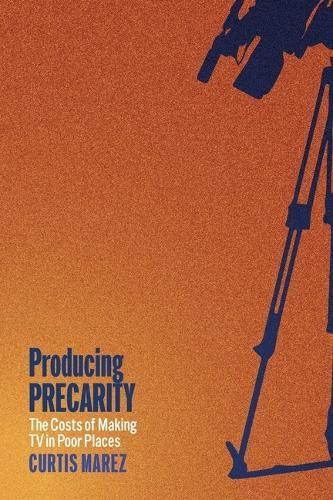
The hidden cost of TV production for communities of color Producing Precarity is a long-overdue examination of the television industry's practice of ""offshoring"" production to impoverished sites within the US. The author, Curtis Marez, focuses on state efforts to attract film and TV producers to poor places with tax incentives, discounted public lands, and subsidized infrastructures. He argues that these efforts result in the redistribution of wealth from poor people of color, Indigenous people, and other taxpayers to Los Angeles-based media makers, while also diverting money that could be used for education and health care to the wealthy. The popular series produced in these places, such as Breaking Bad, The Watchmen, Lovecraft Country, The Walking Dead, and Vida, are praised by critics and awards organizations and highlighted by streaming services for challenging genre, casting, and narrative conventions. However, many of these shows rely on racialized and gendered low-wage labor for production, and diversity, equity, and inclusion representations can sometimes perpetuate repression, such as depicting police as diversity champions. Producing Precarity examines how contemporary streaming shows from these areas promote racial inequality in ideology and content, as well as materially through their local production methods, and perceptually through streaming distribution modes that discourage viewers from understanding how TV is made. Marez also provides examples of local resistance, including movements against a police training center and a film studio in Atlanta, as well as anti-gentrification movements in Latinx neighborhoods of LA.
Full Product Details
Author: Curtis Marez
Publisher: New York University Press
Imprint: New York University Press
Weight: 0.408kg
ISBN: 9781479836727
ISBN 10: 1479836729
Pages: 256
Publication Date: 26 August 2025
Audience:
Professional and scholarly
,
Professional & Vocational
Format: Paperback
Publisher's Status: Active
Availability: Manufactured on demand

We will order this item for you from a manufactured on demand supplier.
Reviews
""Compellingly illustrates the relationship between racial capitalism and place-making, resource extraction and transfer, and the politics of representation. Curtis Marez reveals how the hidden costs of television production are born by poor, disadvantaged Black, Brown, and Native people. In richly detailed examples from shoots in Georgia and New Mexico, Producing Precarity shows how site-specific production practices and relationships facilitate resource extraction—in short, representation and celebration of difference are really expressions of racial capitalism at work."" - Herman Grey, University of California, Santa Cruz ""Building on Cedric Robinson's groundbreaking work, Producing Precarity offers a brilliant theory of 'TV racial capitalism in place.' Curtis Marez deftly analyzes how relations of racialized extraction, settler colonial occupation, and 'the police and prison televisual complex' saturate the material conditions of production and the content of popular, often superficially progressive, streaming television series. A vital, invaluable contribution to key discussions in American studies, media studies, studies of racial capitalism, and settler colonial studies, and a work of demystification we all urgently need."" - Laurie Ouellette, author of Lifestyle TV
Author Information
Curtis Marez is Professor in the Ethnic Studies Department at the University of California. He is the former editor of American Quarterly, the official journal of the American Studies Association (ASA), and also past president of ASA. He is the author of Drug Wars: The Political Economy of Narcotics, Farm Worker Futurism: Speculative Technologies of Resistance, and University Babylon: Film and Race Politics on Campus.