|
|
|||
|
||||
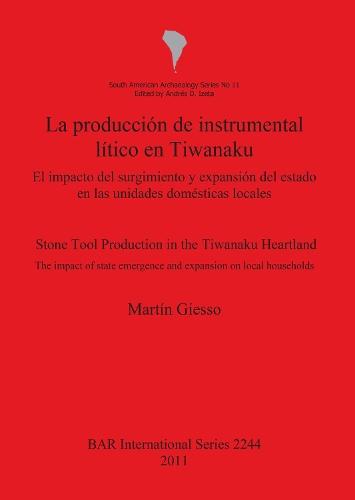
OverviewThis research explores the characteristics of stone tool production in the heart of the Andean state of Tiwanaku, comparing tool production on urban and rural settlements and at elite and non-elite sites. Models of the Tiwanaku state are tested, and comparisons with the contemporaneous Wari state are explored. The author demonstrates that there was an overall continuity in lithic production from the Formative (1500 B.C. - 400 A.D.) to Middle Horizon (400-1100 A.D.), but significant changes occured after 600 A.D., as exotic raw materials began to be exploited. The state controlled the procurement and distribution of obsidian and black basalt, giving preference to urban dwellers, following the experiences of earlier altiplano polities (the Pukara, Chiripa and Wankarani). At the same time, local groups procured smaller quantities of exotics from other (non-state controlled) sources. Spanish text. Full Product DetailsAuthor: Martín GiessoPublisher: BAR Publishing Imprint: BAR Publishing Volume: 2244 Dimensions: Width: 21.00cm , Height: 1.80cm , Length: 29.70cm Weight: 1.184kg ISBN: 9781407308081ISBN 10: 1407308084 Pages: 297 Publication Date: 15 July 2011 Audience: Professional and scholarly , Professional & Vocational Format: Paperback Publisher's Status: Active Availability: Available To Order We have confirmation that this item is in stock with the supplier. It will be ordered in for you and dispatched immediately. Language: Spanish Table of ContentsReviewsBlank Author InformationMartín Giesso Tab Content 6Author Website:Countries AvailableAll regions |
||||