Overview
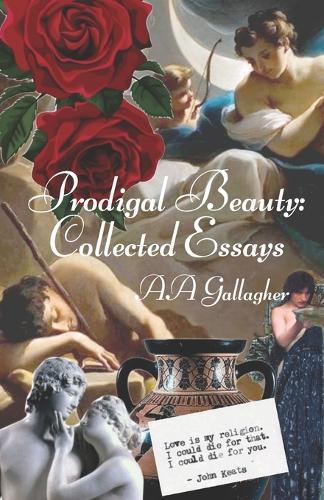
Prodigal Beauty is a collection of essays on many diverse but interrelated and mutually relevant topics; it explores a vast range of literature, with an emphasis on Romantic poetry. All of these essays were written to satisfy undergraduate coursework, and the project culminates with an extensive honors thesis on John Keats's poem, Endymion. In this particular essay I strive to resurrect and legitimate a polytheistic worldview through an appreciation of the literal fantastic; instead of reducing difficult parts of the poem to metaphor and allegory in order to be in accord with a more conventional schema of religious belief, I allow for the real possibility of deities in a world of infinite and magical potentials. Therefore, an essential part of the critical project entails legitimating the beliefs and assumptions that would admit of a perspective in which the fantastic is not merely an anomalous, impossible fiction. Even still, there are metaphorical and allegorical dimensions to the poem which need to be appreciated in tandem with a more literal reading. I consider Endymion to be a masterful work of consummate beauty, and it is my critical aim to elucidate how that beauty is achieved and why it is meaningful. My analysis thus seeks to explore beauty's powerful relevance to nature, gender, love, and even to the transcendent or sacred which unites as it imbues many aspects of experience-as these categories of experience are harmoniously mediated by and depicted through Keats's poetry. In so doing, I believe this poem succeeds in reconciling the real with the ideal and the sacred with the profane- In this book I also interrogate such works as Beowulf, Pope's ""The Rape of the Lock,"" Hogg's Confessions of a Justified Sinner, De Quincey's Confessions of an English Opium-Eater, and Wordsworth's Prelude, in addition to a few other more contemporary and political writings. I ask questions such as: how do we account for the intrinsic and unequivocal evil of monsters? How and when do we sympathize with villains? What are the limits of sympathy for the monstrous? Can beauty be an ethical value or ideal? When and how does the ethical intersect with the aesthetic? How are we to understand ""deviant"" states of mind and experience if we deny them expression? What is our criteria, what are our standards, for determining the real, or for conferring upon experience the status of ""reality""? Can tragedies be so tragic that they transgress into the horrific? When and how do horror and allegory intersect? And how are we to arrive at a redemptive or vindicating meaning for such horrific tragedy? Why should unhappiness signify taboo or deviance? How is the ""aesthetic attitude"" established through significant relation? What would it mean to reframe the ""aesthetic attitude"" primarily in terms of expression and emotion? What values might seem to attend a reading of Keats's ""Ode on a Grecian Urn?"" And what values should inform our reading? What are the affinities between Beauty and Truth? How are we to account for an experience of divinity? How does the sublime evoke an awareness of one's immanent soul? I explore all of these enticing questions in this collection of essays.
Full Product Details
Author: Aa Gallagher
Publisher: Independently Published
Imprint: Independently Published
Dimensions:
Width: 14.00cm
, Height: 1.90cm
, Length: 21.60cm
Weight: 0.395kg
ISBN: 9798289376817
Pages: 342
Publication Date: 09 May 2026
Audience:
General/trade
,
General
Format: Paperback
Publisher's Status: Active
Availability: Available To Order

We have confirmation that this item is in stock with the supplier. It will be ordered in for you and dispatched immediately.