Full Product Details
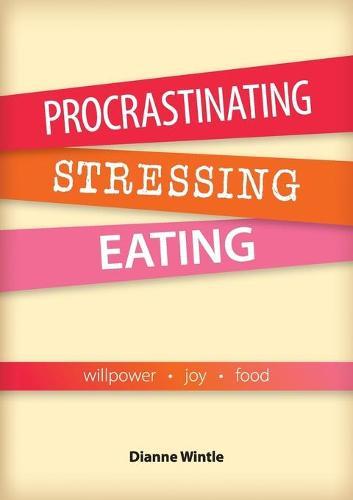
Author: Dianne Wintle
Publisher: Uncommon Spirits
Imprint: Uncommon Spirits
Dimensions:
Width: 14.80cm
, Height: 1.20cm
, Length: 21.00cm
Weight: 0.281kg
ISBN: 9780648211709
ISBN 10: 0648211703
Pages: 172
Publication Date: 26 February 2018
Audience:
General/trade
,
General
Format: Paperback
Publisher's Status: Active
Availability: Available To Order

We have confirmation that this item is in stock with the supplier. It will be ordered in for you and dispatched immediately.
Reviews
We make decisions about food four, five, maybe twenty or more times a day, sometimes just for us, sometimes on behalf of others. Behavioural economics suggests it is rational for us to make decisions that bring immediate satisfaction. Wintle describes this rational decision-gratification moment as an active dialogue with self. Reminding us such dialogue is ours and we have complete autonomy over it. Wintle says there's a third party, a future self with a vested interest too in this moment of decision-making. How we choose to moderate this future self in our decision-making is where Wintle offers new ways of understanding behaviour. Throughout the book Wintle uses the terms satisfaction and utility interchangeably, which they are, and that it is utility that is a central tenet of behavioural economics. Understanding a person's utility Wintle suggests is key to effective behavioural counselling. Wintle's hypothesis is this: if we can get people to understand their procrastination about health, we can bring health benefits earlier to people's lives. Economically speaking, Wintle proposes we can improve population health, achieve cost-savings, by reducing the time it takes people to reach the peak of the hyperbolic discounting curve, to change the dynamic of the procrastination by leveraging their utility.
Author Information
Dianne Wintle is an Accredited Practising Dietitian with a Master of Health Science (Hons) awarded for her research centred around procrastination, stress and obesity in nurses. Dianne has worked as a dietitian in private practice, in community health, in clinical dietetics and in Aboriginal health. She also lectured in Nutrition and Dietetics at Charles Sturt University from 2008 to 2016. Coming to dietetics later in life, after a varied career, allowed for a different perspective. While still studying it was obvious to her templates are of little use to the individual trying to lose weight. Fat people are not stupid! The issues were clear to Dianne that education would do little to help the situation. Lack of knowledge was not the main issue. Her studies fell short, but her research made matters clearer. Having seen many people in private practice who were procrastinating over weight loss, Dianne had the anecdotal evidence, she searched widely across disciplines for commentary and research, and had wide response to her own research. She adds to this the 'lived experience' of being overweight much of her adult life. This led to Procrastinating, Stressing, Eating. On a personal level Dianne is married to Adrian, and has two children, Edwina and Reginald. She currently lives in Wagga Wagga, NSW. Passions include family, food, reading, writing, quilting, embroidery and swimming (the last three no competence, only joy).