|
|
|||
|
||||
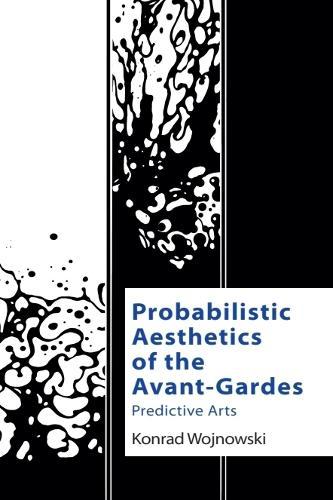
OverviewKonrad Wojnowski argues that the probabilistic revolution, while recognized and investigated by historians of science, has been largely overlooked in the field of art. He shows that the idea that one can perceive and comprehend reality in terms of shifting probabilities was clearly present in the work of many avant-garde artists working in Europe and North America. Exploring the probabilistic aspects of the avant-garde allows him to establish a dialogue between scientific and artistic forms of knowledge. This is particularly important now, as we become surrounded by probabilistic AIs and while the very nature of cognition is being reinterpreted as inherently probabilistic. Full Product DetailsAuthor: Konrad Wojnowski (Assistant Professor of Performativity Studies, Jagiellonian University, Poland)Publisher: Edinburgh University Press Imprint: Edinburgh University Press ISBN: 9781474488976ISBN 10: 1474488978 Pages: 248 Publication Date: 31 December 2025 Audience: Professional and scholarly , Professional & Vocational Format: Paperback Publisher's Status: Active Availability: Not yet available This item is yet to be released. You can pre-order this item and we will dispatch it to you upon its release. Table of ContentsReviewsWell before the late twentieth-century vogue for chaos theory, Konrad Wojnowski reminds us, international modernism had already absorbed creative lessons about the chance nature of the universe from the new sciences of probability and indeterminacy emerging from statistical mechanics and quantum theory. Probabilistic Aesthetics of the Avant-Gardes offers an exhilarating history of these intellectual and aesthetic developments in the works of Boccioni, Breton, Duchamp, Cage, and Xenakis. -- ""Bruce Clarke, Texas Tech University"" Author InformationKonrad Wojnowski is Assistant Professor of Performativity Studies, Jagiellonian University, Poland. His research interests include performativity theory, philosophy of communication, the impact of media and technology on culture and, more recently, the relationship between aesthetics and epistemology. He published two books in Polish: The Aesthetics of Disturbance (Księgarnia Akademicka 2012), on the cinema of Michael Haneke, andUseful Disasters (Universitas 2016), on the performative power of catastrophes in contemporary network culture, as well as multiple texts in Polish and English-language scientific journals. He headed two research grants provided by the National Science Centre (PRELUDIUM and SONATA programmes) and was awarded the prize for best young scientists by the Foundation for Polish Science. Tab Content 6Author Website:Countries AvailableAll regions |
||||