Overview
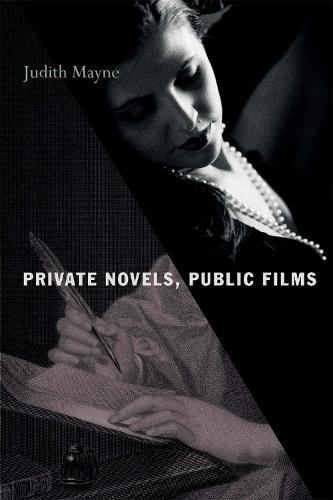
The modern association of the word private with the individual, and the word public with the social did not occur until the emergence of capitalism separated family life from the workplace, creating the fundamental oppositions between home and business, female and male, and rest and labor that have defined life in industrialized societies through our time. Comparing the ways novels and films articulate middle-class culture, Judith Mayne reveals how both forms of narrative function as an encounter between private and public life, engaging the crucial relationships of a dualistic world—between men and women; between social classes; between readers or viewers and texts. Unlike past studies of the novel and film that have tried to establish one art form as superior to the other or have limited their analysis to the ways that novels have been translated into film, Private Novels, Public Films is a comparative study of the relationship between two forms of narrative and spheres of private and public life across different periods of history.
Full Product Details
Author: Judith Mayne
Publisher: University of Georgia Press
Imprint: University of Georgia Press
Dimensions:
Width: 14.00cm
, Height: 1.10cm
, Length: 21.60cm
Weight: 0.525kg
ISBN: 9780820341682
ISBN 10: 0820341681
Pages: 184
Publication Date: 01 September 2016
Audience:
Professional and scholarly
,
Professional & Vocational
Format: Paperback
Publisher's Status: Active
Availability: In Print

This item will be ordered in for you from one of our suppliers. Upon receipt, we will promptly dispatch it out to you. For in store availability, please contact us.
Language: English
Reviews
Mayne delivers what she promises, a solid investigation of the social aspects of narrative of both novel and film. Her analysis of the way ideology shapes theme and structure . . . is always sharp, articulate, and amply demonstrated.--Substance Mayne's book is a welcome departure from standard literature-and-film studies. . . . . Because Mayne's book raises questions for further research and because her approach may be emulated, she has given scholars a promising new direction.--South Atlantic Review For some time Mayne has been one of the most perceptive contemporary commentators on film and film theory. While this study returns to many of the issues which concerned her in the past, it contains one of her most sustained and cogent arguments.--Journal of Modern Literature
For some time Mayne has been one of the most perceptive contemporary commentators on film and film theory. While this study returns to many of the issues which concerned her in the past, it contains one of her most sustained and cogent arguments.-- Journal of Modern Literature Mayne delivers what she promises, a solid investigation of the social aspects of narrative of both novel and film. Her analysis of the way ideology shapes theme and structure . . . is always sharp, articulate, and amply demonstrated.-- Substance Mayne's book is a welcome departure from standard literature-and-film studies. . . . . Because Mayne's book raises questions for further research and because her approach may be emulated, she has given scholars a promising new direction.-- South Atlantic Review
Mayne's book is a welcome departure from standard literature-and-film studies. . . . . Because Mayne's book raises questions for further research and because her approach may be emulated, she has given scholars a promising new direction.--South Atlantic Review Mayne delivers what she promises, a solid investigation of the social aspects of narrative of both novel and film. Her analysis of the way ideology shapes theme and structure . . . is always sharp, articulate, and amply demonstrated.--Substance For some time Mayne has been one of the most perceptive contemporary commentators on film and film theory. While this study returns to many of the issues which concerned her in the past, it contains one of her most sustained and cogent arguments.--Journal of Modern Literature
Author Information
JUDITH MAYNE is an emerita professor of French at the Ohio State University. She is the author of eight books, including Claire Denis, Le Corbeau, and Frames: Lesbian, Feminists, and Media Culture.