Overview
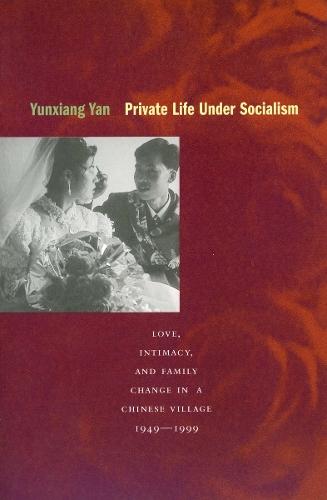
For seven years in the 1970s, the author lived in a village in northeast China as an ordinary farmer. In 1989, he returned to the village as an anthropologist to begin the unparalleled span of eleven years' fieldwork that has resulted in this book - a comprehensive, vivid, and nuanced account of family change and the transformation of private life in rural China from 1949 to 1999. The author's focus on the personal and the emotional sets this book apart from most studies of the Chinese family. Yan explores private lives to examine areas of family life that have been largely overlooked, such as emotion, desire, intimacy, privacy, conjugality, and individuality. He concludes that the past five decades have witnessed a dual transformation of private life: the rise of the private family, within which the private lives of individual women and men are thriving.
Full Product Details
Author: Yunxiang Yan
Publisher: Stanford University Press
Imprint: Stanford University Press
Edition: New edition
Dimensions:
Width: 15.20cm
, Height: 2.60cm
, Length: 22.90cm
Weight: 0.572kg
ISBN: 9780804733090
ISBN 10: 0804733090
Pages: 320
Publication Date: 05 March 2003
Audience:
College/higher education
,
Professional and scholarly
,
Undergraduate
,
Postgraduate, Research & Scholarly
Format: Hardback
Publisher's Status: Active
Availability: In Print

This item will be ordered in for you from one of our suppliers. Upon receipt, we will promptly dispatch it out to you. For in store availability, please contact us.
Reviews
When Yunxiang Yan's first book, The Flow of Gifts, was published in 1996 it was immediately clear that a new leading scholar of contemporary Chinese society had entered the scene. Yan's second book Private Life Under Socialism richly delivers on the promise of his first. This new book is, in fact, very much a companion volume to The Flow of Gifts. Together, they constitute a uniquely rich ethnography of the intimate details of social life as lived and experienced in the village where Yan himself spent 15 years of his life before becoming an anthropologist. -- China Quarterly The best ethnography of rural China in the 1990s, this important book is about a rarely explored but central dimension of Chinese family life. Yan also places his study of private life directly in the center of classic debates about the character and importance of corporate kinship. It takes years of sharing villagers' lives to see beneath the surface. Yan lived it, and he brings deep understanding to both the narrative and the analysis. -- Deborah Davis Yale University Beautifully crafted, this study provides a sobering look at changes in rural Chinese family life, while shedding rare light on the inner moral and emotional world of the Chinese villager. -- Population and Development Review In probably the best micro-examination of Chinese society in transition, Yan goes beyond the three conventional topologies of treating the Chinese family as a cultural, economic, and political unit. His focus on the personal and emotional aspects of Chinese families separates this book from the conventional emphasis on structure and collectivism. -- H.T. Wong Eastern Washington University This may well prove to be the finest rural ethnography of a Chinese village ever written. By focusing on the emotional domain, Yan invites his readers to engage ethnographically in a new domain of scholarly exploration and analysis. In so doing, he has made the Chinese more human. It is a wonderful study. -- William Jankowiak, University of Nevada ...a thought provoking book... -- American Historical Review ... Yan contributes tremendously to the field of China studies by empirically countering a number of its dominant and discriminatory assumptions. -- Canadian Journal of History Throughout this well-researched and highly original book, Yan has once again demonstrated his unusual ethnographic sensitivity and fine ability to capture the multilayered micropolitics of changing rural social life. -- Journal of Asian Studies While the majority of the world views contemporary China as the single most formidable economic force on the planet, threatening to define a new age, anthropologists of China are taking a characteristically contrary approach by studying the deeply personal and emotional social worlds of various Chinese communities ... Yan directly challenges the entrenched theory of the Chinese family as a corporate enterprise in which the the economic self-interest of the domestic group is the driving force of development. -- Matthew Z. Noellert Anthropological Quarterly This ethnographic study should be in every academic library.
The best ethnography of rural China in the 1990s, this important book is about a rarely explored but central dimension of Chinese family life. Yan also places his study of private life directly in the center of classic debates about the character and importance of corporate kinship. It takes years of sharing villagers' lives to see beneath the surface. Yan lived it, and he brings deep understanding to both the narrative and the analysis. --Deborah Davis, Yale University
The best ethnography of rural China in the 1990s, this important book is about a rarely explored but central dimension of Chinese family life. Yan also places his study of private life directly in the center of classic debates about the character and importance of corporate kinship. It takes years of sharing villagers' lives to see beneath the surface. Yan lived it, and he brings deep understanding to both the narrative and the analysis. -Deborah Davis, Yale University This may well prove to be the finest rural ethnography of a Chinese village ever written. By focusing on the emotional domain, Yan invites his readers to engage ethnographically in a new domain of scholarly exploration and analysis. In so doing, he has made the Chinese more human. It is a wonderful study. -William Jankowiak, University of Nevada, Las Vegas This ethnographic study should be in every academic library. -Library Journal
Beautifully crafted, this study provides a sobering look at changes in rural Chinese family life, while shedding rare light on the inner moral and emotional world of the Chinese villager. -- Population and Development Review
The best ethnography of rural China in the 1990s, this important book is about a rarely explored but central dimension of Chinese family life. Yan also places his study of private life directly in the center of classic debates about the character and importance of corporate kinship. It takes years of sharing villagers' lives to see beneath the surface. Yan lived it, and he brings deep understanding to both the narrative and the analysis. --Deborah Davis, Yale University This may well prove to be the finest rural ethnography of a Chinese village ever written. By focusing on the emotional domain, Yan invites his readers to engage ethnographically in a new domain of scholarly exploration and analysis. In so doing, he has made the Chinese more human. It is a wonderful study. --William Jankowiak, University of Nevada, Las Vegas This ethnographic study should be in every academic library. --Library Journal In probably the best micro-examination of Chinese society in transition, Yan goes beyond the three conventional topologies of treating the Chinese family as a cultural, economic, and political unit. His focus on the personal and emotional aspects of Chinese families separates this book from the conventional emphasis on structure and collectivism. --H.T. Wong, Eastern Washington University Beautifully crafted, this study provides a sobering look at changes in rural Chinese family life, while shedding rare light on the inner moral and emotional world of the Chinese villager. --Population and Development Review ...a thought provoking book... --American Historical Review When Yunxiang Yan's first book, The Flow of Gifts, was published in 1996 it was immediately clear that a new leading scholar of contemporary Chinese society had entered the scene. Yan's second book Private Life Under Socialism richly delivers on the promise of his first. This new book is, in fact, very much a companion volume to The Flow of Gifts. Together, they constitute a uniquely rich ethnography of the intimate details of social life as lived and experienced in the village where Yan himself spent 15 years of his life before becoming an anthropologist. --China Quarterly ... Yan contributes tremendously to the field of China studies by empirically countering a number of its dominant and discriminatory assumptions. --Canadian Journal of History Throughout this well-researched and highly original book, Yan has once again demonstrated his unusual ethnographic sensitivity and fine ability to capture the multilayered micropolitics of changing rural social life. --Journal of Asian Studies While the majority of the world views contemporary China as the single most formidable economic force on the planet, threatening to define a new age, anthropologists of China are taking a characteristically contrary approach by studying the deeply personal and emotional social worlds of various Chinese communities ... Yan directly challenges the entrenched theory of the Chinese family as a corporate enterprise in which the the economic self-interest of the domestic group is the driving force of development. --Matthew Z. Noellert, Anthropological Quarterly
The best ethnography of rural China in the 1990s, this important book is about a rarely explored but central dimension of Chinese family life. Yan also places his study of private life directly in the center of classic debates about the character and importance of corporate kinship. It takes years of sharing villagers' lives to see beneath the surface. Yan lived it, and he brings deep understanding to both the narrative and the analysis. - Deborah Davis, Yale University This may well prove to be the finest rural ethnography of a Chinese village ever written. By focusing on the emotional domain, Yan invites his readers to engage ethnographically in a new domain of scholarly exploration and analysis. In so doing, he has made the Chinese more human. It is a wonderful study. - William Jankowiak, University of Nevada, Las Vegas This ethnographic study should be in every academic library. - Library Journal In probably the best micro-examination of Chinese society in transition, Yan goes beyond the three conventional topologies of treating the Chinese family as a cultural, economic, and political unit. His focus on the personal and emotional aspects of Chinese families separates this book from the conventional emphasis on structure and collectivism. - H.T. Wong, Eastern Washington University Beautifully crafted, this study provides a sobering look at changes in rural Chinese family life, while shedding rare light on the inner moral and emotional world of the Chinese villager. - Population and Development Review
Author Information
Yunxiang Yan is Associate Professor of Anthropology at the University of California, Los Angeles. He is the author of The Flow of Gifts: Reciprocity and Social Networks in a Chinese Village (Stanford, 1996).