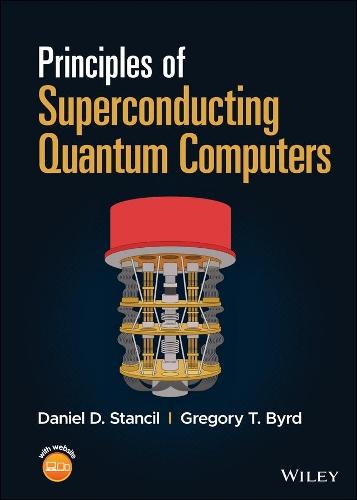
Principles of Superconducting Quantum Computers

Author:   Daniel D. Stancil ,  Gregory T. Byrd
Publisher:   John Wiley & Sons Inc
ISBN:  

9781119750727


Pages:   384
Publication Date:   05 April 2022
Format:   Hardback
Availability:   Out of stock   Availability explained
The supplier is temporarily out of stock of this item. It will be ordered for you on backorder and shipped when it becomes available.

Our Price $177.95 Quantity:  
Add to Cart

Share |

Principles of Superconducting Quantum Computers


Overview

Explore the intersection of computer science, physics, and electrical and computer engineering with this discussion of the engineering of quantum computers In Principles of Superconducting Quantum Computers, a pair of distinguished researchers delivers a comprehensive and insightful discussion of the building of quantum computing hardware and systems. Bridging the gaps between computer science, physics, and electrical and computer engineering, the book focuses on the engineering topics of devices, circuits, control, and error correction. Using data from actual quantum computers, the authors illustrate critical concepts from quantum computing. Questions and problems at the end of each chapter assist students with learning and retention, while the text offers descriptions of fundamentals concepts ranging from the physics of gates to quantum error correction techniques. The authors provide efficient implementations of classical computations, and the book comes complete with a solutions manual and demonstrations of many of the concepts discussed within. It also includes: A thorough introduction to qubits, gates, and circuits, including unitary transformations, single qubit gates, and controlled (two qubit) gates Comprehensive explorations of the physics of single qubit gates, including the requirements for a quantum computer, rotations, two-state systems, and Rabi oscillations Practical discussions of the physics of two qubit gates, including tunable qubits, SWAP gates, controlled-NOT gates, and fixed frequency qubits In-depth examinations of superconducting quantum computer systems, including the need for cryogenic temperatures, transmission lines, S parameters, and more Ideal for senior-level undergraduate and graduate students in electrical and computer engineering programs, Principles of Superconducting Quantum Computers also deserves a place in the libraries of practicing engineers seeking a better understanding of quantum computer systems.

Full Product Details

Author:   Daniel D. Stancil ,  Gregory T. Byrd
Publisher:   John Wiley & Sons Inc
Imprint:   John Wiley & Sons Inc
Dimensions:   Width: 17.80cm , Height: 2.20cm , Length: 25.40cm
Weight:   0.875kg
ISBN:  

9781119750727


ISBN 10:   1119750725
Pages:   384
Publication Date:   05 April 2022
Audience:   Professional and scholarly ,  Professional & Vocational
Format:   Hardback
Publisher's Status:   Active
Availability:   Out of stock   Availability explained
The supplier is temporarily out of stock of this item. It will be ordered for you on backorder and shipped when it becomes available.

Table of Contents

1 Qubits, Gates, and Circuits 1 1.1 Bits and Qubits . . . . . . . . . . . . . . . . . . . . . . . . 1 1.1.1 Circuits in Space vs. Circuits in Time . . . . . . . 1 1.1.2 Superposition . . . . . . . . . . . . . . . . . . . . . 2 1.1.3 No Cloning . . . . . . . . . . . . . . . . . . . . . . 3 1.1.4 Reversibility . . . . . . . . . . . . . . . . . . . . . 4 1.1.5 Entanglement . . . . . . . . . . . . . . . . . . . . . 4 1.2 Single-Qubit States . . . . . . . . . . . . . . . . . . . . . . 5 1.3 Measurement and the Born Rule . . . . . . . . . . . . . . 6 1.4 Unitary Operations and Single-Qubit Gates . . . . . . . . 7 1.5 Two-Qubit Gates . . . . . . . . . . . . . . . . . . . . . . . 9 1.5.1 Two-Qubit States . . . . . . . . . . . . . . . . . . . 9 1.5.2 Two-Qubit Gates . . . . . . . . . . . . . . . . . . . 11 1.5.3 Controlled-NOT . . . . . . . . . . . . . . . . . . . 13 1.6 Bell State . . . . . . . . . . . . . . . . . . . . . . . . . . . 14 1.7 No Cloning, Revisited . . . . . . . . . . . . . . . . . . . . 15 1.8 Example: Deutsch’s Problem . . . . . . . . . . . . . . . . 17 1.9 Key Characteristics of Quantum Computing . . . . . . . . 20 1.10 Quantum Computing Systems . . . . . . . . . . . . . . . . 22 1.11 Exercises . . . . . . . . . . . . . . . . . . . . . . . . . . . 26 2 Physics of Single Qubit Gates 29 2.1 Requirements for a Quantum Computer . . . . . . . . . . 29 2.2 Single Qubit Gates . . . . . . . . . . . . . . . . . . . . . . 30 2.2.1 Rotations . . . . . . . . . . . . . . . . . . . . . . . 30 2.2.2 Two State Systems . . . . . . . . . . . . . . . . . . 38 2.2.3 Creating Rotations: Rabi Oscillations . . . . . . . 44 2.3 Quantum State Tomography . . . . . . . . . . . . . . . . 49 2.4 Expectation Values and the Pauli Operators . . . . . . . . 51 2.5 Density Matrix . . . . . . . . . . . . . . . . . . . . . . . . 52 2.6 Exercises . . . . . . . . . . . . . . . . . . . . . . . . . . . 56 iii iv CONTENTS 3 Physics of Two Qubit Gates 59 3.1 √ iSWAP Gate . . . . . . . . . . . . . . . . . . . . . . . . 59 3.2 Coupled Tunable Qubits . . . . . . . . . . . . . . . . . . . 61 3.3 Fixed-frequency Qubits . . . . . . . . . . . . . . . . . . . 64 3.4 Other Controlled Gates . . . . . . . . . . . . . . . . . . . 66 3.5 Two-qubit States and the Density Matrix . . . . . . . . . 68 3.6 Exercises . . . . . . . . . . . . . . . . . . . . . . . . . . . 71 4 Superconducting Quantum Computer Systems 73 4.1 Transmission Lines . . . . . . . . . . . . . . . . . . . . . . 73 4.1.1 General Transmission Line Equations . . . . . . . 73 4.1.2 Lossless Transmission Lines . . . . . . . . . . . . . 75 4.1.3 Transmission Lines with Loss . . . . . . . . . . . . 77 4.2 Terminated Lossless Line . . . . . . . . . . . . . . . . . . 82 4.2.1 Reflection Coefficient . . . . . . . . . . . . . . . . . 82 4.2.2 Power (Flow of Energy) and Return Loss . . . . . 84 4.2.3 Standing Wave Ratio (SWR) . . . . . . . . . . . . 85 4.2.4 Impedance as a Function of Position . . . . . . . . 86 4.2.5 Quarter Wave Transformer . . . . . . . . . . . . . 88 4.2.6 Coaxial, Microstrip, and Co-planar Lines . . . . . 89 4.3 S Parameters . . . . . . . . . . . . . . . . . . . . . . . . . 92 4.3.1 Lossless Condition . . . . . . . . . . . . . . . . . . 93 4.3.2 Reciprocity . . . . . . . . . . . . . . . . . . . . . . 94 4.4 Transmission (ABCD) Matrices . . . . . . . . . . . . . . . 94 4.5 Attenuators . . . . . . . . . . . . . . . . . . . . . . . . . . 99 4.6 Circulators and Isolators . . . . . . . . . . . . . . . . . . . 100 4.7 Power Dividers/Combiners . . . . . . . . . . . . . . . . . 102 4.8 Mixers . . . . . . . . . . . . . . . . . . . . . . . . . . . . . 105 4.9 Low-pass Filters . . . . . . . . . . . . . . . . . . . . . . . 111 4.10 Noise . . . . . . . . . . . . . . . . . . . . . . . . . . . . . . 112 4.10.1 Thermal Noise . . . . . . . . . . . . . . . . . . . . 113 4.10.2 Equivalent Noise Temperature . . . . . . . . . . . 116 4.10.3 Noise Factor and Noise Figure . . . . . . . . . . . 117 4.10.4 Attenuators and Noise . . . . . . . . . . . . . . . . 118 4.10.5 Noise in Cascaded Systems . . . . . . . . . . . . . 120 4.11 Low Noise Amplifiers . . . . . . . . . . . . . . . . . . . . . 121 4.12 Exercises . . . . . . . . . . . . . . . . . . . . . . . . . . . 123 5 Resonators: Classical Treatment 125 5.1 Parallel Lumped Element Resonator . . . . . . . . . . . . 125 5.2 Capacitive Coupling to a Parallel Lumped-Element Res[1]onator . . . . . . . . . . . . . . . . . . . . . . . . . . . . . 128 5.3 Transmission Line Resonator . . . . . . . . . . . . . . . . 130 5.4 Capacitive Coupling to a Transmission Line Resonator . . 133 5.5 Capacitively-Coupled Lossless Resonators . . . . . . . . . 136 CONTENTS v 5.6 Classical Model of Qubit Readout . . . . . . . . . . . . . 142 5.7 Exercises . . . . . . . . . . . . . . . . . . . . . . . . . . . 146 6 Resonators: Quantum Treatment 149 6.1 Lagrangian Mechanics . . . . . . . . . . . . . . . . . . . . 149 6.1.1 Hamilton’s Principle . . . . . . . . . . . . . . . . . 149 6.1.2 Calculus of Variations . . . . . . . . . . . . . . . . 150 6.1.3 Lagrangian Equation of Motion . . . . . . . . . . . 151 6.2 Hamiltonian Mechanics . . . . . . . . . . . . . . . . . . . 153 6.3 Harmonic Oscillators . . . . . . . . . . . . . . . . . . . . . 153 6.3.1 Classical Harmonic Oscillator . . . . . . . . . . . . 154 6.3.2 Quantum Mechanical Harmonic Oscillator . . . . . 156 6.3.3 Raising and Lowering Operators . . . . . . . . . . 158 6.3.4 Can a Harmonic Oscillator be used as a Qubit? . . 160 6.4 Circuit Quantum Electrodynamics . . . . . . . . . . . . . 162 6.4.1 Classical LC Resonant Circuit . . . . . . . . . . . 162 6.4.2 Quantization of the LC Circuit . . . . . . . . . . . 163 6.4.3 Circuit Electrodynamic Approach for General Cir[1]cuits . . . . . . . . . . . . . . . . . . . . . . . . . . 164 6.4.4 Circuit Model for Transmission Line Resonator . . 165 6.4.5 Quantizing a Transmission Line Resonator . . . . 168 6.4.6 Quantized Coupled LC Resonant Circuits . . . . . 169 6.4.7 Schrödinger, Heisenberg, and Interaction Pictures 172 6.4.8 Resonant Circuits and Qubits . . . . . . . . . . . . 175 6.4.9 The Dispersive Regime . . . . . . . . . . . . . . . . 178 6.5 Exercises . . . . . . . . . . . . . . . . . . . . . . . . . . . 182 7 Theory of Superconductivity 183 7.1 Bosons and Fermions . . . . . . . . . . . . . . . . . . . . . 184 7.2 Bloch Theorem . . . . . . . . . . . . . . . . . . . . . . . . 186 7.3 Free Electron Model for Metals . . . . . . . . . . . . . . . 188 7.3.1 Discrete States in Finite Samples . . . . . . . . . . 189 7.3.2 Phonons . . . . . . . . . . . . . . . . . . . . . . . . 191 7.3.3 Debye Model . . . . . . . . . . . . . . . . . . . . . 193 7.3.4 Electron-Phonon Scattering and Electrical Con[1]ductivity . . . . . . . . . . . . . . . . . . . . . . . 194 7.3.5 Perfect Conductor vs. Superconductor . . . . . . . 196 7.4 Bardeen, Cooper and Schrieffer Theory of Superconduc[1]tivity . . . . . . . . . . . . . . . . . . . . . . . . . . . . . . 199 7.4.1 Cooper Pair Model . . . . . . . . . . . . . . . . . . 199 7.4.2 Dielectric Function . . . . . . . . . . . . . . . . . . 203 7.4.3 Jellium . . . . . . . . . . . . . . . . . . . . . . . . 204 7.4.4 Scattering Amplitude and Attractive Electron-Electron Interaction . . . . . . . . . . . . . . . . . . . . . . 208 7.4.5 Interpretation of Attractive Interaction . . . . . . 209 vi CONTENTS 7.4.6 Superconductor Hamiltonian . . . . . . . . . . . . 210 7.4.7 Superconducting Ground State . . . . . . . . . . . 211 7.5 Electrodynamics of Superconductors . . . . . . . . . . . . 215 7.5.1 Cooper Pairs and the Macroscopic Wave Function 215 7.5.2 Potential Functions . . . . . . . . . . . . . . . . . . 216 7.5.3 London Equations . . . . . . . . . . . . . . . . . . 217 7.5.4 London Gauge . . . . . . . . . . . . . . . . . . . . 219 7.5.5 Penetration Depth . . . . . . . . . . . . . . . . . . 220 7.5.6 Flux Quantization . . . . . . . . . . . . . . . . . . 221 7.6 Chapter Summary . . . . . . . . . . . . . . . . . . . . . . 223 7.7 Exercises . . . . . . . . . . . . . . . . . . . . . . . . . . . 224 8 Josephson Junctions 225 8.1 Tunneling . . . . . . . . . . . . . . . . . . . . . . . . . . . 225 8.1.1 Reflection from a Barrier . . . . . . . . . . . . . . 226 8.1.2 Finite Thickness Barrier . . . . . . . . . . . . . . . 229 8.2 Josephson Junctions . . . . . . . . . . . . . . . . . . . . . 231 8.2.1 Current and Voltage Relations . . . . . . . . . . . 231 8.2.2 Josephson Junction Hamiltonian . . . . . . . . . . 235 8.2.3 Quantized Josephson Junction Analysis . . . . . . 237 8.3 Superconducting Quantum Interference Devices (SQUIDs) 239 8.4 Josephson Junction Parametric Amplifiers . . . . . . . . . 241 8.5 Exercises . . . . . . . . . . . . . . . . . . . . . . . . . . . 242 9 Errors and Error Mitigation 245 9.1 NISQ Processors . . . . . . . . . . . . . . . . . . . . . . . 245 9.2 Decoherence . . . . . . . . . . . . . . . . . . . . . . . . . . 246 9.3 State Preparation and Measurement Errors . . . . . . . . 248 9.4 Characterizing Gate Errors . . . . . . . . . . . . . . . . . 250 9.5 State Leakage and Suppression using Pulse Shaping . . . 254 9.6 Zero-Noise Extrapolation . . . . . . . . . . . . . . . . . . 257 9.7 Optimized Control using Deep Learning . . . . . . . . . . 260 9.8 Exercises . . . . . . . . . . . . . . . . . . . . . . . . . . . 261 10 Quantum Error Correction 265 10.1 Review of Classical Error Correction . . . . . . . . . . . . 265 10.1.1 Error Detection . . . . . . . . . . . . . . . . . . . . 266 10.1.2 Error Correction: Repetition Code . . . . . . . . . 267 10.1.3 Hamming Code . . . . . . . . . . . . . . . . . . . . 268 10.2 Quantum Errors . . . . . . . . . . . . . . . . . . . . . . . 269 10.3 Detecting and Correcting Quantum Errors . . . . . . . . . 272 10.3.1 Bit Flip . . . . . . . . . . . . . . . . . . . . . . . . 272 10.3.2 Phase Flip . . . . . . . . . . . . . . . . . . . . . . 274 10.3.3 Correcting Bit and Phase Flips: Shor’s 9-qubit Code275 10.3.4 Arbitrary Rotations . . . . . . . . . . . . . . . . . 277 CONTENTS vii 10.4 Stabilizer Codes . . . . . . . . . . . . . . . . . . . . . . . 279 10.4.1 Stabilizers . . . . . . . . . . . . . . . . . . . . . . . 279 10.4.2 Stabilizers for Error Correction . . . . . . . . . . . 280 10.5 Operating on Logical Qubits . . . . . . . . . . . . . . . . 283 10.6 Error Thresholds . . . . . . . . . . . . . . . . . . . . . . . 285 10.6.1 Concatenation of Error Codes . . . . . . . . . . . . 286 10.6.2 Threshold Theorem . . . . . . . . . . . . . . . . . 286 10.7 Surface Codes . . . . . . . . . . . . . . . . . . . . . . . . . 288 10.7.1 Stabilizers . . . . . . . . . . . . . . . . . . . . . . . 289 10.7.2 Error Detection and Correction . . . . . . . . . . . 291 10.7.3 Logical X and Z Operators . . . . . . . . . . . . . 295 10.7.4 Multiple Qubits: Lattice Surgery . . . . . . . . . . 297 10.7.5 CNOT . . . . . . . . . . . . . . . . . . . . . . . . . 301 10.7.6 Single-Qubit Gates . . . . . . . . . . . . . . . . . . 305 10.8 Summary and Further Reading . . . . . . . . . . . . . . . 306 10.9 Exercises . . . . . . . . . . . . . . . . . . . . . . . . . . . 308 11 Quantum Logic: Efficient Implementation of Classical Computations 309 11.1 Reversible Logic . . . . . . . . . . . . . . . . . . . . . . . 310 11.1.1 Reversible Logic Gates . . . . . . . . . . . . . . . . 311 11.1.2 Reversible Logic Circuits . . . . . . . . . . . . . . 313 11.2 Quantum Logic Circuits . . . . . . . . . . . . . . . . . . . 317 11.2.1 Entanglement and Uncomputing . . . . . . . . . . 317 11.2.2 Multi-qubit gates . . . . . . . . . . . . . . . . . . . 319 11.2.3 Qubit topology . . . . . . . . . . . . . . . . . . . . 321 11.3 Efficient Arithmetic Circuits: Adder . . . . . . . . . . . . 322 11.3.1 Quantum Ripple Carry Adder . . . . . . . . . . . . 323 11.3.2 In-place Ripple Carry Adder . . . . . . . . . . . . 326 11.3.3 Carry-Lookahead Adder . . . . . . . . . . . . . . . 329 11.3.4 Adder Comparison . . . . . . . . . . . . . . . . . . 334 11.4 Phase Logic . . . . . . . . . . . . . . . . . . . . . . . . . . 336 11.4.1 Controlled-Z and Controlled-Phase Gates . . . . . 336 11.4.2 Selective Phase Change . . . . . . . . . . . . . . . 339 11.4.3 Phase Logic Gates . . . . . . . . . . . . . . . . . . 341 11.5 Summary and Further Reading . . . . . . . . . . . . . . . 342 11.6 Exercises . . . . . . . . . . . . . . . . . . . . . . . . . . . 345 12 Some Quantum Algorithms 347 12.1 Computational Complexity . . . . . . . . . . . . . . . . . 347 12.1.1 Quantum Program Run-Time . . . . . . . . . . . . 348 12.1.2 Classical Complexity Classes . . . . . . . . . . . . 349 12.1.3 Quantum Complexity . . . . . . . . . . . . . . . . 350 12.2 Grover’s Search Algorithm . . . . . . . . . . . . . . . . . . 351 12.2.1 Grover Iteration . . . . . . . . . . . . . . . . . . . 351 viii CONTENTS 12.2.2 Quantum Implementation . . . . . . . . . . . . . . 354 12.2.3 Generalizations . . . . . . . . . . . . . . . . . . . . 357 12.3 Quantum Fourier Transform . . . . . . . . . . . . . . . . . 358 12.3.1 Frequencies and Quantum-encoded Signals . . . . 358 12.3.2 Inverse QFT . . . . . . . . . . . . . . . . . . . . . 361 12.3.3 Quantum Implementation . . . . . . . . . . . . . . 362 12.3.4 Computational Complexity . . . . . . . . . . . . . 365 12.4 Quantum Phase Estimation . . . . . . . . . . . . . . . . . 365 12.4.1 Quantum Implementation . . . . . . . . . . . . . . 366 12.4.2 Computational Complexity and Other Issues . . . 367 12.5 Shor’s Algorithm . . . . . . . . . . . . . . . . . . . . . . . 368 12.5.1 Hybrid Classical-Quantum Algorithm . . . . . . . 368 12.5.2 Finding the Period . . . . . . . . . . . . . . . . . . 370 12.5.3 Computational Complexity . . . . . . . . . . . . . 373 12.6 Variational Quantum Algorithms . . . . . . . . . . . . . . 375 12.6.1 Variational Quantum Eigensolver . . . . . . . . . . 377 12.6.2 Quantum Approximate Optimization Algorithm . 382 12.6.3 Challenges and Opportunities . . . . . . . . . . . . 386 12.7 Summary and Further Reading . . . . . . . . . . . . . . . 387 12.8 Exercises . . . . . . . . . . . . . . . . . . . . . . . . . . . 388

Reviews

Author Information

Daniel D. Stancil, PhD, is the Alcoa Distinguished Professor and Head of Electrical and Computer Engineering at North Carolina State University. In addition to quantum computing, his research interests include spin waves, and microwave and optical devices and systems. Gregory T. Byrd, PhD, is Professor and Associate Head of Electrical and Computer Engineering at North Carolina State University. His research focuses on both classical and quantum computer architecture and systems.

Tab Content 6

Author Website:  

Countries Available

All regions
Latest Reading Guide

NOV RG 20252


Shopping Cart
Your cart is empty
Shopping cart
Mailing List