Overview
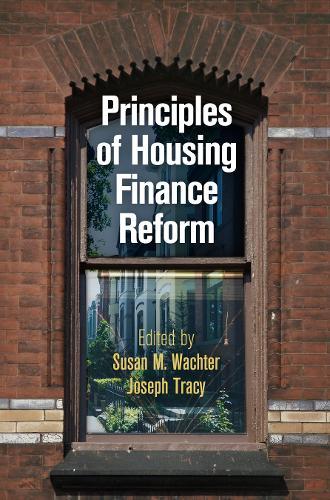
In the fall of 2008, the world watched in horror as the U.S. housing finance system shattered, triggering a global financial panic and ultimately the Great Recession. Now, nearly a decade later, the long and slow housing recovery has reached a critical moment. Though the housing finance system has stabilized, it remains in the hands of the federal government, leaving taxpayers exposed to the credit risk while private funding remains mostly on the sidelines. Principles of Housing Finance Reform identifies the changes necessary to modernize the housing finance system, identifying guiding principles that should underlie a rebuilt system. Contributors to the volume set out a wealth of innovative solutions that are possible within this framework, presenting proposals for long-term structural reforms that would infuse new life into the U.S. housing finance system while enhancing long-term stability. Nearly a decade after the inception of the Great Recession, reform proposals have arisen across the political spectrum. This is a moment of opportunity for rebuilding a key sector of the U.S. economy. The research in this volume represents the best thinking of policy researchers and economic experts on the challenges that lie ahead and provides a roadmap for reforms to create a system characterized by liquidity, stability, access, and sustainability. Contributors: W. Scott Frame, Meghan Grant, John Griffith, Diana Hancock, Stephanie Heller, Akash Kanojia, Patricia C. Mosser, Kevin A. Park, Wayne Passmore, Roberto G. Quercia, David Scharfstein, Phillip Swagel, Joseph Tracy, Susan M. Wachter, Dale A. Whitman, Mark A. Willis, Joshua Wright.
Full Product Details
Author: Susan M. Wachter ,
Joseph Tracy
Publisher: University of Pennsylvania Press
Imprint: University of Pennsylvania Press
Dimensions:
Width: 15.20cm
, Height: 2.30cm
, Length: 22.90cm
Weight: 0.590kg
ISBN: 9780812248623
ISBN 10: 0812248627
Pages: 288
Publication Date: 23 September 2016
Audience:
College/higher education
,
Undergraduate
,
Postgraduate, Research & Scholarly
Format: Hardback
Publisher's Status: Active
Availability: Manufactured on demand

We will order this item for you from a manufactured on demand supplier.
Reviews
Principles of Housing Finance Reform provides an instructive and realistic assessment of key legal, regulatory, and marketplace issues facing policymakers in reshaping the Nation's housing finance system. -Ed DeMarco, former Director of the Federal Housing Finance Agency (FHFA) and current Senior Fellow, Milliken Institute Discussions of fixing the U.S. housing finance system often devolve into theoretical tussles that do not connect to the real world complexities of transforming a ten-trillion-dollar market. Not so with the practical, analytical and reasonable recommendations contained in Principles of Housing Finance Reform which provides a well-researched roadmap for reform. -Andrew Davidson, President, Andrew Davidson & Company The shortcomings of America's housing finance system were vividly exposed after the crash of 2007, but we have yet to meaningfully reform that system. This edited volume provides an excellent guide to how reform should occur. Wachter and Tracy have brought together a terrific set of papers which map out the intellectual terrain and provide a rich set of ideas about fixing America's housing system. Anyone who is hoping that our future housing policies will be better than our past housing policies would do well to read this book. -Edward Glaeser, Harvard University Principles of Housing Finance Reform is full of interesting, often highly idiosyncratic information about how the U.S. housing finance system works, or often doesn't work. By collecting the essays of leading scholars into one volume, editors Susan M. Wachter and Joseph Tracy provide a very useful public service. -Robert Buckley, The New School The book is straight on American housing financial system and is highly interesting, if you want to learn about and to analyze the system . . . It is magnificient that the authors present and analyze serious proposals instead of just criticizing, when something has got off the track. -Journal of Housing and the Built Environment
Discussions of fixing the U.S. housing finance system often devolve into theoretical tussles that do not connect to the real world complexities of transforming a ten trillion dollar market. Not so with the practical, analytical and reasonable recommendations contained in Principles of Housing Finance Reform which provides a well-researched roadmap for reform. -Andrew Davidson, President, Andrew Davidson & Company Principles of Housing Finance Reform provides an instructive and realistic assessment of key legal, regulatory, and marketplace issues facing policymakers in reshaping the Nation's housing finance system. -Ed DeMarco, former Director of the Federal Housing Finance Agency (FHFA) and current Senior Fellow, Milliken Institute The shortcomings of America's housing finance system were vividly exposed after the crash of 2007, but we have yet to meaningfully reform that system. This edited volume provides an excellent guide to how reform should occur. Wachter and Tracy have brought together a terrific set of papers which map out the intellectual terrain and provide a rich set of ideas about fixing America's housing system. Anyone who is hoping that our future housing policies will be better than our past housing policies would do well to read this book. -Edward Glaeser, Harvard University Principles of Housing Finance Reform is full of interesting, often highly idiosyncratic information about how the U.S. housing finance system works, or often doesn't work. By collecting the essays of leading scholars into one volume, editors Susan M. Wachter and Joseph Tracy provide a very useful public service. -Robert Buckley, The New School
Author Information
Susan M. Wachter is the Albert Sussman Professor of Real Estate and Professor of Finance, The Wharton School; Professor of City and Regional Planning, School of Design; and Co-Director, Penn Institute for Urban Research, at the University of Pennsylvania. Joseph Tracy is Executive Vice President and Special Adviser to the President of the Federal Reserve Bank of New York.