Overview
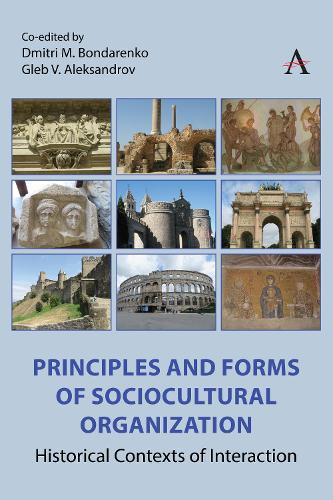
To show the non-linear nature of social evolution, it is crucially important to discuss cases from different cultural areas and different historical periods, including our time, as well as different levels of overall sociocultural complexity. This anthology includes chapters that explore case studies covering a wide range of societies of the Old and the New World ranging from ancient to modern contexts. Respectively, the chapters are based on different kinds of sources archaeological, historical, anthropological (ethnographic), and sociological. This analysis of pre-modern and modern societies sheds valuable light on the variety of ways in which social institutions were developing through time and space and of how these institutions may have fostered social evolution. Therefore, this publication may enhance our understanding of social evolution at the world-system, regional, and local-culture levels via the integration of various kinds of evidence within a unified conceptual framework. Societies are systems composed of a great number of various social institutions. Societies change as a result of emergence, transformation, and interaction of institutions. As systems of social institutions, societies have a fundamental characteristic that can be called a 'basic principle of societal organization'. The principle of organisation a society embodies depends on the way its institutions are arranged with respect to one another. Two basic principles can be distinguished: heterarchical, at which institutions interact being unranked with respect to one another or can be ranked in different ways, and the opposite principle, homoarchical, at which institutions interact being rigidly ranked in the only way and have no or very limited potential for being unranked or ranked in other ways. Societies of the same level of overall cultural complexity and with the same basic principle of organization can take different specific forms, as alternativeness exists not only between but also within the heterarchical and homoarchical macrogroups of societies. The division of societies into predominantly heterarchical and homoarchical is a constant fact of human sociocultural history. The dichotomy of heterarchy and homoarchy has considerably determined the non-linear and alternative nature of the global sociocultural process. Transformations in the ways social institutions and their sets, societal subsystems, are ranked (homoarchically or heterarchically) on one hand and changes in the overall sociocultural complexity on the other are two different, largely unrelated processes. Homoarchy and heterarchy are not evolutionary lines: a society can pass from a predominantly heterarchical way of ranking institutions to predominantly homoarchical or vice versa, and can do it both with and without a change in level of complexity. At any level of overall cultural complexity, one can observe both heterarchical and homoarchical societies, because an equal level of complexity (which makes it possible to solve equally difficult problems societies face) can be achieved in various forms on essentially different (though intersecting in the history of many societies and regions) principles of societal organisation.
Full Product Details
Author: Dmitri M. Bondarenko ,
Gleb V. Aleksandrov
Publisher: Anthem Press
Imprint: Anthem Press
Dimensions:
Width: 15.30cm
, Height: 2.10cm
, Length: 22.90cm
Weight: 0.555kg
ISBN: 9781839995910
ISBN 10: 1839995912
Pages: 286
Publication Date: 07 April 2026
Audience:
Professional and scholarly
,
College/higher education
,
Professional & Vocational
,
Postgraduate, Research & Scholarly
Format: Hardback
Publisher's Status: Active
Availability: Not yet available, will be POD

This item is yet to be released. You can pre-order this item and we will dispatch it to you upon it's release. This is a print on demand item which is still yet to be released.
Reviews
“The editors have compiled an extraordinary set of geographically wide-ranging case studies from different time periods involving various levels of political organization. The insightful analysis of social institutions put forth in this publication makes it a must-read for social scientists interested in understanding the nature of sociopolitical organization.” — Richard J. Chacon, Professor of Anthropology, Winthrop University, SC, USA. “Bondarenko and Aleksandrov address an important issue in anthropology; evolutionary concepts need to be tested in institutional contexts. Applying heterarchy and homoarchy to historical, archaeological, and modern contexts, they outline shortcomings and corrections to evolutionary applications. This approach is an important model for future research.” — David B. Small, Professor Emeritus of Anthropology, Lehigh University, PA, USA.
Author Information
Dmitri M. Bondarenko, PhD, Dr. Habil., is Professor and Corresponding Member of the Russian Academy of Sciences and Deputy Director of the Institute of Oriental Studies of the Russian Academy of Sciences. Gleb V. Aleksandrov, PhD, is Deputy Director of the International Centre of Anthropology, National Research University Higher School of Economics.