Overview
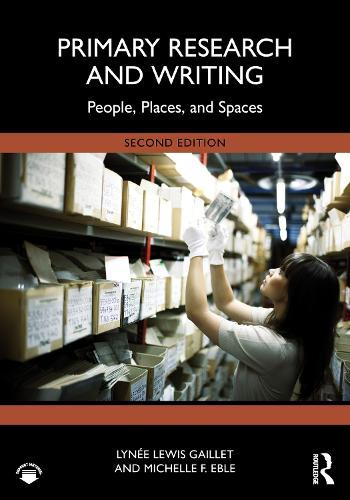
This thoroughly revised new edition offers a comprehensive introduction to the writing process, one grounded in archival and primary research methodologies. This second edition includes updated readings and student examples, expanded in-text features such as “Profile of a Primary Researcher” and “Communities in Context,” and emphasizes the role primary investigation plays across academic disciplines, in workplace writing, and within personal communication. This unique approach to writing instruction provides extensive practice in blending primary and secondary research, and connects students to topics they genuinely care about—including personal communities, professional interests, and the stories around them. Relying heavily upon innovative assignments and student examples, the second edition retains study of classical rhetorical components, but also explores research possibilities using generative artificial intelligence technologies, illustrates how to present findings using engaging elements of multimodality, and provides teachers with a complete toolbox for developing students’ natural curiosities about material culture. Designed for writing courses across disciplines, this student-centered approach to learning prepares readers for a lifetime of research and writing. Students find the study of enduring issues and materials, focus on multimedia research and composition, and the invitation to make meaning for targeted audiences to be authentic, urgent, and relevant. Online resources, including sample syllabi and course designs, sample class projects/assignment descriptions, activities, and discussion questions are available at www.routledge.com/9781041025825.
Full Product Details
Author: Lynée Lewis Gaillet (Georgia State University, USA) ,
Michelle F. Eble (East Carolina University, USA)
Publisher: Taylor & Francis Ltd
Imprint: Routledge
Edition: 2nd edition
ISBN: 9781041025825
ISBN 10: 1041025823
Pages: 288
Publication Date: 09 April 2026
Audience:
College/higher education
,
Undergraduate
Format: Paperback
Publisher's Status: Forthcoming
Availability: Not yet available

This item is yet to be released. You can pre-order this item and we will dispatch it to you upon its release.
Reviews
Praise for the 1st Edition ""Primary Research and Writing transformed the way I teach first year composition. When students become researchers, they become passionate about research and writing. My students saw research, writing, and critical analysis as relevant and even necessary activities. As a result, my classroom became a community of scholars immersed in examining the world around them, and I haven't looked back since."" Candace Nadon, Fort Lewis College, USA ""Teaching writing via communities and primary research truly enlivens and enriches the first-year classroom. Primary Research and Writing: People, Places, and Spaces is an incredibly useful text for exploring how to gather and write up firsthand data in the twenty-first century. Filled with wide-ranging contemporary examples, the text connects research and writing methods with various local and global communities in a manner that students find helpful and accessible."" Matthew Sansbury, Georgia State University, USA ""Revitalize and recharge your composition or expository writing or history or service-learning class! This approach energized my students, who took off running to investigate a community of their choice using primary sources in the archives and in the world around them. I had the joy of seeing them take ownership of their writing."" Amanda C. Gable, Georgia State University, USA
Praise from the 1st Edition ""Primary Research and Writing transformed the way I teach first year composition. When students become researchers, they become passionate about research and writing. My students saw research, writing, and critical analysis as relevant and even necessary activities. As a result, my classroom became a community of scholars immersed in examining the world around them, and I haven't looked back since."" Candace Nadon, Fort Lewis College, USA ""Teaching writing via communities and primary research truly enlivens and enriches the first-year classroom. Primary Research and Writing: People, Places, and Spaces is an incredibly useful text for exploring how to gather and write up firsthand data in the twenty-first century. Filled with wide-ranging contemporary examples, the text connects research and writing methods with various local and global communities in a manner that students find helpful and accessible."" Matthew Sansbury, Georgia State University, USA ""Revitalize and recharge your composition or expository writing or history or service-learning class! This approach energized my students, who took off running to investigate a community of their choice using primary sources in the archives and in the world around them. I had the joy of seeing them take ownership of their writing."" Amanda C. Gable, Georgia State University, USA
Author Information
Lynée Lewis Gaillet is Distinguished University Professor in the English department at Georgia State University, USA. She has served as Writing Program Administrator, Writing Center Director, Department Chair, and is a Past President of the Coalition of Feminist Scholars in the History of Composition and Rhetoric. Michelle F. Eble is Professor of Rhetoric, Writing, and Professional Communication in the Department of English at East Carolina University (ECU), USA. She serves as Chair of ECU’s Behavioral and Social Sciences Institutional Review Board, and is a Past President of the Association of Teachers of Technical Writing (ATTW).