Overview
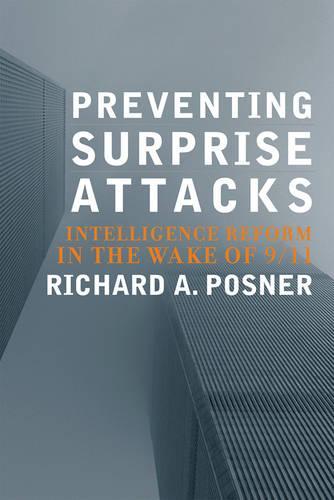
The commission to investigate the September 11, 2001, terrorist attacks on the United States issued its final report in July of 2004, in which it recommended a dramatic overhaul of the nation's intelligence system. Congress responded by hastily enacting the Intelligence Reform and Terrorism Prevention Act of 2004, which adopts many of the 9/11 commission's specific recommendations, though with a number of alterations. Richard A. Posner, in the first full-length study of the post-9/11 movement for intelligence reform, argues that the 9/11 commission's analysis, on which Congress relied, was superficial and its organizational proposals unsound. The commission, followed by Congress, exaggerated the benefits of centralizing control over intelligence; neglected the relevant scholarship dealing with surprise attacks, organization theory, the principles of intelligence, and the experience of foreign nations, some of which have a longer history of fighting terrorism than the United States; and as a result ignored the psychological, economic, historical, sociological, and comparative dimensions of the issue of intelligence reform. Posner explains, however, that a ray of hope remains: the reorganization provisions of the new Act are so vague, as a result of intense politicking, that the actual shape of the reorganized system will depend critically on decisions made by the President in implementing the Act. In a searing critique, Posner exposes the pitfalls created by the new legislation, identifies the issues overlooked by the 9/11 commission and Congress, and suggests directions for real reform. This book is published in cooperation with the Hoover Institution
Full Product Details
Author: Richard A. Posner
Publisher: Bloomsbury Publishing Plc
Imprint: Rowman & Littlefield
Dimensions:
Width: 16.20cm
, Height: 1.80cm
, Length: 23.60cm
Weight: 0.426kg
ISBN: 9780742549470
ISBN 10: 074254947
Pages: 226
Publication Date: 22 May 2005
Audience:
General/trade
,
General
Format: Hardback
Publisher's Status: Out of Stock Indefinitely
Availability: Out of stock

Reviews
It's fitting that Posner sits on the federal bench, where the Constitution guarantees jurists life tenure, and a salary that can never be reduced. A critic this honest, piercing, and unforgiving would otherwise have a short tenure in Washington, D.C.--David White American Enterprise
It's fitting that Posner sits on the federal bench, where the Constitution guarantees jurists life tenure, and a salary that can never be reduced. A critic this honest, piercing, and unforgiving would otherwise have a short tenure in Washington, D.C.--David White American Enterprise Magazine
Richard Posner has tackled head on—and found dangerously flawed—the new law on our national intelligence system. His combination of scholarship, realism about the impossibility of preventing surprise attacks such as that on 9/11, and highlighting of the perils of centralizing intelligence authority, makes this an important and most timely book. Ambiguities in the law leave scope for interpretation by the Executive branch and Posner's trenchant analysis points the way to averting some of the worst hazards. -- Henry Rowen, senior fellow of the Hoover Institution; former chairman of the National Intelligence Council, 1981-1983 A bold new work that is a welcome antidote to the commission fatigue that is settling over Washington. Posner's demystification of the 9/11 commission and of the role of the September 11 families . . . is timely and pertinent. You can't read this book and come away believing that Congress has fixed the problem. -- Jim Hoagland, columnist, <I>Washington Post<I> ""Preventing Surprise Attacks"" provides a... useful and contrarian view of the commision report. -- Eric Lichtblau * The New York Times * Posner trenchantly takes to task the grandstanding 9/11 commission. The picture painted by this useful book is pessimistic but not dire. Preempting another 9/11 would be difficult. But, as Posner argues, to the limited extent intelligence structure many factor in, the new legislation has enough play in the joints to allow competent actors to operate. -- Andrew McCarthy * New York Post * In this concise book, Posner...critically unravels the foundations of the 9/11 Commission report and shows defects in..the Intelligence Reform and Terrorism Prevention Act of 2004....substantially enhances the public debate about intelligence reform."" -- Steven Puro, St. * Library Journal * It's fitting that Posner sits on the federal bench, where the Constitution guarantees jurists life tenure, and a salary that can never be reduced. A critic this honest, piercing, and unforgiving would otherwise have a short tenure in Washington, D.C. -- David White * American Enterprise * A rewarding read that is worth re-reading. * Parameters *
Richard Posner has tackled head on-and found dangerously flawed-the new law on our national intelligence system. His combination of scholarship, realism about the impossibility of preventing surprise attacks such as that on 9/11, and highlighting of the perils of centralizing intelligence authority, makes this an important and most timely book. Ambiguities in the law leave scope for interpretation by the Executive branch and Posner's trenchant analysis points the way to averting some of the worst hazards. -- Henry Rowen, senior fellow of the Hoover Institution; former chairman of the National Intelligence Council, 1981-1983 A bold new work that is a welcome antidote to the commission fatigue that is settling over Washington. Posner's demystification of the 9/11 commission and of the role of the September 11 families ... is timely and pertinent. You can't read this book and come away believing that Congress has fixed the problem. -- Jim Hoagland, columnist, Washington Post Preventing Surprise Attacks provides a... useful and contrarian view of the commision report. -- Eric Lichtblau The New York Times Posner trenchantly takes to task the grandstanding 9/11 commission. The picture painted by this useful book is pessimistic but not dire. Preempting another 9/11 would be difficult. But, as Posner argues, to the limited extent intelligence structure many factor in, the new legislation has enough play in the joints to allow competent actors to operate. -- Andrew McCarthy New York Post In this concise book, Posner...critically unravels the foundations of the 9/11 Commission report and shows defects in..the Intelligence Reform and Terrorism Prevention Act of 2004...substantially enhances the public debate about intelligence reform. -- Steven Puro, St. Library Journal It's fitting that Posner sits on the federal bench, where the Constitution guarantees jurists life tenure, and a salary that can never be reduced. A critic this honest, piercing, and unforgiving would otherwise have a short tenure in Washington, D.C. -- David White American Enterprise A rewarding read that is worth re-reading. Parameters
Author Information
Richard A. Posner is a judge on the U.S. Court of Appeals in Chicago and a senior lecturer at the University of Chicago Law School. He is the author of hundreds of articles and nearly four dozen books, including An Affair of State: The Investigation, Impeachment, and Trial of President Clinton (1999); Breaking the Deadlock: The 2000 Election, The Constitution, and the Courts (2001); Public Intellectuals: A Study of Decline (2002); and Catastrophe: Risk and Response (2004).