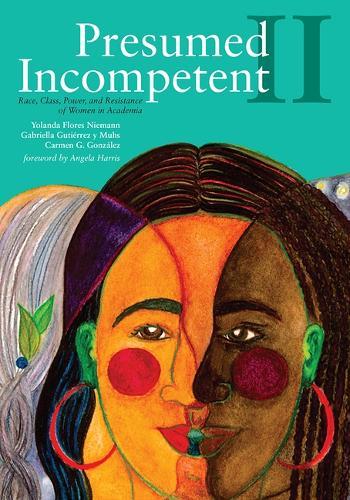
Full Product Details
Author: Yolanda Flores Niemann ,
Gabriella Gutiérrez y Muhs ,
Carmen G. González ,
Angela P. Harris
Publisher: Utah State University Press
Imprint: Utah State University Press
Dimensions:
Width: 17.80cm
, Height: 2.30cm
, Length: 25.40cm
Weight: 0.710kg
ISBN: 9781607329657
ISBN 10: 1607329654
Pages: 386
Publication Date: 15 April 2020
Recommended Age: From 18 to 99 years
Audience:
College/higher education
,
Professional and scholarly
,
Tertiary & Higher Education
,
Professional & Vocational
Format: Paperback
Publisher's Status: Active
Availability: Available To Order

We have confirmation that this item is in stock with the supplier. It will be ordered in for you and dispatched immediately.
Reviews
This work is a powerful call to action and must read for chief diversity officers, deans, department heads, presidents, and provosts. Building on Presumed Incompetent, these are courageous and bold testimonies of racism, sexism, and bullying faced by women of color--who continue to survive and thrive, in spite of it all. The academy can no longer use the excuse of not knowing or understanding the experiences of women of color. It now has a responsibility to respond, change, and eliminate these unjust and unfair barriers. Reading this work is an important step for those who consider themselves allies, advocates, and leaders who are committed to inclusive excellence. It is also essential for women of color in the academy to know that they are not alone in their experiences and journeys. --Menah Pratt-Clarke, Vice President for Strategic Affairs and Diversity, Professor of Education, Virginia Tech As a bastion of elites, whiteness is fiercely protected in academia. Institutions claim to 'value diversity' yet consistently remain overwhelmingly white. Contrary to the claim that this is a 'pipeline' issue, this powerful collection of essays makes visible the daily mechanics of white supremacy and its intersections with class and gender in academic institutions. We cannot address a problem we cannot see. May these eye-opening essays help loosen the grip of whiteness in academia. --Robin DiAngelo, author of White Fragility: Why It's So Hard for White People to Talk about Racism Presumed Incompetent II leaves a legacy for contemporary women as well as those who had to remain silent in their academic isolation. The voices of stoic, unapologetic, and courageous women who put up and pushed back in the culture of patriarchy can embolden many others. This second book again captures the nuances of intersecting identities for women in the academy and highlights the systemic bias that persists. Their lived experiences need to be shared and honored. --Patricia Arredondo, American Association of Hispanics in Higher Education This updated edition is filled with new empirical studies and personal accounts from women of color in academia. Each chapter points out the subtle and not-so-subtle ways that gender, race, class, sexuality, and religion are used to quiet women of color, even in the academy, the supposed palace of the mind. Each study and personal story unflinchingly confronts structural oppression and personal bullying that seek to eradicate women of color from the academy. This work is a call to action and should be read by fellow academics, especially those in positions of power. --CHOICE The authors remind women of color of their agency in enacting resistance to the shenanigans of the academy and in developing ways to hold institutions liable for their actions. --Teachers College Record Institutional leaders and policy makers can use the wealth of knowledge shared in Presumed Incompetent II to cultivate nurturing work environments that include and value the talent and perspectives of those who have been marginalized. --American Association of University Professors Journal
This work is a powerful call to action and must read for chief diversity officers, deans, department heads, presidents, and provosts. Building on Presumed Incompetent, these are courageous and bold testimonies of racism, sexism, and bullying faced by women of color--who continue to survive and thrive, in spite of it all. The academy can no longer use the excuse of not knowing or understanding the experiences of women of color. It now has a responsibility to respond, change, and eliminate these unjust and unfair barriers. Reading this work is an important step for those who consider themselves allies, advocates, and leaders who are committed to inclusive excellence. It is also essential for women of color in the academy to know that they are not alone in their experiences and journeys. --Menah Pratt-Clarke, Vice President for Strategic Affairs and Diversity, Professor of Education, Virginia Tech As a bastion of elites, whiteness is fiercely protected in academia. Institutions claim to 'value diversity' yet consistently remain overwhelmingly white. Contrary to the claim that this is a 'pipeline' issue, this powerful collection of essays makes visible the daily mechanics of white supremacy and its intersections with class and gender in academic institutions. We cannot address a problem we cannot see. May these eye-opening essays help loosen the grip of whiteness in academia. --Robin DiAngelo, author of White Fragility: Why It's So Hard for White People to Talk about Racism Presumed Incompetent II leaves a legacy for contemporary women as well as those who had to remain silent in their academic isolation. The voices of stoic, unapologetic, and courageous women who put up and pushed back in the culture of patriarchy can embolden many others. This second book again captures the nuances of intersecting identities for women in the academy and highlights the systemic bias that persists. Their lived experiences need to be shared and honored. --Patricia Arredondo, American Association of Hispanics in Higher Education
"""Presumed Incompetent II expands on its forerunner but stands on it own as an important collection of essays highlighting challenges to access, survival and success in the academy for women from BIPOC communities."" --LSE Review of Books ""Institutional leaders and policy makers can use the wealth of knowledge shared in Presumed Incompetent II to cultivate nurturing work environments that include and value the talent and perspectives of those who have been marginalized."" --American Association of University Professors Journal ""The authors remind women of color of their agency in enacting resistance to the shenanigans of the academy and in developing ways to hold institutions liable for their actions."" --Teachers College Record ""This updated edition is filled with new empirical studies and personal accounts from women of color in academia. Each chapter points out the subtle and not-so-subtle ways that gender, race, class, sexuality, and religion are used to quiet women of color, even in the academy, the supposed palace of the mind. Each study and personal story unflinchingly confronts structural oppression and personal bullying that seek to eradicate women of color from the academy. This work is a call to action and should be read by fellow academics, especially those in positions of power."" --CHOICE ""This work is a powerful call to action and must read for chief diversity officers, deans, department heads, presidents, and provosts. Building on Presumed Incompetent, these are courageous and bold testimonies of racism, sexism, and bullying faced by women of color--who continue to survive and thrive, in spite of it all. The academy can no longer use the excuse of not knowing or understanding the experiences of women of color. It now has a responsibility to respond, change, and eliminate these unjust and unfair barriers. Reading this work is an important step for those who consider themselves allies, advocates, and leaders who are committed to inclusive excellence. It is also essential for women of color in the academy to know that they are not alone in their experiences and journeys."" --Menah Pratt-Clarke, Vice President for Strategic Affairs and Diversity, Professor of Education, Virginia Tech ""As a bastion of elites, whiteness is fiercely protected in academia. Institutions claim to 'value diversity' yet consistently remain overwhelmingly white. Contrary to the claim that this is a 'pipeline' issue, this powerful collection of essays makes visible the daily mechanics of white supremacy and its intersections with class and gender in academic institutions. We cannot address a problem we cannot see. May these eye-opening essays help loosen the grip of whiteness in academia."" --Robin DiAngelo, author of White Fragility: Why It's So Hard for White People to Talk about Racism ""Presumed Incompetent II leaves a legacy for contemporary women as well as those who had to remain silent in their academic isolation. The voices of stoic, unapologetic, and courageous women who put up and pushed back in the culture of patriarchy can embolden many others. This second book again captures the nuances of intersecting identities for women in the academy and highlights the systemic bias that persists. Their lived experiences need to be shared and honored."" --Patricia Arredondo, American Association of Hispanics in Higher Education"
This work is a powerful call to action and must read for chief diversity officers, deans, department heads, presidents, and provosts. Building on Presumed Incompetent, these are courageous and bold testimonies of racism, sexism, and bullying faced by women of color--who continue to survive and thrive, in spite of it all. The academy can no longer use the excuse of not knowing or understanding the experiences of women of color. It now has a responsibility to respond, change, and eliminate these unjust and unfair barriers. Reading this work is an important step for those who consider themselves allies, advocates, and leaders who are committed to inclusive excellence. It is also essential for women of color in the academy to know that they are not alone in their experiences and journeys. --Menah Pratt-Clarke, Vice President for Strategic Affairs and Diversity, Professor of Education, Virginia Tech As a bastion of elites, whiteness is fiercely protected in academia. Institutions claim to 'value diversity' yet consistently remain overwhelmingly white. Contrary to the claim that this is a 'pipeline' issue, this powerful collection of essays makes visible the daily mechanics of white supremacy and its intersections with class and gender in academic institutions. We cannot address a problem we cannot see. May these eye-opening essays help loosen the grip of whiteness in academia. --Robin DiAngelo, author of White Fragility: Why It's So Hard for White People to Talk about Racism Presumed Incompetent II leaves a legacy for contemporary women as well as those who had to remain silent in their academic isolation. The voices of stoic, unapologetic, and courageous women who put up and pushed back in the culture of patriarchy can embolden many others. This second book again captures the nuances of intersecting identities for women in the academy and highlights the systemic bias that persists. Their lived experiences need to be shared and honored. --Patricia Arredondo, American Association of Hispanics in Higher Education This updated edition is filled with new empirical studies and personal accounts from women of color in academia. Each chapter points out the subtle and not-so-subtle ways that gender, race, class, sexuality, and religion are used to quiet women of color, even in the academy, the supposed palace of the mind. Each study and personal story unflinchingly confronts structural oppression and personal bullying that seek to eradicate women of color from the academy. This work is a call to action and should be read by fellow academics, especially those in positions of power. --CHOICE
Author Information
Yolanda Flores Niemann (PhD, Psychology, University of Houston, 1992) is professor of psychology at the University of North Texas. Carmen G. González (JD, Harvard Law School, 1988) is professor of law at Seattle University. Gabriella Gutiérrez y Muhs (MA and PhD Stanford University, 2000) is professor of modern languages and women studies at Seattle University.