|
|
|||
|
||||
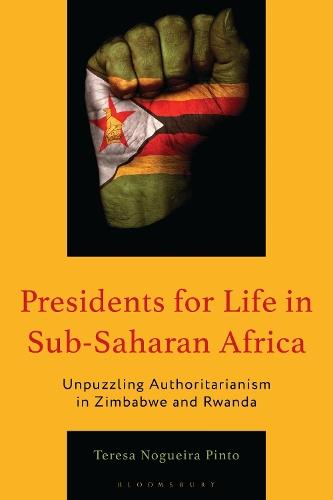
OverviewFull Product DetailsAuthor: Teresa Nogueira Pinto (Lusófona University)Publisher: Bloomsbury Publishing Plc Imprint: Rowman & Littlefield Dimensions: Width: 16.00cm , Height: 2.20cm , Length: 23.00cm Weight: 0.560kg ISBN: 9781666963434ISBN 10: 1666963437 Pages: 290 Publication Date: 22 January 2026 Audience: Professional and scholarly , College/higher education , Professional & Vocational , Postgraduate, Research & Scholarly Format: Hardback Publisher's Status: Active Availability: Manufactured on demand We will order this item for you from a manufactured on demand supplier. Table of ContentsList of Figures List of Tables Introduction Chapter One: Constructing Usable Pasts in Zimbabwe and Rwanda Chapter Two: Liberation Credentials and the Politics of Exclusion in Zimbabwe Chapter Three: Consensual Democracy and Constitutional Engineering in Rwanda Chapter Four: Economic Performance and the Legitimation of Power Chapter Five: Civil Society in Zimbabwe and Rwanda: Contentious vs. Co-opted Public Spheres Chapter Six: Strategies of Power Legitimation in the Regional and International Spheres Conclusion: Unpuzzling Power Legitimation Strategies References About the Author IndexReviewsPresidents for Life in Sub-Saharan Africa: Unpuzzling Authoritarianism in Zimbabwe and Rwanda offers a compelling and nuanced analysis of the political strategies employed by the semi-authoritarian regimes of Robert Mugabe and Paul Kagame to secure and sustain legitimacy. Using a multidimensional framework, the book employs process tracing to examine the interplay between historical narratives, legal and institutional frameworks, economic policies and outcomes, state–civil society relations, and foreign policy choices in both countries—revealing the multi-causal dynamics underpinning semi-authoritarian resilience. This book is an essential resource for scholars, students, and practitioners of African politics, authoritarianism, and international relations. * Ricardo Real P. de Sousa, Professor of International Relations, University of Beira Interior, Portugal * Author InformationTeresa Nogueira Pinto is Professor of Political Science at Lusófona University and an integrated researcher at LusoGlobe, Lusófona’s Centre on Global Challenges, Portugal. Tab Content 6Author Website:Countries AvailableAll regions |
||||