|
|
|||
|
||||
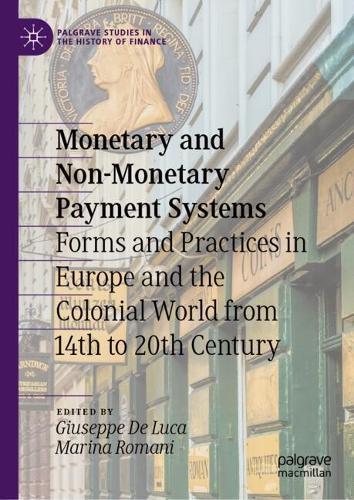
OverviewThis book analyses how preindustrial monetary practices functioned, focusing on Europe and some selected colonial areas between the fourteenth and twentieth centuries. It explores the major contexts in which monetary circulation operated and provides a fascinating range of case studies from experts in the field. A primary context for this edited volume is the raft of challenges associated with cash in the preindustrial period. Covering issues such as the slow circulation of coins, the risk of debasement, clipping, the first proto currency, and parallel circulation of several currencies, the book offers insight into the ways in which people dealt with the need to transact and exchange payment. It focuses on cash-equivalent goods and commodity currencies as well as traditional cash methods, looking at the physical development of money as well as exploring the structure of payment methods and financial systems in past societies. Grounded in extensive archival research, chapters use a range of sources such as notary deeds, wills, rent-books, expenditure accounts and public ledgers to analyse the dynamics of circulation and transaction in various settings, from the city to the countryside, regional to international contexts, and different European states. This will be highly valuable reading for scholars interested in financial and monetary history. Full Product DetailsAuthor: Giuseppe De Luca , Marina RomaniPublisher: Springer Nature Switzerland AG Imprint: Palgrave Macmillan ISBN: 9783032118097ISBN 10: 3032118093 Pages: 299 Publication Date: 03 May 2026 Audience: College/higher education , Postgraduate, Research & Scholarly Format: Hardback Publisher's Status: Forthcoming Availability: Not yet available This item is yet to be released. You can pre-order this item and we will dispatch it to you upon its release. Table of ContentsReviewsAuthor InformationGiuseppe De Luca is Professor of Economic History at the University of Milan, Italy. He has published several books and many journal articles in the areas of financial and economic history, infrastructure financing, and economic growth. He is also Honorary Professor at The Bartlett School of Sustainable Construction, University College London, and Associate to the National Research Council of Italy, Institute of History of Mediterranean Europe (ISEM). Marina Romani is Associate Professor of Economic History at the University of Genoa, Italy. She specializes in financial history during the early modern period, Jewish history, and historical demography. Tab Content 6Author Website:Countries AvailableAll regions |
||||