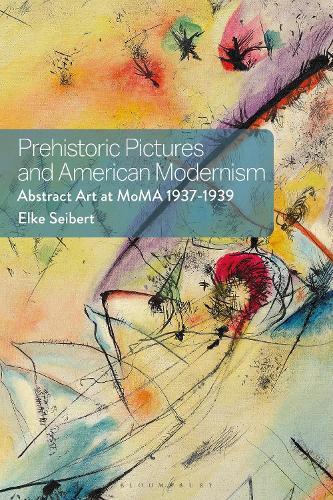
Full Product Details
Author: Dr Elke Seibert (Independent Scholar, France)
Publisher: Bloomsbury Publishing PLC
Imprint: Bloomsbury Visual Arts
Dimensions:
Width: 15.40cm
, Height: 2.00cm
, Length: 23.20cm
Weight: 0.420kg
ISBN: 9781350418325
ISBN 10: 1350418323
Pages: 272
Publication Date: 29 May 2025
Audience:
College/higher education
,
Tertiary & Higher Education
Format: Paperback
Publisher's Status: Active
Availability: Manufactured on demand

We will order this item for you from a manufactured on demand supplier.
Reviews
"""Opens a fascinating discourse on the undervalued artistic reception of prehistoric works in American 20th century art. This thoroughly researched book demonstrates not only the inspiration they had on modernist artists, but also how use of the controversial term ""primitivism"" was directly related to ethnographic and anthropological thought at the time."" --Thomas W. Gaehtgens, Director Emeritus, Getty Research Institute, USA ""Meticulously researched and strikingly ambitious in its aims and range, Elke Seibert's study is a highly original contribution to our understanding of American modernism. Drawing on largely neglected material from a rich variety of sources - from anthropological debates in 1930s New York to the activities of the American Abstract Artist group - this book explores with brilliance and in impressive detail the impact that an exhibition of prehistoric art made on artists in the 1930s, a phenomenon that until now has been largely overlooked. Apart from its importance for the history of modern art, this is an enthralling case study in the relationship between prehistoric and 20th century art that will resonate with any art historian concerned with issues of artistic influence and appropriation across history."" --Malcolm Baker, Distinguished Professor Emeritus of Art History, University of California, Riverside, USA ""An illuminating journey into the nexus where prehistoric art, emerging modernism and discourses of the indigenous intertwined and generated a new understanding of what American art could be. A lucid testament to the power of art across time."" --Annette Bhagwati, Director, The Museum Rietberg, Z�rich, Switzerland"
Opens a fascinating discourse on the undervalued artistic reception of prehistoric works in American 20th century art. This thoroughly researched book demonstrates not only the inspiration they had on modernist artists, but also how use of the controversial term “primitivism” was directly related to ethnographic and anthropological thought at the time. * Thomas W. Gaehtgens, Director Emeritus, Getty Research Institute, USA * Meticulously researched and strikingly ambitious in its aims and range, Elke Seibert’s study is a highly original contribution to our understanding of American modernism. Drawing on largely neglected material from a rich variety of sources - from anthropological debates in 1930s New York to the activities of the American Abstract Artist group - this book explores with brilliance and in impressive detail the impact that an exhibition of prehistoric art made on artists in the 1930s, a phenomenon that until now has been largely overlooked. Apart from its importance for the history of modern art, this is an enthralling case study in the relationship between prehistoric and 20th century art that will resonate with any art historian concerned with issues of artistic influence and appropriation across history. * Malcolm Baker, Distinguished Professor Emeritus of Art History, University of California, Riverside, USA * An illuminating journey into the nexus where prehistoric art, emerging modernism and discourses of the indigenous intertwined and generated a new understanding of what American art could be. A lucid testament to the power of art across time. * Annette Bhagwati, Director, The Museum Rietberg, Zürich, Switzerland *
Author Information
Elke Seibert is a Post-Doctoral Research Fellow at the Cultural Department Canton Nidwalden, Switzerland, specialising in the interdisciplinary study of reception processes in contemporary and fine art from the 18th to the 20th century.