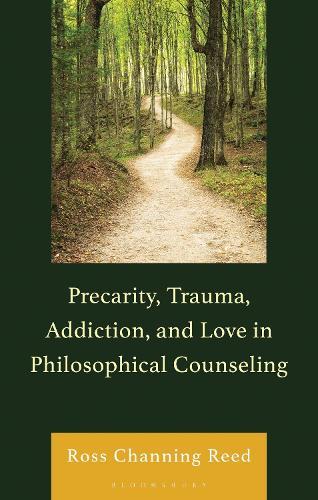
Full Product Details
Author: Dr. Ross Channing Reed
Publisher: Bloomsbury Publishing Plc
Imprint: Rowman & Littlefield
ISBN: 9781666934373
ISBN 10: 1666934372
Pages: 256
Publication Date: 19 March 2026
Audience:
College/higher education
,
Professional and scholarly
,
Tertiary & Higher Education
,
Professional & Vocational
Format: Hardback
Publisher's Status: Active
Availability: Manufactured on demand

We will order this item for you from a manufactured on demand supplier.
Reviews
Reed has made an invaluable contribution to our understanding and healing of systemically-induced illnesses afflicting the developed world. He insightfully examines crises of precarity, stress, trauma, addiction, and meaninglessness that have attained epidemic proportions in our most affluent and technologically-advanced societies. This timely and well-written book provides perceptive analyses of the systemic problems from which these crises arise and propagate. Moreover, it also reinstates the central place of philosophy and its practice as a way of transcending the dehumanizing effects of mechanized health-care, among other soulless institutional providers of essential services. * Lou Marinoff, The City College of CUNY, USA * This book explains how and why most people in the world are now living in constant fear of disaster. In Precarity, Trauma, Addiction, and Love in Philosophical Counseling, Ross Channing Reed argues that much of this suffering is not due to the challenges of ordinary life circumstances; it’s deliberately produced. By scrutinizing political control, economic manipulations, even religious prophecies, he shows how this is accomplished. Reed offers both certified data and personal anecdotes to demonstrate who benefits and who loses out. This is a very enlightening book. * Peter B. Raabe, Emeritus Professor of Philosophy, University of the Fraser Valley, Canada * This book makes a significant contribution to philosophical counseling by powerfully demonstrating philosophy's effectiveness in addressing everyday problems and the systemic pain prevalent in modern society. Drawing on extensive experience, Reed provides a unique, coherent narrative linking precarity, trauma, and addiction to societal structures influenced by nihilism. He argues that philosophical practice, particularly counseling, cultivates metanoia (expanded consciousness) and collective self-awareness, which are crucial for mitigating suffering and fostering a more humane society. This book offers hope by explaining that much suffering is contingent, not inevitable. * Kate Mehuron, Eastern Michigan University, USA *
Author Information
Ross Channing Reed is a lecturer in philosophy at Missouri University of Science and Technology, USA.