Overview
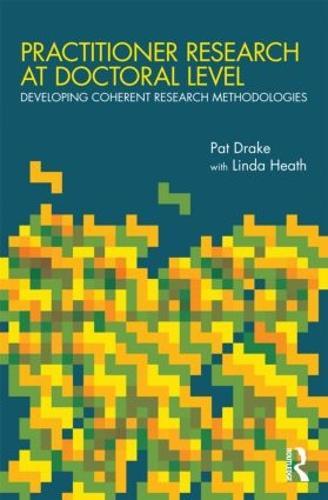
This book explores the idea that the critical position that doctoral students must achieve in terms of both their research and the research setting is, at best, extremely difficult and, at worst, may be unachievable for practitioners conducting 'insider research'. The authors suggest that universities need to examine current research methodologies on practitioner doctorates with a view to creating new methodologies to accommodate new forms of knowledge construction. The authors argue that comparisons between traditional PhDs and professional doctorates not only neglect the diversity of models of practitioner research at doctoral level, but also that a paradigm shift has occurred and that the construction of knowledge in the social sciences is not limited to the type of doctoral programme through which it is engendered. Recent research indicates that key elements including supervision, ethical issues, relationships with colleagues, loyalty, duty and integrity place the practitioner in a situation which may not methodologically align with conventional approaches. In this book the authors take the opportunity to explore these themes in an holistic and integrated way in order to develop a sense of methodological coherence for the practitioner researcher at doctoral level. This book will be essential reading for doctoral students and their supervisors, practitioner researchers working in professional settings more generally and those engaging with policy debates about doctoral research.
Full Product Details
Author: Pat Drake (University of Sussex, UK) ,
Linda Heath (University of Brighton, UK)
Publisher: Taylor & Francis Ltd
Imprint: Routledge
Weight: 0.270kg
ISBN: 9780415490221
ISBN 10: 0415490227
Pages: 134
Publication Date: 31 August 2010
Audience:
College/higher education
,
Professional and scholarly
,
Tertiary & Higher Education
,
Professional & Vocational
Format: Paperback
Publisher's Status: Active
Availability: In Print

This item will be ordered in for you from one of our suppliers. Upon receipt, we will promptly dispatch it out to you. For in store availability, please contact us.
Reviews
Throughout the book, the authors clearly identify the complexities of conducting research in one's own professional setting, the challenges of making the everyday `problematic', reflecting critically on practice with which one - and others - are engaged, and continuing to work successfully within the setting. They acknowledge the political influences that inform professional research and the doctoral researcher, and relationships with colleagues who are also part of the research setting. However, Drake and Heath believe that this also brings a uniqueness to the research because the researcher is working from a unique perspective. - Gwyneth Owen-Jackson, Higher Education Review 2012
Throughout the book, the authors clearly identify the complexities of conducting research in one's own professional setting, the challenges of making the everyday 'problematic', reflecting critically on practice with which one -- and others -- are engaged, and continuing to work successfully within the setting. They acknowledge the political influences that inform professional research and the doctoral researcher, and relationships with colleagues who are also part of the research setting. However, Drake and Heath believe that this also brings a uniqueness to the research because the researcher is working from a unique perspective. - Gwyneth Owen-Jackson, Higher Education Review 2012
Throughout the book, the authors clearly identify the complexities of conducting research in one's own professional setting, the challenges of making the everyday 'problematic', reflecting critically on practice with which one - and others - are engaged, and continuing to work successfully within the setting. They acknowledge the political influences that inform professional research and the doctoral researcher, and relationships with colleagues who are also part of the research setting. However, Drake and Heath believe that this also brings a uniqueness to the research because the researcher is working from a unique perspective. - Gwyneth Owen-Jackson, Higher Education Review 2012
Author Information
Pat Drake is Senior Lecturer in Education at the University of Sussex, UK. Linda Heath is Senior Lecturer in the Business School at the University of Brighton, UK.