Overview
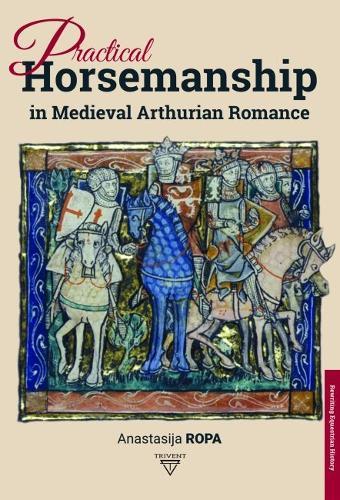
The figure of a knight on horseback is the emblem of medieval chivalry. Much has been written on the ideology and practicalities of knighthood as portrayed in medieval romance, especially Arthurian romance, and it is surprising that so little attention was hitherto granted to the knight's closest companion, the horse. This study examines the horse as a social indicator, as the knight's animal alter ego in his spiritual peregrinations and earthly adventures, the ups and downs of chivalric adventure, as well as the relations between the lady and her palfrey in romance. Both medieval authors and their audiences knew more about the symbolism and practice of horsemanship than most readers do today. By providing the background to the descriptions of horses and horsemanship in Arthurian romance, this study deepens the readers' appreciation of these texts. At the same time, critical reading of romance supplies information about the ideology and daily practice of horsemanship in the Middle Ages that is otherwise impossible to obtain from other sources, be it archaeology, chronicles or administrative documentation.
Full Product Details
Author: Anastasija Ropa
Publisher: Trivent Publishing
Imprint: Trivent Medieval
Weight: 2.218kg
ISBN: 9786156405180
ISBN 10: 6156405186
Pages: 102
Publication Date: 30 April 2019
Audience:
Professional and scholarly
,
Professional & Vocational
Format: Hardback
Publisher's Status: Active
Availability: In Print

This item will be ordered in for you from one of our suppliers. Upon receipt, we will promptly dispatch it out to you. For in store availability, please contact us.
Reviews
The mediaeval knight is a mythic figure, always (like the cowboy) imagined primarily on horseback. Horses used to play a part in many human activities, but twenty-first-century readers have been cut off from all that by the triumph of the internal combustion engine. Anastasija Ropa, however, knows both about horses and about the historic and imaginative worlds in they were once ubiquitous. Observant readers today may notice that when that very modern figure, Chretien de Troyes's obsessed and controlling Orguilleux de la Lande, forces his mistress to ride a horse that he will not allow to be reshod, that is cruel to the horse, but how many, without Dr Ropa's guidance, will realize that the lady's ride will become inexorably more uncomfortable until it is a painful and inescapably public humiliation? Similarly, modern readers will notice the contrast in the Ellesmere Chaucer miniatures between the Prioress's high-stepping mount and the Second Nun's wretched balky nag; but who, without Dr Ropa's prompting, will realize that the Prioress's style of riding is not as competent as such a good horse needs, or that the Second Nun's horse is unshod? These things extend Chaucer's satire, suggesting that the Top People whom the Prioress wants to impress would find her horsemanship, like her famously provincial French, slightly comic; and that the way she exercises the authority she has been given over her sisters in Christ is, albeit unconsciously, comparable to the behaviour of Orguilleux de la Lande. - Peter Field, Professor Emeritus of Bangor University, UK
"The mediaeval knight is a mythic figure, always (like the cowboy) imagined primarily on horseback. Horses used to play a part in many human activities, but twenty-first-century readers have been cut off from all that by the triumph of the internal combustion engine. Anastasija Ropa, however, knows both about horses and about the historic and imaginative worlds in they were once ubiquitous. Observant readers today may notice that when that very modern figure, Chrétien de Troyes's obsessed and controlling Orguilleux de la Lande, forces his mistress to ride a horse that he will not allow to be reshod, that is cruel to the horse, but how many, without Dr Ropa's guidance, will realize that the lady's ride will become inexorably more uncomfortable until it is a painful and inescapably public humiliation? Similarly, modern readers will notice the contrast in the Ellesmere Chaucer miniatures between the Prioress's high-stepping mount and the Second Nun's wretched balky nag; but who, without Dr Ropa's prompting, will realize that the Prioress's style of riding is not as competent as such a good horse needs, or that the Second Nun's horse is unshod? These things extend Chaucer's satire, suggesting that the Top People whom the Prioress wants to impress would find her horsemanship, like her famously provincial French, slightly comic; and that the way she exercises the authority she has been given over her sisters in Christ is, albeit unconsciously, comparable to the behaviour of Orguilleux de la Lande."""" - Peter Field, Professor Emeritus of Bangor University, UK"
Author Information
Anastasija Ropa holds a doctoral degree from Bangor University (North Wales), for a study in medieval and modern Arthurian literature. She has published several articles on medieval and modern Arthurian literature, focusing on its historical and artistic aspects. Anastasija is a member of the British Branch of the International Arthurian Society and of the Centre for Arthurian Studies. She is currently employed as guest lecturer at the Latvian Academy of Sport Education. Anastasija's most recent research explores medieval equestrianism in English and French literary sources and documents, and she has been one of the organizers of sessions on medieval equestrianism at the International Medieval Congress in Leeds since 2016.