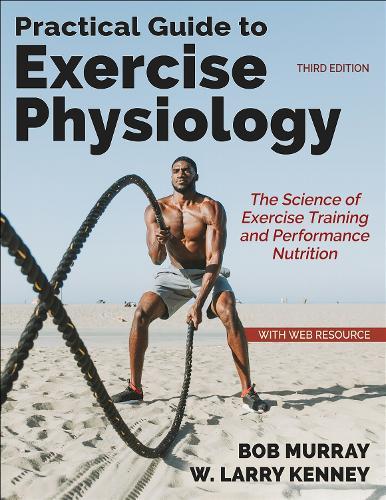
Practical Guide to Exercise Physiology: The Science of Exercise Training and Performance Nutrition

Author:   Robert Murray ,  W. Larry Kenney
Publisher:   Human Kinetics Publishers
Edition:   Third Edition
ISBN:  

9781718239630


Pages:   280
Publication Date:   15 April 2026
Format:   Paperback
Availability:   Not yet available   Availability explained
This item is yet to be released. You can pre-order this item and we will dispatch it to you upon its release.

Our Price $221.76 Quantity:  
Add to Cart

Share |

Practical Guide to Exercise Physiology: The Science of Exercise Training and Performance Nutrition


Overview

Full Product Details

Author:   Robert Murray ,  W. Larry Kenney
Publisher:   Human Kinetics Publishers
Imprint:   Human Kinetics
Edition:   Third Edition
ISBN:  

9781718239630


ISBN 10:   1718239637
Pages:   280
Publication Date:   15 April 2026
Audience:   College/higher education ,  Tertiary & Higher Education
Format:   Paperback
Publisher's Status:   Active
Availability:   Not yet available   Availability explained
This item is yet to be released. You can pre-order this item and we will dispatch it to you upon its release.

Table of Contents

Part I. Warming Up: Physiology 101 Chapter 1. Muscles Move Us How Do Muscles Work? How Do Muscles Adapt to Training? How Do Muscle Cells Grow Bigger, Get Stronger, and Develop More Endurance? Chapter 2. Food Really Is Fuel From Food to Energy How Do Nutrients Fuel Muscle? What About Vitamins and Minerals? Water Is a Nutrient Too Chapter 3. Muscles Run on Oxygen How Does Oxygen Get to Muscles? How Does Oxygen Use Relate to Metabolic Rate? How Does Training Help the Body Use More Oxygen? Oxygen Delivery and Performance Enhancement Chapter 4. Fatigue: What Is It Good For? What Causes Fatigue? What's the Difference Between Fatigue and Overtraining? What Role Does Fatigue Play in Adaptations to Training? Part II. The Science of Training Program Design Chapter 5. Personalizing Training Programs What Are the Basics of Training Program Design? What Makes an Effective Training Program? Training Terms Chapter 6. Training to Improve Muscle Strength and Muscle Mass How Do Strength and Mass Increase? What Is the Best Way to Gain Strength and Mass? What About Core Training? What's the Role of Nutrition in Developing Strength and Mass? Retraining and Retraining Chapter 7. Training for Weight Loss and Body Weight Control Weight Loss Is All About Energy Balance Why Do Many People Have Difficulty Losing Weight? What's the Best Way to Lose Fat but Protect Muscle Mass? Chapter 8. Training for Speed, Power, and Athleticism What Are Speed, Power, and Athleticism? What Adaptations Are Needed to Improve Speed, Power, and Athleticism? What Kinds of Training Improve Speed, Power, and Athleticism? Dietary Supplements for Speed, Power, and Athleticism Chapter 9. Training for Aerobic Endurance What Are the Main Adaptations to Aerobic Training? What's the Best Way to Improve Aerobic Endurance? Should Endurance Athletes Engage in Strength Training? Why Is Endurance Capacity Important for Sprinters and Team-Sport Athletes? Part III. Special Considerations Chapter 10. Adapting to Exercise in Heat, in the Cold, and at Altitude Overheating Impairs Performance Cold Stress Chills Performance Exercise at Altitude Chapter 11. Training Children and Adolescents Do Children Respond Differently to Exercise Training? Can Children Improve Strength With Training? What Are the Safe Limits for Training in Children? Chapter 12. Training Pregnant and Postpartum Women What Changes Occur in a Woman's Body During Pregnancy? What Are the Health Risks Associated With Exercise During Pregnancy? Should Women Exercise During Pregnancy? Chapter 13. Training Older Adults for Functional Fitness What Changes With Aging? How Can Exercise Training Benefit Older Adults? What Considerations Should Be Part of Training for Older Adults? Chapter 14. Training Masters Athletes How Does Age Affect Performance Capacity? Do Masters Athletes Respond Differently to Training and Detraining? How Do Masters Athletes Respond to Strength Training? Do Masters Athletes Require More Time for Recovery? Do Masters Athletes Have Special Nutrition Needs? Are Masters Athletes Prone to Heart Problems? Are Masters Athletes More Susceptible to Environmental Stress? Do Masters Athletes Require More Sleep?

Reviews

Author Information

Bob Murray, PhD, FACSM, was a cofounder of the Gatorade Sports Science Institute (GSSI) and served as its director from 1985 to 2008. Dr. Murray oversaw a comprehensive program of GSSI- and university-based research in exercise science and sport nutrition, setting industry standards and consumer expectations for science-based product efficacy. A native of Pittsburgh, Dr. Murray earned his BS and MEd degrees in physical education at Slippery Rock University. He was an assistant professor of physical education and head swimming coach at Oswego State University from 1974 to 1977 before earning his PhD in exercise physiology from Ohio State University. He was an assistant and associate professor in the department of kinesiology at Boise State University from 1980 to 1985 before relocating to Chicago to begin work with Gatorade. In 2008, Dr. Murray founded Sports Science Insights LLC, a consulting group that helps clients with projects in exercise science and sport nutrition. An author of numerous publications in scientific texts and journals, and an invited speaker at professional meetings worldwide, Dr. Murray is a fellow of the American College of Sports Medicine and an honorary member of the Academy of Nutrition and Dietetics. He and his wife, Linda, live in Crystal Lake, Illinois. W. Larry Kenney, PhD, FACSM, FAPS, is the Marie Underhill Noll Chair in Human Performance and a professor of physiology and kinesiology at Pennsylvania State University. Dr. Kenney was awarded the prestigious Faculty Scholar Medal by Pennsylvania State University for his research contributions. He has published more than 220 journal articles and dozens of book chapters on the topic of human responses to exercise, heat and cold stress, and dehydration as well as the biophysics of heat exchange between humans and the environment. He was continuously funded by National Institutes of Health (NIH) from 1986 through 2015, one of the longest-running R01 grants. Over the years, he has mentored 38 MS or PhD students along with 8 postdoctoral fellows and numerous undergraduate scholars. Dr. Kenney is the primary author of Physiology of Sport and Exercise, a best-selling textbook in exercise physiology. He served as president of the American College of Sports Medicine from 2003 to 2004 and received the Citation Award from that organization in 2008. He is also a fellow of the American Physiological Society and was presented with the Adolph Distinguished Lectureship Award by that organization in 2017. He is the former chair of the Gatorade Sports Science Institute and serves on many scientific advisory panels, including Nike's Science Advisory Board.

Tab Content 6

Author Website:  

Countries Available

All regions
Latest Reading Guide

MRG 26 2


Shopping Cart
Your cart is empty
Shopping cart
Mailing List