Overview
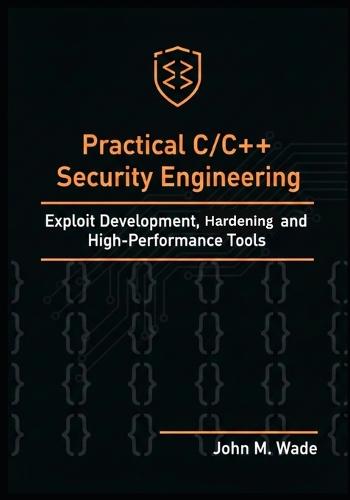
C and C++ are the indispensable backbone of high-performance and systems programming, powering everything from operating system kernels and embedded controllers to high-frequency trading platforms. This direct control over memory and hardware provides unrivaled efficiency, but it also introduces the security hazards of manual resource management and undefined behavior, making C/C++ code a prime target for exploits based on memory corruption. Mastering security in this landscape requires bridging low-level exploit development with robust, high-performance engineering practices. This book provides a complete, hands-on roadmap to mastering security in C and C++. It guides developers and security engineers through the entire lifecycle, from understanding the vulnerability primitives inherent in C/C++ (like buffer overflows and use-after-free) and crafting exploits to implementing modern, layered defenses. You will learn to use cutting-edge tools like AddressSanitizer and Control-Flow Integrity (CFI) while leveraging hardware features such as Pointer Authentication and Memory Tagging for near-zero-overhead protection. This comprehensive guide transforms performance-critical native code into a fortress. What's Inside The book is structured to move logically from attack fundamentals to advanced, automated defense: Exploit Fundamentals: Master the memory layout of stack and heap, craft simple buffer-overflow exploits, and understand advanced techniques like use-after-free and format-string bugs to bypass ASLR and DEP. Defense & Hardening: Implement secure coding practices using the RAII idiom, integrate static analyzers (Clang-Tidy, Cppcheck), and deploy runtime sanitizers (ASan, UBSan, LSan) to catch errors immediately. Build-Time Fortification: Apply powerful compiler and linker hardening flags, including Stack Canaries, PIE, full RELRO, and Control-Flow Integrity (CFI), demonstrating how to retrofit CFI into legacy codebases. Automation & Tooling: Leverage binary analysis (IDA Pro, Ghidra) and build coverage-guided fuzzers to find deep bugs at scale. Learn to generate minimal runtime patches and integrate security checks into CI/CD pipelines. Advanced Techniques: Discover how to design high-performance data structures and use multi-threading with asynchronous I/O for fast security utilities. Explore the future of security, including Machine Learning for discovery and hardware-based mitigations. Real-World Application: Dissect a modern kernel exploit and learn practical lessons from hardening an established open-source project. About the Reader This book is for developers, software engineers, and security analysts who work with C or C++ and are serious about building resilient, high-performance, and secure applications. Whether you are refactoring a sprawling legacy codebase or designing a new, performance-critical system (such as a multi-threaded network service or kernel module), you will gain the practical skills and mindset needed to achieve memory safety and control-flow integrity. A background in C/C++ and familiarity with the Linux environment is beneficial. Turn the page and begin planting the seeds of that future today. Transform your code from a liability into a highly resilient asset. Get your copy of Practical C/C++ Security Engineering now and build the fortress you need for a secure, resilient future.
Full Product Details
Author: John M Wade
Publisher: Independently Published
Imprint: Independently Published
Dimensions:
Width: 17.80cm
, Height: 0.60cm
, Length: 25.40cm
Weight: 0.213kg
ISBN: 9798276771274
Pages: 114
Publication Date: 30 November 2025
Audience:
General/trade
,
General
Format: Paperback
Publisher's Status: Active
Availability: Available To Order

We have confirmation that this item is in stock with the supplier. It will be ordered in for you and dispatched immediately.