Overview
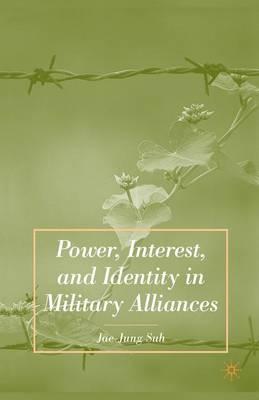
This book looks at U.S.-Korea relations and argues that military alliances depend upon a combination of power distribution, material assets, and identities. The author asserts that beyond being mere tools of power balancing, alliances are also impacted by material and institutional practices that constitute the identity of allies and adversaries.
Full Product Details
Author: J. Suh
Publisher: Palgrave Macmillan
Imprint: Palgrave Macmillan
Edition: 1st ed. 2007
Dimensions:
Width: 14.00cm
, Height: 1.60cm
, Length: 21.60cm
Weight: 0.454kg
ISBN: 9781349538188
ISBN 10: 1349538183
Pages: 286
Publication Date: 24 July 2007
Audience:
Professional and scholarly
,
Professional & Vocational
Format: Paperback
Publisher's Status: Active
Availability: Manufactured on demand

We will order this item for you from a manufactured on demand supplier.
Reviews
This book takes up what has been left by previous scholarship and makes original contributions to the current debate on the subject...Bridging case study and theory building and integrating diverse international relations theories, Power, Interest, and Identity in Military Alliances is an outstanding example of historical institutionalism applied to the field of international relations. The book is a welcome scholarly work, both for those who wish to learn about the U.S.-Korea security alliance and for those who engage in theoretical debates in international politics. - Youngshik D. Bong, The Journal of Asian Studies The theoretical sophistication of this book sets a new standard for all students of military alliances in general and of the US-Korea alliance in specific. Based on meticulous empirical research Suh's nuanced analysis develops a compelling case forthe political significance of alliances. Beyond the balance of power, alliance politics trigger processes that construct the identities of allies and adversaries. Suh's elegant analysis explains how and why. This important book is required reading for all scholars interested in national security and international relations theory. - Peter J. Katzenstein, Walter S. Carpenter, Jr. Professor of International Studies, Cornell University How does North Korea, a castaway from the wreckage of communism, with a ruined economy and a Lilliputian military budget in comparison to both the United States and South Korea, justify the persistence of the US-South Korean alliance? In this thoughtful and courageous book, J.J. Suh explains how habits of the mind and long-standing institutions lock us in, where worst-case scenarios often substitute for analyses of the enemy that remains as imagined as it is real. This is one of the most sophisticated and original accounts of the security dilemma in East Asia and it will make an important contribution to the way we think about military alliances in general. - Meredith Woo, Professor of Political Science, University of Michigan
This book takes up what has been left by previous scholarship and makes original contributions to the current debate on the subject. . .Bridging case study and theory building and integrating diverse international relations theories, Power, Interest, and Identity in Military Alliances is an outstanding example of historical institutionalism applied to the field of international relations. The book is a welcome scholarly work, both for those who wish to learn about the U.S.-Korea security alliance and for those who engage in theoretical debates in international politics. - Youngshik D. Bong, The Journal of Asian Studies The theoretical sophistication of this book sets a new standard for all students of military alliances in general and of the US-Korea alliance in specific. Based on meticulous empirical research Suh's nuanced analysis develops a compelling case forthe political significance of alliances. Beyond the balance of power, alliance politics trigger processes that construct the identities of allies and adversaries. Suh's elegant analysis explains how and why. This important book is required reading for all scholars interested in national security and international relations theory. - Peter J. Katzenstein, Walter S. Carpenter, Jr. Professor of International Studies, Cornell University How does North Korea, a castaway from the wreckage of communism, with a ruined economy and a Lilliputian military budget in comparison to both the United States and South Korea, justify the persistence of the US-South Korean alliance? In this thoughtful and courageous book, J.J. Suh explains how habits of the mind and long-standing institutions lock us in, where worst-case scenarios often substitute for analyses of the enemy that remains as imagined as it is real. This is one of the most sophisticated and original accounts of the security dilemma in East Asia and it will make an important contribution to the way we think about military alliances in general. - Meredith Woo, Professor of Political Science, University of Michigan
Author Information
JAE-JUNG SUH is Assistant Professor of Government, Cornell University, USA.