|
|
|||
|
||||
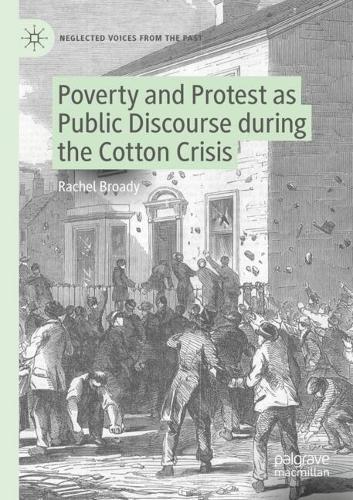
OverviewThis book constitutes the first book-length study of journalistic responses to poverty and protest during the Lancashire cotton crisis. The cotton crisis of 1861-1865 is a popular subject in history, culture and education. Workers’ voices are comprehensively studied in terms of newspapers publishing fiction and poetry, and the broader political response to the crisis, the American Civil War and British workers’ support of Lincoln’s Emancipation Proclamation. They are, though, overlooked in terms of journalistic representation of workers. Ironically, discussions of the cotton crisis, including where efforts are made to assess the workers’ experience, have consistently relied upon journalism as primary sources and the first witness of history without assessing the news copy’s political unconscious. This lack of attention is especially apparent when considering workers challenging poverty through dedicated protest. Amid the celebrated workers’ opposition to slavery, and their ‘sublime heroism’ as noted by American President Abraham Lincoln, there were less studied local struggles for financial help, for education, and for the vote. Full Product DetailsAuthor: Rachel BroadyPublisher: Springer International Publishing AG Imprint: Palgrave Macmillan ISBN: 9783031733086ISBN 10: 3031733088 Pages: 213 Publication Date: 17 December 2025 Audience: Professional and scholarly , Professional & Vocational Format: Paperback Publisher's Status: Active Availability: Manufactured on demand We will order this item for you from a manufactured on demand supplier. Table of Contents1. Introduction.- 2. The Political Unconscious.- 3. The Triumvirate.- 4. Cottonopolis, poverty and protest.- 5. The cotton workers and the American Civil War.- 6. Marx and Engels in Manchester.- 7. Poor Reporting: interpreting the triumvirate.- 8. Conclusion.ReviewsAuthor InformationRachel Broady is Lecturer at Liverpool John Moores University, UK. Tab Content 6Author Website:Countries AvailableAll regions |
||||