Overview
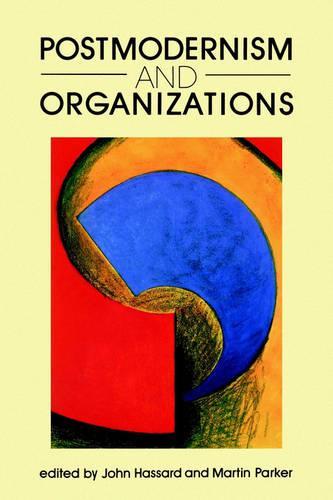
This text addresses the implications of postmodernist/poststructuralist ideas for organizational analysis. The first part of the book aims to provide a comprehensive introduction to postmodernist thinking in the context of organization studies. Contributors then examine a range of organizational themes from postmodernist perspectives including deconstructive organizational research, use of metaphor in organizational analysis, postmodern interpretations of motivation theory, and issues of gender and inequality in organizations. The last part of the book provides critical analysis as well as support for postmodernist organizational theory, asking whether it implies neglect of the central issues of power, control and change in a globalizing world. This text is suitable for academics and advanced students in organization theory, organizational behaviour, sociology and psychology.
Full Product Details
Author: John Hassard ,
Martin Parker
Publisher: SAGE Publications Inc
Imprint: SAGE Publications Inc
Dimensions:
Width: 15.60cm
, Height: 1.30cm
, Length: 23.40cm
Weight: 0.390kg
ISBN: 9780803988804
ISBN 10: 080398880
Pages: 256
Publication Date: 13 July 1993
Audience:
College/higher education
,
Professional and scholarly
,
Tertiary & Higher Education
,
Professional & Vocational
Format: Paperback
Publisher's Status: Active
Availability: Manufactured on demand

We will order this item for you from a manufactured on demand supplier.
Reviews
'I very much liked Dr Michael Reed's chapter on continuities and discontinuities, as well as Professor Paul Thompson on postmodernism as a 'fatal distraction', and Professor Gibson Burrell on the university in postmodern times' - Journal of General Management 'Most of the papers are written with an unusual degree of wit and good humour which gives the collection an aura of seriousness tempered by a feeling that, collectively, the authors do not take themselves - or postmodernism - too seriously. The result is a refreshing and considered commentary on the main subject matter... The first section of the book comprising contributions from those in the main well-disposed to the postmodernist enterprise is generally interesting and accessible... The ... paper by Gibson Burrell - 'Eco and the Bunnymen' - deserves special mention... because it is hysterically funny. Humour apart, Burrell offers a brief but penetrating analysis of the implications of postmodernist thought for an understanding of the search for universal 'truths' as mediated by the university and the academic 'community' more generally... can be warmly recommended for academics' bookshelves and as a useful text for students on specialist courses in organisational studies... the postmodernist's delight.' - Work, Employment and Society 'It carries with it the singular benefit of an enormously clear and accessible representation of the meaning of post-modernism (by Hassard), and an equally clear and convincing account of why post-modern theory is less compelling than post-modernists suppose (by Parker). As an edited collection, it is one of the most intelligible accounts of what a postmodern perspective on organisations might require' - Health and Social Care
'I very much liked Dr Michael Reed's chapter on continuities and discontinuities, as well as Professor Paul Thompson on postmodernism as a 'fatal distraction', and Professor Gibson Burrell on the university in postmodern times' - Journal of General Management 'Most of the papers are written with an unusual degree of wit and good humour which gives the collection an aura of seriousness tempered by a feeling that, collectively, the authors do not take themselves - or postmodernism - too seriously. The result is a refreshing and considered commentary on the main subject matter... The first section of the book comprising contributions from those in the main well-disposed to the postmodernist enterprise is generally interesting and accessible... The ... paper by Gibson Burrell - 'Eco and the Bunnymen' - deserves special mention... because it is hysterically funny. Humour apart, Burrell offers a brief but penetrating analysis of the implications of postmodernist thought for an understanding of the search for universal 'truths' as mediated by the university and the academic 'community' more generally... can be warmly recommended for academics' bookshelves and as a useful text for students on specialist courses in organisational studies... the postmodernist's delight.' - Work, Employment and Society 'It carries with it the singular benefit of an enormously clear and accessible representation of the meaning of post-modernism (by Hassard), and an equally clear and convincing account of why post-modern theory is less compelling than post-modernists suppose (by Parker). As an edited collection, it is one of the most intelligible accounts of what a postmodern perspective on organisations might require' - Health and Social Care
Author Information
Martin Parker is a Professor of Culture and Organization at the School of Management, Leicester University