Overview
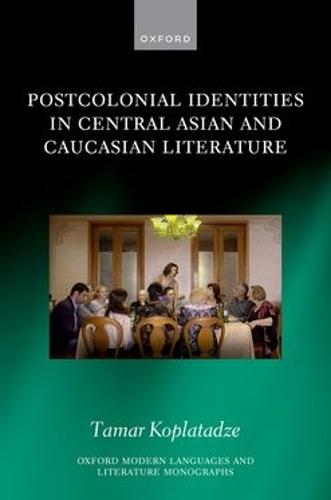
Decoloniality has emerged as one of the most prominent subjects of public and academic debates of our time, bringing to the fore the post-colonial perspectives of previously underrepresented groups. Interest is similarly growing around the countries of the Caucasus and Central Asia, which have been part of the Russian and Soviet empires, and are now defining their independent, post-Soviet, and decolonial identities. Following the dissolution of the Soviet Union, literature has become a key platform for exploring what it means to be post-Soviet, and the extent to which post-Soviet identity is a post-colonial one. It is at this point that this monograph intervenes as the first major study to examine post-Soviet literature from the Caucasus and Central Asia and to employ postcolonial theory as its methodology. Authors from Georgia, Armenia, Azerbaijan, Kazakhstan, Kyrgyzstan, Tajikistan, and Uzbekistan are placed in dialogue with each other to establish how they respond to the post-Soviet transition and negotiate their postcolonial identities in their fiction. These include Narine Abgaryan, Hamid Ismailov, Nana Ekvtimishvili, Mariam Petrosyan, Bibish, Lilya Kalaus, the SHTAB collective, and others. Building and expanding on the theoretical tools of postcolonial and decolonial studies, the enquiry covers four core topics: trauma, immigration, NGOs, and utopias. The author argues that post-colonial theory is crucial for understanding the current cultural developments in the Caucasus and Central Asia, whose literatures are in many respects postcolonial on the level of the writers' identity configurations and modes of representation.
Full Product Details
Author: Tamar Koplatadze (Associate Professor in Postsocialist Literature and Culture, Associate Professor in Postsocialist Literature and Culture, University of Oxford)
Publisher: Oxford University Press
Imprint: Oxford University Press
Dimensions:
Width: 16.00cm
, Height: 2.30cm
, Length: 24.00cm
Weight: 0.699kg
ISBN: 9780198974062
ISBN 10: 019897406
Pages: 336
Publication Date: 27 November 2025
Audience:
Professional and scholarly
,
Professional & Vocational
Format: Hardback
Publisher's Status: Active
Availability: To order

Stock availability from the supplier is unknown. We will order it for you and ship this item to you once it is received by us.
Author Information
Tamar Koplatadze is Associate Professor of Postsocialist Literature and Culture at the University of Oxford. She specialises in Postcolonial Studies and Russophone Literature and Culture. Dr Koplatadze is author of a number of articles, including the prize-winning 'Theorising Russian Postcolonial Studies'. Her research frequently features on non-academic platforms such as film festivals and the BBC.