Overview
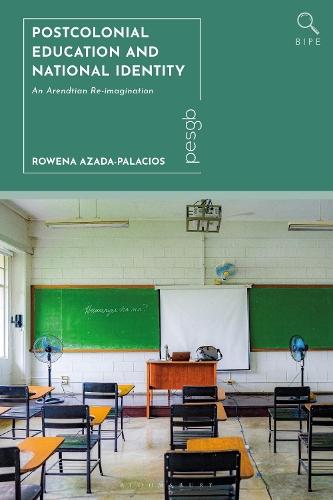
Winner of the Philosophy of Education Society of Australasia 2025 Book Award Recognizing the strategic role that national identities play in post-colonial struggles for justice, this book conceptualizes a new approach to teaching national identity that, following Hannah Arendt, emphasizes children’s ability to renew culture. The book uses the Philippine colonial experience as a case study, and includes a genealogy of Hannah Arendt’s concept of the ’social’, including an analysis of how she used this idea to explore the role that schools play within the political community. Azada-Palacios problematizes the way that national identity is valued as an educational goal in Philippine schools and the way that Philippine citizenship education continues to aspire towards a homogeneity of culture. Through an examination of colonial-era documents, she traces this characteristic of colonial history, and identifies this aspiration as an unreflective perpetuation of American colonial educational policy that has not been sufficiently criticized.
Full Product Details
Author: Rowena Azada-Palacios (Ateneo de Manila University, Philippines) ,
Paul Standish
Publisher: Bloomsbury Publishing PLC
Imprint: Bloomsbury Academic
Dimensions:
Width: 15.60cm
, Height: 2.50cm
, Length: 23.40cm
Weight: 0.454kg
ISBN: 9781350433342
ISBN 10: 1350433349
Pages: 200
Publication Date: 25 June 2026
Audience:
Professional and scholarly
,
College/higher education
,
Professional & Vocational
,
Postgraduate, Research & Scholarly
Format: Paperback
Publisher's Status: Forthcoming
Availability: Manufactured on demand

Reviews
""Drawing on a rigorous and incisive reading of Hannah Arendt's political and educational thought, this book advances fresh and significant insights into important questions of postcolonial education and national identity."" --Wayne Veck, University of Winchester, UK ""This valuable book elegantly and critically engages with Hannah Arendt's political theory and provides a most innovative discussion of national identities, cosmopolitan thought and post-colonial spatiality. It pertinently revisits the cultivation of political belonging in a specific context and helps us rethink citizenship education beyond Eurocentric sensibilities and hegemonies."" --Marianna Papastephanou, University of Cyprus, Cyprus
Drawing on a rigorous and incisive reading of Hannah Arendt’s political and educational thought, this book advances fresh and significant insights into important questions of postcolonial education and national identity. -- Wayne Veck, University of Winchester, UK This valuable book elegantly and critically engages with Hannah Arendt’s political theory and provides a most innovative discussion of national identities, cosmopolitan thought and post-colonial spatiality. It pertinently revisits the cultivation of political belonging in a specific context and helps us rethink citizenship education beyond Eurocentric sensibilities and hegemonies. -- Marianna Papastephanou, University of Cyprus, Cyprus
Author Information
Rowena Azada-Palacios is Assistant Professor in Philosophy at Ateneo de Manila University, Philippines.