Overview
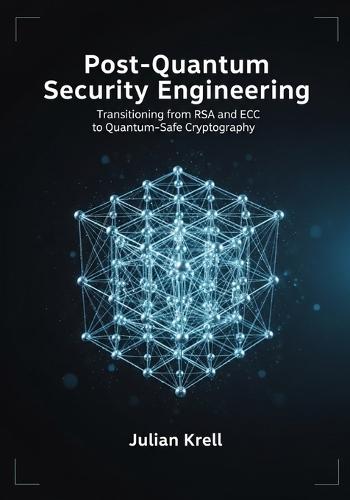
Most books about cryptography quietly assume you still have time. This one doesn't. We are entering a moment where the mathematical foundations behind digital trust-RSA and ECC-are no longer safe assumptions, but time-limited dependencies. Every secure connection you make today, every encrypted message, every signed update, every ""trusted"" identity in your systems is built on structures that are already being actively targeted through harvested data and future quantum capability. Post-Quantum Security Engineering is not a theoretical exploration of quantum computing. It is a systems-level confrontation with what happens when the assumptions behind modern security stop holding in production environments. This book takes you inside the actual engineering reality of that transition-where security is not an abstract property, but a moving constraint shaped by performance limits, protocol fragility, infrastructure debt, and migration risk. You will see why increasing key sizes is no longer a strategy, why classical cryptography fails in ways that are silent before they are catastrophic, and why ""secure"" systems today may already be compromised in ways that will only become visible years from now. You will learn how post-quantum cryptography actually behaves under deployment pressure-not in research papers, but in real systems: TLS handshakes, VPN tunnels, firmware signing chains, cloud identity systems, and embedded devices that cannot simply be ""updated."" But more importantly, this is not a book about fear. It is about inevitability and design response. Because the real question is no longer whether quantum computing will break current cryptography, but whether your systems will survive the transition without collapsing under their own assumptions. Inside, you will find a structured breakdown of: Why RSA and ECC fail in fundamentally irreversible ways under quantum models How Harvest-Now-Decrypt-Later already changes the meaning of ""secure communication"" What post-quantum algorithms actually look like when deployed under real network and compute constraints Why hybrid cryptography is not optional, but transitional infrastructure How system design must shift from static security to cryptographic agility as a core architectural principle This is the reality most systems have not been built for yet. And the uncomfortable truth is this: If your infrastructure still assumes cryptography is permanent, it is already behind. Post-Quantum Security Engineering is a guide for engineers, architects, and decision-makers who will not get the luxury of waiting for the transition to become obvious before acting on it.
Full Product Details
Author: Julian Krell
Publisher: Independently Published
Imprint: Independently Published
Dimensions:
Width: 17.80cm
, Height: 1.10cm
, Length: 25.40cm
Weight: 0.376kg
ISBN: 9798259247147
Pages: 212
Publication Date: 28 April 2026
Audience:
General/trade
,
General
Format: Paperback
Publisher's Status: Active
Availability: Available To Order

We have confirmation that this item is in stock with the supplier. It will be ordered in for you and dispatched immediately.