Overview
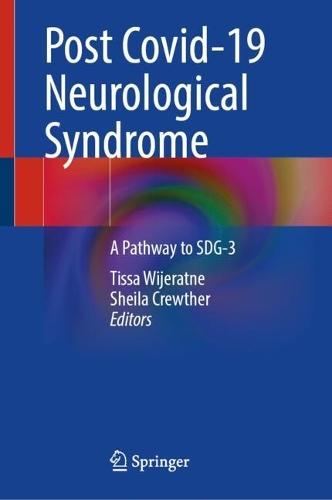
This book represents a groundbreaking contribution to the field of neurology, addressing a critical gap in our understanding of the long-term neurological effects of Covid-19. Crafted by frontline researchers, it offers invaluable insights into Post Covid-19 Neurological Syndrome (PCNS), a condition first described by the Editors themselves in 2020. Through a comprehensive synthesis, this volume explores PCNS in the context of the sustainable development goals and the 2030 agenda, providing an up-to-date overview across the spectrum of this syndrome. Comprising both general chapters delving into the pathobiological mechanisms of PCNS, the intricate relationship between Covid-19 infection and brain involvement, as well as a review of current research and barriers to accessing care, this book offers a holistic understanding of the subject matter. Furthermore, it addresses potential therapeutic options and contemporary issues within the framework of the WHO intersectoral global action plan (IGAP) and SDG-3, offering a global perspective on tackling this pressing issue. Neurologists worldwide will benefit greatly from the insights presented in this book, providing them with essential knowledge for diagnosing and treating cases of PCNS, particularly in situations where clinical experience with the condition may be limited. Additionally, international organizations, policymakers, and non-governmental organizations engaged in health and Covid-19 pandemic response efforts will find this resource invaluable. Anticipated to become an indispensable addition to neurological department libraries, this book will serve as a fundamental textbook for teaching neurology. Its profound exploration of the impact of Covid-19 on brain health ensures its relevance for generations to come, solidifying its place as a cornerstone in advancing our understanding and management of neurological sequelae associated with the pandemic.
Full Product Details
Author: Tissa Wijeratne ,
Sheila Crewther
Publisher: Springer Nature Switzerland AG
Imprint: Springer Nature Switzerland AG
ISBN: 9783032149947
ISBN 10: 3032149940
Pages: 197
Publication Date: 12 February 2026
Audience:
Professional and scholarly
,
Professional & Vocational
Format: Hardback
Publisher's Status: Active
Availability: Not yet available

This item is yet to be released. You can pre-order this item and we will dispatch it to you upon its release.
Author Information
Professor Tissa Wijeratne OAM MD PhD FRACP is an internationally recognised neurologist and a global leader in brain health. He is an elected Trustee of the World Federation of Neurology (WFN) and the Global Chair for Headache and Migraine for the World Federation for Neurorehabilitation (WFNR). As Co-Founder and Co-Chair of World Brain Day, his advocacy has reached more than one billion people worldwide. A highly influential clinician-scientist, Professor Wijeratne is the highest-cited clinical researcher in Australia in the field of COVID-19 and the Brain, and was recognised as the Field Leader in Neurology, Australia (2025). He has published more than 350 works, with over 150,000 citations and an h-index of 88, placing him among the world’s most impactful neurologists. Professor Wijeratne has mentored 52 PhD students and continues to supervise doctoral candidates across three continents. He has trained more than 450 physicians and over 50 neurologists, contributing substantially to global neurology education. He also co-led the GBD2021 Migraine Study, published in Cell Reports (2025), and remains a key figure driving international progress in post-COVID neurological syndromes, migraine, neuroinflammation, and systems-based brain health. Prof. Sheila Gillard Crewther embarked on her academic journey at Melbourne University, pursuing a double major in Zoology and Psychology, subsequently achieving Honors and a Master of Science in Pharmacology and Comparative Physiology under the mentorship of Professor G. Burnstock. Her academic pursuits led her to complete a PhD in Behavioral and Molecular Neuroscience at Caltech, under the guidance of Nobel Prize Winner Professor Roger Sperry. Currently, Prof. Crewther leads a dynamic, multidisciplinary laboratory dedicated to exploring behavioral, cognitive, and molecular aspects of neuroscience, particularly focusing on the impact of environmental factors on vision, as well as neurodevelopmental and neurodegenerative anomalies in both humans and animal models. With a prolific publication record boasting over 400 peer-reviewed articles, accumulating more than 40,000 citations, she has established herself as a leading authority in her field. Prof. Crewther's professional qualifications extend to Neuropsychology, Optometry, and Education. Her expertise has been instrumental in various initiatives, including leading the 2003 Victorian Government Department of Human Services Review of Autism Services for 0-6 years and securing funding for Autism Services in 2009. Moreover, her research laid the foundation for Optometry Australia's ongoing Children's Vision Campaign. Recently, she has revisited her early interest in the molecular mechanisms underlying environmentally driven vision and brain disorders, focusing on both young and older individuals. Over the years, she has supervised approximately 50 PhD students, many of whom now hold prominent academic and research positions both nationally and internationally, with an additional 6 graduates in 2021 alone. The overarching goal of Prof. Crewther's research is to gain deeper insights into neurodevelopmental anomalies, including dyslexia and Autism Spectrum Disorder (ASD), as well as myopia, amblyopia, and neurological disorders such as stroke, Parkinson's Disease, Migraine, and Post-COVID Neurological Syndrome, a term she coined with Prof. Tissa Wijeratne. Through her work, Prof. Crewther aims to contribute to the development of improved therapeutic and behavioral management strategies for these conditions, ultimately enhancing the quality of life for affected individuals.