Overview
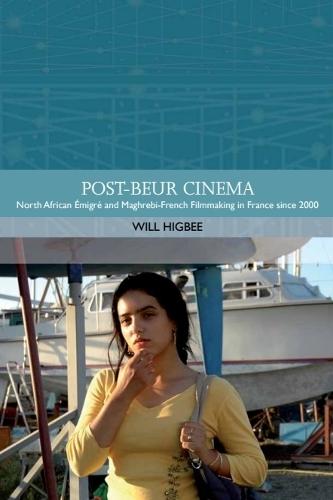
Since the early 1980s and the arrival of Beur cinema filmmakers of Maghrebi origin have made a key contribution French cinema's representation of issues such as immigration, integration and national identity. However, they have done so mostly from a position on the margins of the industry. In contrast, since the early 2000s, Maghrebi-French and North African emigre filmmakers have occupied an increasingly prominent position on both sides of the camera, announcing their presence on French screens in a wider range of genres and styles than ever before. This greater visibility and move to the mainstream has not, however, automatically meant that these films have lost any of the social or political relevance. Indeed in the 2000s many of these films have increasingly questioned the boundaries between national, transnational and diasporic cinema, whilst simultaneously demanding, either implicitly or explicitly, a reconsideration of the very difference that has traditionally been seen as a barrier to the successful integration of North African immigrants and their descendants into French society. Through a detailed study of this transformative decade for Maghrebi-French and North African emigre filmmaking in France, this book argues for the emergence of a 'Post-Beur' cinema in the 2000s that is simultaneously global and local in its outlook. Its key features include: Acomprehensive overview of the key developments in Maghrebi-French and North African emigre filmmaking in France since the 2000s: counter-heritage cinema and the memorialisation of France's colonial past; journey narratives and the myth of return; the 'mainstreaming' of Maghrebi-French directors and stars; representations of Islam.Detailed case studies of key films from the 2000s that have yet to receive scholarly attention, such as Hors-la-loi, Dernier maquis and Venus noire.An in-depth analysis of trends in production, distribution and exhibition as they relate to Maghrebi-French and North African emigre filmmakers in the 2000s.An absorbing introduction to this recent cinematic tradition, Post-Beur Cinema is essential reading for students and scholars in Film Studies, French Studies and Diaspora Studies.
Full Product Details
Author: Will Higbee (Professor of Film Studies, University of Exeter)
Publisher: Edinburgh University Press
Imprint: Edinburgh University Press
Dimensions:
Width: 15.60cm
, Height: 2.00cm
, Length: 23.40cm
Weight: 0.466kg
ISBN: 9780748640041
ISBN 10: 0748640045
Pages: 288
Publication Date: 22 July 2013
Audience:
Professional and scholarly
,
Professional & Vocational
,
Postgraduate, Research & Scholarly
Format: Hardback
Publisher's Status: Active
Availability: Temporarily unavailable

The supplier advises that this item is temporarily unavailable. It will be ordered for you and placed on backorder. Once it does come back in stock, we will ship it out to you.
Reviews
This is a major study of one of the most exciting and vital areas of contemporary French cinema. Will Higbee has excellent knowledge of Maghrebi-French and North African emigre filmmaking and proves a reliable and enlightening guide. - James S. Williams, French Studies
Author Information
Will Higbee is a Professor of Film Studies at the University of Exeter. He has published widely on cinemas of the Maghreb and their diasporas, as well as questions of national and transnational cinema. He is the author of Post-Beur Cinema (2013) and co-editor of De-Westernizing Film Studies (2012).