Overview
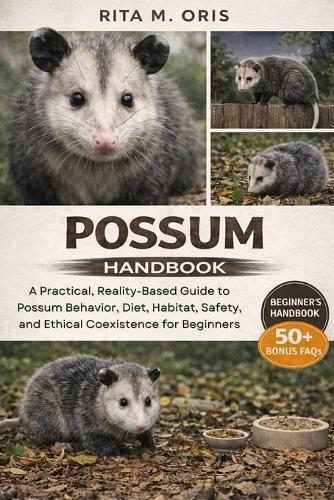
INTRODUCTION Meet the Possum A possum is one of those animals that people think they understand-until they actually spend time learning what it is, how it lives, and why it behaves the way it does. ""Possum"" is often used casually to describe any small, night-active, tree-climbing animal with a pointy face and a quiet, watchful look. But the truth is more interesting: possums are specialized survivors built for a life that happens mostly after dark, in branches, roof spaces, hollow logs, and the hidden edges of everyday neighborhoods. They are not pets in the simple sense. They are not ""friendly wildlife"" in the way some people imagine. And they are not disposable nuisances either. A possum is a whole living system-instinct, muscle, balance, fear, curiosity, hunger, and caution-packaged into a creature that has learned how to thrive around danger. When you meet a possum-whether you see one in the wild, hear it on a roof, spot it in a tree at night, or rescue one that has been injured-the first thing to understand is that you are meeting an animal shaped by nighttime pressure. Their world is a world of shadow movement, sudden sounds, quick escapes, and careful decision-making. A possum's daily life is organized around safety first. That doesn't mean they are timid in every moment. It means their courage is situational. They can look calm and slow until the instant they decide you are too close, and then their whole body becomes speed, grip, and escape. If they can climb, they climb. If they can freeze and blend, they freeze. If they feel trapped, they may defend themselves with startling intensity. This is not ""bad behavior."" It is a rule set that has kept possums alive through thousands of nights of predators, hunger, cold, and competition. What a possum really is Possums are marsupials, which means they are not rodents, not primates, and not ""just another small mammal."" Their reproductive strategy is different, and it affects everything about the early life of their young. Marsupials give birth to very underdeveloped babies, and those babies complete crucial growth while close to the mother, in a pouch or attached to a teat depending on the species. This isn't just a fun fact-it explains why possums are deeply tuned to nesting spaces and why mothers can be extremely defensive if disturbed. It also explains why orphaned or displaced young require very specific care and why ""guessing"" with feeding or warmth can lead to silent failure. Also, possums are strongly adapted to living in trees or in environments that allow climbing. Their bodies are built for gripping and navigating uneven, vertical spaces. Their feet, claws, and limb structure are not designed for long, fast running across open ground the way a rabbit or dog might. Their strength is in climbing, holding, balancing, and moving with quiet precision. How possums fit into the world around them A possum is not only an individual animal; it is also part of a local ecosystem. In many places, possums act as nighttime recyclers. They eat a wide range of natural foods depending on what is available: plant matter, fruits, flowers, leaves, and sometimes insects and other small items. Their diet flexibility is one reason they can survive near people. They learn routes. They remember where food appears. They adapt to seasons and weather. This is why a possum can seem ""mysteriously present"" in a neighborhood for months-because it has mapped the area like a living GPS, moving between safe tree lines, fences, rooftops, and hiding cavities. But this adaptability creates misunderstandings. People see a possum eating something in a yard and assume it is ""stealing,"" ""raiding,"" or ""being aggressive."" Most of the time it's doing what it has evolved to do: take opportunities while staying alive. It's not plotting. It's not being ""mean."" It's responding to accessible calories, scent cues, and learned pathways.
Full Product Details
Author: Rita M Oris
Publisher: Independently Published
Imprint: Independently Published
Dimensions:
Width: 15.20cm
, Height: 1.00cm
, Length: 22.90cm
Weight: 0.268kg
ISBN: 9798245265964
Pages: 194
Publication Date: 23 January 2026
Audience:
General/trade
,
General
Format: Paperback
Publisher's Status: Active
Availability: Available To Order

We have confirmation that this item is in stock with the supplier. It will be ordered in for you and dispatched immediately.