Overview
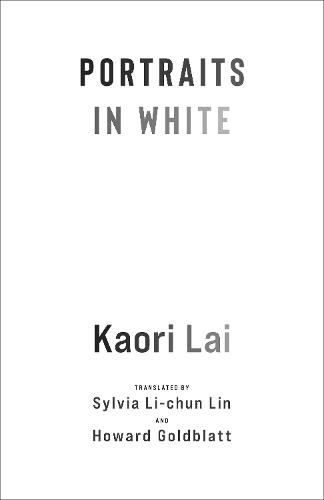
After the Chinese Civil War, the Kuomintang imposed authoritarian rule on Taiwan in the name of anticommunism. The White Terror, as martial law and state repression were known, would last for decades, casting a pall of uncertainty and fear over Taiwanese society¯and its legacies still haunt Taiwan today. Kaori Lai's Portraits in White explores everyday life under the White Terror, illuminating how the violence of martial law pervades even the most mundane moments. The book is composed of three novellas, each telling the story of an ordinary person. Mr. Ch'ing-chih, a schoolteacher, keeps his head down and avoids harming others despite pressure to do intelligence work. Ms. Wen-hui, an old woman who had served as a housekeeper for elites of different backgrounds since the Japanese occupation, faces death alone in the digital age. Ms. Casey, discriminated against for not being of mainlander descent, moves to Europe and must navigate the politics of diaspora. Even if only alluded to obliquely, the White Terror always hovers in the background, shaping the characters' experiences and inner worlds. Elegantly written and keenly observed, Portraits in White provides a panoramic view of the ways authoritarianism seeps into daily life.
Full Product Details
Author: Kaori Lai ,
James Lin ,
Sylvia Lin, Ph.D. ,
Howard Goldblatt
Publisher: Columbia University Press
Imprint: Columbia University Press
ISBN: 9780231220101
ISBN 10: 0231220103
Pages: 272
Publication Date: 05 August 2025
Audience:
General/trade
,
General
Format: Paperback
Publisher's Status: Active
Availability: Available To Order

We have confirmation that this item is in stock with the supplier. It will be ordered in for you and dispatched immediately.
Language: Chinese
Reviews
Kaori Lai's intimate portraits of ""ordinary"" people, set against the backdrop of Taiwan’s ever-evolving political landscape, tackle a profound project: assembling a cohesive understanding of Taiwan’s past for a generation whose stories were lost to the erasure of authoritarianism. Elegant and moving, Portraits in White feels more timely than ever. -- Shawna Yang Ryan, author of <i>Green Island: A Novel</i> Through three novellas, Portraits in White pieces together quiet details from “ordinary” lives to illustrate a tumultuous and extraordinary era. Kaori Lai’s characters are not gunned down in the streets or imprisoned in labor camps, but by merely trying to map out family life and sustainable careers, they find themselves grazing the red lines of White Terror again and again. A schoolteacher unwittingly recruited into the military; a housekeeper drifting from Japanese to Chinese to Taiwanese employers; a scholar who cannot escape Taiwan’s censors whether in Paris or Berlin: politics, Lai shows us, permeates even the lives of the apolitical. Sylvia Li-Chun Lin and Howard Goldblatt maintain the linguistic complexity of the original, which interweaves Mandarin, Taiwanese, Japanese, English, French, and German, presenting a timely and rare opportunity for English-language readers to consider everyday life under authoritarianism. -- Lin King, translator of Yang Shuang-zi's <i>Taiwan Travelogue</i> Portraits in White can still be read as three interesting stories of people reaching the end of their lives and wondering if the decisions they took were the right ones. * Tony's Reading List *
Kaori Lai's intimate portraits of ""ordinary"" people, set against the backdrop of Taiwan’s ever-evolving political landscape, tackle a profound project: assembling a cohesive understanding of Taiwan’s past for a generation whose stories were lost to the erasure of authoritarianism. Elegant and moving, Portraits in White feels more timely than ever. -- Shawna Yang Ryan, author of <i>Green Island: A Novel</i> Through three novellas, Portraits in White pieces together quiet details from “ordinary” lives to illustrate a tumultuous and extraordinary era. Kaori Lai’s characters are not gunned down in the streets or imprisoned in labor camps, but by merely trying to map out family life and sustainable careers, they find themselves grazing the red lines of White Terror again and again. A schoolteacher unwittingly recruited into the military; a housekeeper drifting from Japanese to Chinese to Taiwanese employers; a scholar who cannot escape Taiwan’s censors whether in Paris or Berlin: politics, Lai shows us, permeates even the lives of the apolitical. Sylvia Li-Chun Lin and Howard Goldblatt maintain the linguistic complexity of the original, which interweaves Mandarin, Taiwanese, Japanese, English, French, and German, presenting a timely and rare opportunity for English-language readers to consider everyday life under authoritarianism. -- Lin King, translator of Yang Shuang-zi's <i>Taiwan Travelogue</i>
Author Information
Kaori Lai is an acclaimed Taiwanese writer, now based in Berlin, who has received numerous honors including the Taiwan Literature Award and the Taipei International Book Exhibition Prize. Her previous works include the novel Afterwards, the short story collection Island, and essays on Taiwanese history and culture. Sylvia Li-chun Lin is a former professor at the University of Notre Dame and the author of Representing Atrocity in Taiwan: The 2/28 Incident and White Terror in Fiction and Film (Columbia, 2007). Howard Goldblatt is the translator of more than sixty works in Chinese, including the novels of Nobel laureate Mo Yan, for which he received a Guggenheim Fellowship. Lin and Goldblatt have collaboratively translated nearly two dozen books by writers from China and Taiwan, including Notes of a Desolate Man by Chu T’ien-wen (Columbia, 1999).