Overview
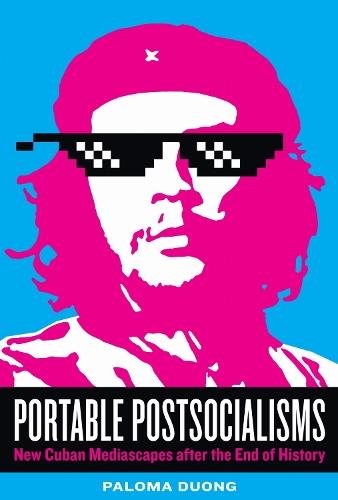
A study of Cuban culture and media in the twenty-first century as both a global phenomenon and a local reality, at a time when the declared death of socialism coexists in tension with emerging anticapitalist movements worldwide. Why does Cuban socialism endure as an object of international political desire, while images of capitalist markets consume Cuba's national imagination? This bold new study argues that Cuba's changing media cultures are key to our understanding of the global postsocialist condition and its competing political imaginaries. Portable Postsocialisms calls on a vast multimedia archive to offer a groundbreaking cultural interpretation of Cuban postsocialism. Paloma Duong examines songs, artworks, advertisements, memes, literature, jokes, and networks that refuse exceptionalist and exoticizing visions of Cuba. Expanding postsocialist critical theory to read this complex mediascape, Duong argues that a materialist critique of Cuba's revolutionary legacy must account for Cubans' everyday demands for agency and self-representation. This long overdue reassessment of Cuba's place in Latin American and post-Marxist studies shows Cuban postsocialism to be an urgent and indispensable referent for core debates on the politics of participatory cultures in new media studies. Portable Postsocialisms performs the crucial task of redefining how we envision imaginaries of social change in Latin America and the Caribbean.
Full Product Details
Author: Paloma Duong
Publisher: University of Texas Press
Imprint: University of Texas Press
Dimensions:
Width: 15.20cm
, Height: 3.00cm
, Length: 22.90cm
Weight: 0.567kg
ISBN: 9781477328262
ISBN 10: 1477328262
Pages: 296
Publication Date: 02 January 2024
Audience:
Professional and scholarly
,
Professional & Vocational
Format: Hardback
Publisher's Status: Active
Availability: To order

Stock availability from the supplier is unknown. We will order it for you and ship this item to you once it is received by us.
Reviews
[Duong] critically explores the Cuban people’s experience and relationship to socialism and anti-capitalism through the lens of mediascapes...paying close attention to change and continuity. * CHOICE *
[Duong] critically explores the Cuban people’s experience and relationship to socialism and anti-capitalism through the lens of mediascapes...paying close attention to change and continuity. * CHOICE * Duong offers reprieve for Cuba’s overdetermined position by pointing to how Cubans have engaged with digital media to narrate themselves as postsocialist subjects within the capitalist condition of the world. As such, Duong’s book offers rich conceptual analysis from which to build. * Popular Culture Studies Journal * An informed cultural critique spiced with considerable theoretical flavour that has much to commend it. * Latin American Review of Books *
Author Information
Paloma Duong is an associate professor of Latin American and studies in the Comparative Media Studies/Writing Program at MIT.