|
|
|||
|
||||
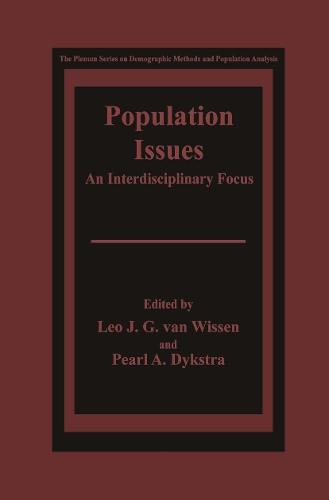
OverviewFull Product DetailsAuthor: Leo J.G. van Wissen , Pearl A. DykstraPublisher: Springer Imprint: Springer Edition: Softcover reprint of the original 1st ed. 1999 Dimensions: Width: 15.50cm , Height: 1.60cm , Length: 23.50cm Weight: 0.474kg ISBN: 9789401058858ISBN 10: 9401058857 Pages: 287 Publication Date: 27 September 2012 Audience: Professional and scholarly , Professional & Vocational Format: Paperback Publisher's Status: Active Availability: Manufactured on demand We will order this item for you from a manufactured on demand supplier. Table of Contents1. Introduction: The Life Course Approach as an Interdisciplinary Framework for Population Studies.- 1.1. Demography as an “Object” Science.- 1.2. The Life Course Approach.- 1.3. Overview of Chapters.- 2. The Life Course: Models and Analysis.- 2.1. Introduction.- 2.2. The Life Course: A Paradigm Shift.- 2.3. Anatomy of the Life Course.- 2.4. Life Histories Analysis: Variables, Data and Models.- 2.5. Conclusion.- 3. From Youth to Adulthood: Understanding Changing Patterns of Family Formation from a Life Course Perspective.- 3.1. Introduction.- 3.2. Changes in Family-Life Transitions: The Dutch Case.- 3.3. Major Recent Developments in Studies on the Transition from Youth to Adulthood.- 3.4. Societal Changes Influencing the Transition from Youth to Adulthood.- 3.5. Dynamic Studies of the Individual-Level Determinants of Family-Life Decisions.- 3.6. Opening the “Black Box”: Studies on Individual Decision-Making Process.- 3.7. Features of the Future: How Will Studies on the Transition from Youth to Adulthood Evolve?.- 4. Households, Families, and Kin Networks.- 4.1. Introduction.- 4.2. Changing Household and Family Structures in Present-Day Europe.- 4.3. Young Families and the Aging of Fertility.- 4.4. Changing Kin Networks.- 4.5. Social Networks of the Elderly.- 4.6. Conclusion.- 5. Work, Savings, and Social Security in a Life Course Perspective.- 5.1. Introduction.- 5.2. Transitions in the Labor Market.- 5.3. Savings over the Course of a Life Time.- 5.4. Social Security over the Source of a Life Time.- 5.5. Sustainability of Social Security.- 5.6. Conclusions.- 6. Residential Relocations in the Life Course.- 6.1. Introduction.- 6.2. A Life Course Theory of Residential Relocations.- 6.3. Processes Underlying the Decision to Move.- 6.4. Who Moves Under WhichCircumstances.- 6.5. Household Formation: Leaving the Parental Home.- 6.6. Residential Environments.- 6.7. Renting and Owning.- 6.8. The Consequences of Migration for Labor Market Careers.- 6.9. Conclusion.- 7. Medical Demography in the Netherlands: Recent Advances, Future Challenges.- 7.1. Introduction.- 7.2. Challenges for Medical Demography.- 7.3. Studies on Past Trends in Mortality.- 7.4. Studies on Mortality Differentials Between Population Groups.- 7.5. Studies on Future Trends in Mortality.- 7.6. Studies on Future Trends in Morbidity.- 7.7. Studies on Consequences for Health Care Demand, Costs and Financing.- 7.8. Policy Relevance.- 7.9. Challenges to Future Research.- 8. Advances in the Microsimulation of Demographic Behavior.- 8.1. Introduction.- 8.2. Theory: Micro Biographies and Macro Structures.- 8.3. Microsimulation Methodology.- 8.4. State of the Art: Microsimulation Models in the Priority Program.- 8.5. Conclusion.- 9. Epilogue: New Directions in Population Studies.- 9.1. Introduction.- 9.2. Accomplishments and Challenges.- 9.3. The Life Course: A Useful Interdisciplinary Framework.ReviewsAuthor InformationTab Content 6Author Website:Countries AvailableAll regions |
||||