Overview
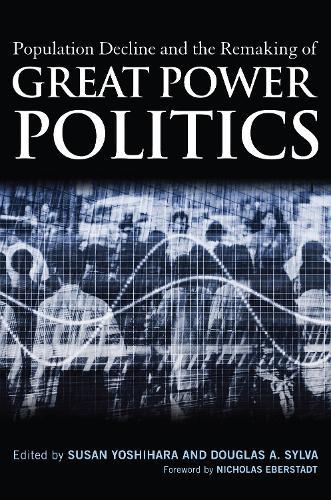
Remarkably, most conventional wisdom about the shifting balance of world power virtually ignores one of the most fundamental components of power: population. The studies that do consider international security and demographic trends almost unanimously focus on population growth as a liability. In contrast, the distinguished contributors to this volume-security experts from the Naval War College, the American Enterprise Institute, and other think tanks-contend that demographic decline in key world powers now poses a profound challenge to global stability. The countries at greatest risk are in the developed world, where birthrates are falling and populations are aging. Many have already lost significant human capital, capital that would have helped them innovate and fuel their economy, man their armed forces, and secure a place at the table of world power. By examining the effects of diverging population trends between the United States and Europe and the effects of rapid population aging in Japan, India, and China, this book uncovers increasing tensions within the transatlantic alliance and destabilizing trends in Asian security. Thus, it argues, relative demographic decline may well make the world less, and not more, secure.
Full Product Details
Author: Susan Yoshihara ,
Douglas A. Sylva ,
Nicholas Eberstadt
Publisher: Potomac Books Inc
Imprint: Potomac Books Inc
Dimensions:
Width: 15.00cm
, Height: 2.80cm
, Length: 23.00cm
Weight: 0.581kg
ISBN: 9781597975506
ISBN 10: 1597975508
Pages: 304
Publication Date: 01 December 2011
Audience:
Professional and scholarly
,
College/higher education
,
Professional & Vocational
,
Postgraduate, Research & Scholarly
Format: Hardback
Publisher's Status: Active
Availability: Awaiting stock

The supplier is currently out of stock of this item. It will be ordered for you and placed on backorder. Once it does come back in stock, we will ship it out for you.
Reviews
We live in an era of many challenges. But few are as certain as global aging and few are likely to have as large and enduring an impact on the shape of the world order. Planning national security strategy without regard for the implications of demographic change is like setting sail without a map or a compass. The essays in this volume offer a wealth of insightful analysis that will help those navigating tomorrow s turbulent geopolitical waters to steer a safer and surer course.
-We live in an era of many challenges. But few are as certain as global aging--and few are likely to have as large and enduring an impact on the shape of the world order. Planning national security strategy without regard for the implications of demographic change is like setting sail without a map or a compass. The essays in this volume offer a wealth of insightful analysis that will help those navigating tomorrow's turbulent geopolitical waters to steer a safer and surer course.---Richard Jackson, senior fellow, Center for Strategic and International Studies, and coauthor of The Graying of the Great Powers: Demography and Geopolitics in the 21st Century--Richard Jackson
Demography isn't destiny. But demography is important, and its implications are often surprising. The essays in this book avoid the twin traps of fatalism or wishful thinking. At once remarkably informative and intellectually challenging, they force us to confront realities one might prefer to avoid but also invite us to think in imaginative ways about how to deal with global aging and population decline. --William Kristol, editor, Weekly Standard--William Kristol The authors of Population Decline and the Remaking of Great Power Politics shine a bright light upon a tremendously important but underexamined aspect of international security, demonstrating the powerful influence of demography on the development of the strategic environment. --Thomas G. Mahnken, Jerome E. Levy Chair in Economic Geography and National Security, U.S. Naval War College--Thomas G. Mahnken We live in an era of many challenges. But few are as certain as global aging--and few are likely to have as large and enduring an impact on the shape of the world order. Planning national security strategy without regard for the implications of demographic change is like setting sail without a map or a compass. The essays in this volume offer a wealth of insightful analysis that will help those navigating tomorrow's turbulent geopolitical waters to steer a safer and surer course. --Richard Jackson, senior fellow, Center for Strategic and International Studies, and coauthor of The Graying of the Great Powers: Demography and Geopolitics in the 21st Century--Richard Jackson Great Power Politics is a book that keeps strong ethical principles in mind while analyzing the real-world demographic problems of great powers. --Joseph Meaney, National Catholic Bioethics Quarterly--Joseph Meaney National Catholic Bioethics Quarterly
Author Information
Susan Yoshihara is director of the International Organizations Research Group and senior vice president for research at the Catholic Family and Human Rights Institute. She is the author of Waging War to Make Peace: U.S. Intervention in Global Conflicts (2010), and her work has appeared in numerous periodicals. She received her PhD in international relations from the Fletcher School of Law and Diplomacy, Tufts University. She lives in Portsmouth, Rhode Island.