Overview
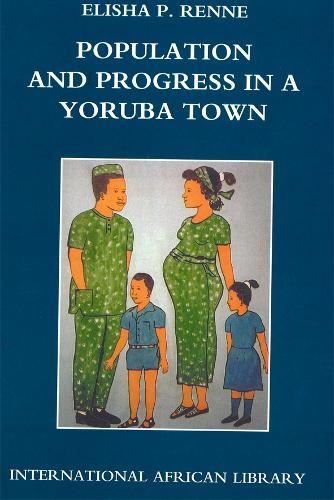
This study of local perceptions of population and development in a rural southwestern Nigerian town questions some of the underlying assumptions of the demographic theory of fertility transition. Fertility transition theory and modernisation theory from which it derives have not explained why fertility remains high, particularly in sub-Saharan Africa, despite the presence of some conditions associated with its decline in Western societies, nor why development, despite a plethora of projects, has failed to 'take-off'. As this study demonstrates, neither fertility change nor development follows a universal trajectory. Whether lower fertility or Western models of development are viewed as possible or advantageous reflects cultural ideas about proper social relations as well as political and economic conditions, which may hinder or facilitate these changes. Key Features:Its example of grass-roots development complements economic development textsProvides an ethnographic study of fertility changeExamines the historical processes of social change in the context of Nigeria under military rule
Full Product Details
Author: Elisha P. Renne (Associate Professor, University of Michigan)
Publisher: Edinburgh University Press
Imprint: Edinburgh University Press
Volume: v. 28
Dimensions:
Width: 15.60cm
, Height: 2.30cm
, Length: 23.40cm
Weight: 0.531kg
ISBN: 9780748618156
ISBN 10: 0748618155
Pages: 256
Publication Date: 24 July 2003
Audience:
College/higher education
,
Professional and scholarly
,
Undergraduate
,
Postgraduate, Research & Scholarly
Format: Paperback
Publisher's Status: Active
Availability: Temporarily unavailable 
The supplier advises that this item is temporarily unavailable. It will be ordered for you and placed on backorder. Once it does come back in stock, we will ship it out to you.
Table of Contents
TABLE OF CONTENTS; Preface; Acknowledgments; List of figures, tables; Part I. Anthropological and demographic concerns; Chapter 1. Introduction: Paradoxes of progress; Chapter 2. Historical and anthropological aspects of population: Centripetal and centrifugal tendencies; Chapter 3. Demographic dimensions of Itapa-Ekiti; Part II. Bodies, persons, and social relations; Chapter 4. Women's bodies, virginity, and marriage; Chapter 5. Child-fostering, blood ties, and parenthood; Chapter 6. Burial, rebirth, and relations with the dead; Part III. Population, development, and the state; Chapter 7. Personal hygiene, public sanitation, and western education; Chapter 8. Houses, descendants, and land tenure; Chapter 9. Counting bodies: Censuses, vital registration, and the creation of Ekiti State; Chapter 10: Conclusion: Local development, politics, and two funerals; Bibliography; Appendices; Appendix I. Research methods and materials; Appendix II. Important dates in Itapa and Nigerian history; Appendix III. Contraception ever used by Itapa-Ekiti women, based on 1992, 1997 surveys; Index.
Reviews
A rich and compelling account of the social and cultural processes that underlie the dynamics of fertility in contemporary Nigeria! Rich, important and insightful!Readers with interests in anthropology, demography or Africa all have much to learn from this fine book. -- Daniel Jordan Smith, Department of Anthropology, Brown University A rich and compelling account of the social and cultural processes that underlie the dynamics of fertility in contemporary Nigeria! Rich, important and insightful!Readers with interests in anthropology, demography or Africa all have much to learn from this fine book.
Author Information
Elisha P. Renne is an associate professor in the Department of Anthropology and the Center for Afroamerican and African Studies, University of Michigan.
Tab Content 6
Author Website:
Countries Available
All regions
|