Awards
- Winner of Sonya Rudikoff Award 2019 (United States)
Overview
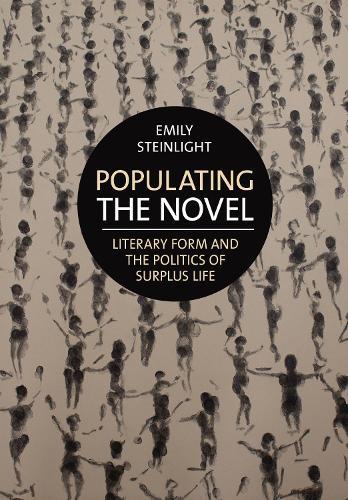
From the teeming streets of Dickens's London to the households of domestic fiction, nineteenth-century British writers constructed worlds crammed beyond capacity with human life. In Populating the Novel, Emily Steinlight contends that rather than simply reflecting demographic growth, such pervasive literary crowding contributed to a seismic shift in British political thought. She shows how the nineteenth-century novel in particular claimed a new cultural role as it took on the task of narrating human aggregation at a moment when the Malthusian specter of surplus population suddenly and quite unexpectedly became a central premise of modern politics. In readings of novels by Mary Shelley, Elizabeth Gaskell, Charles Dickens, Mary Braddon, Thomas Hardy, and Joseph Conrad that link fiction and biopolitics, Steinlight brings the crowds that pervade nineteenth-century fiction into the foreground. In so doing, she transforms the subject and political stakes of the Victorian novel, dislodging the longstanding idea that its central category is the individual by demonstrating how fiction is altered by its emerging concern with population. By overpopulating narrative space and imagining the human species perpetually in excess of the existing social order, she shows, fiction made it necessary to radically reimagine life in the aggregate.
Full Product Details
Author: Emily Steinlight
Publisher: Cornell University Press
Imprint: Cornell University Press
Dimensions:
Width: 15.20cm
, Height: 2.70cm
, Length: 22.90cm
Weight: 0.907kg
ISBN: 9781501710704
ISBN 10: 1501710702
Pages: 294
Publication Date: 15 March 2018
Recommended Age: From 18 years
Audience:
General/trade
,
General
Format: Hardback
Publisher's Status: Active
Availability: Manufactured on demand

We will order this item for you from a manufactured on demand supplier.
Reviews
While England's population more than tripled during the nineteenth century, the congested narratives of this era's fiction do not simply reflect demographic change. Instead, as Steinlight powerfully contends, they turn that reality into a pressing political problem that exposes the limits of social and political institutions to contain, manage, and care for the biological life of the populace. * Studies in the Novel * Steinlight's study moves across a truly impressive array of materials and does so without ever sacrificing close attention to the particular texts under consideration... The book moves fluently beyond the rigid periodizations that continue to govern the professional life of nineteenth-century scholars. * Modern Philology * Populating the Novel is an impressive and thought-provoking work. It lays down a gauntlet to other scholars for further examination of biopower and surplus in nineteenth-century literature and culture. * Dickens Quarterly * A work of scholarship that fulfills and exceeds the multitude of promises contained in its title. After describing and delineating the overcrowded demographics of Romantic and Victorian writing, Steinlight makes a provocative claim about population: in an age of efflorescence of biopolitical principles and quantitative social science, population becomes a political, economic, sociological, and, above all, literary problem. * V21 Collations Book Forum * Populating the Novel is an extremely accomplished and wide-ranging monograph that contributes forcefully to the field of nineteenth-century novel studies. The argument that the multitude, not the individual, is the focus of nineteenth-century fiction takes criticism in an exciting new direction. * Modern Language Review * Populating the Novel is a compelling, thought-provoking work of criticism. Steinlight's reading of traditional narratives in the nineteenth century helps redefine pre-existing ideas about the novel's cultural role while simultaneously considering how its form was heavily influenced by demographics. This significant contribution to scholarship helps reimagine life in the aggregate while demonstrating a unique approach to socio-political aspects of the English novel. * Victorian Review *
Analyzing the politics and form of nineteenth-century crowds, masses, aggregates, and novels, Emily Steinlight shows how the period responded to the idea of an increasing-and increasingly difficult to conceptualize-population. Her book deftly reveals the many ways in which poets, theorists, and novelists, from Wordsworth to Hardy, sought to accommodate an ostensible surplus of life, at the same time enfolding numerous readers in their representations. -- Audrey Jaffe, Professor of English, University of Toronto This is a magnificent book, elegantly conceived and luminously executed. Steinlight identifies an original, striking, multifaceted thematic thread uniting the major works of the period: the figure of excess population. Populating the Novel is an enormously important, fruitful, and relevant book, and Steinlight meticulously turns every stone in pursuing it. -- Jules Law, Professor of English and Comparative Literature, Northwestern University Populating the Novel is a tremendously impressive book. Steinlight expertly demonstrates how thoroughly the Victorians-famous for their `individualism'-conceived of human life in the aggregate. Her book will quickly become a touchstone in nineteenth-century literary studies and the definitive study of biopolitics in Victorian fiction. -- David Kurnick, Associate Professor of English, Rutgers University
Analyzing the politics and form of nineteenth-century crowds, masses, aggregates, and novels, Emily Steinlight shows how the period responded to the idea of an increasing--and increasingly difficult to conceptualize--population. Her book deftly reveals the many ways in which poets, theorists, and novelists, from Wordsworth to Hardy, sought to accommodate an ostensible surplus of life, at the same time enfolding numerous readers in their representations. --University of Toronto, and author of The Victorian Novel Dreams of the Real, University of Toronto, and author of The Victorian Novel Dreams of the Real This is a magnificent book, elegantly conceived and luminously executed. Steinlight identifies an original, striking, multifaceted thematic thread uniting the major works of the period: the figure of excess population. Populating the Novel is an enormously important, fruitful, and relevant book, and Steinlight meticulously turns every stone in pursuing it. --Jules Law, Professor of English and Comparative Literature, Northwestern University Populating the Novel is a tremendously impressive book. Steinlight expertly demonstrates how thoroughly the Victorians--famous for their 'individualism'--conceived of human life in the aggregate. Her book will quickly become a touchstone in nineteenth-century literary studies, and the definitive study of biopolitics in Victorian fiction. --David Kurnick, Associate Professor of English, Rutgers University
Populating the Novel is a tremendously impressive book. Steinlight expertly demonstrates how thoroughly the Victorians-famous for their `individualism'-conceived of human life in the aggregate. Her book will quickly become a touchstone in nineteenth-century literary studies, and the definitive study of biopolitics in Victorian fiction. -- David Kurnick, Associate Professor of English, Rutgers University This is a magnificent book, elegantly conceived and luminously executed. Steinlight identifies an original, striking, multifaceted thematic thread uniting the major works of the period: the figure of excess population. Populating the Novel is an enormously important, fruitful, and relevant book, and Steinlight meticulously turns every stone in pursuing it. -- Jules Law, Professor of English and Comparative Literature, Northwestern University Analyzing the politics and form of nineteenth-century crowds, masses, aggregates, and novels, Emily Steinlight shows how the period responded to the idea of an increasing-and increasingly difficult to conceptualize-population. Her book deftly reveals the many ways in which poets, theorists, and novelists, from Wordsworth to Hardy, sought to accommodate an ostensible surplus of life, at the same time enfolding numerous readers in their representations. -- University of Toronto, and author of The Victorian Novel Dreams of the Real, University of Toronto, and author of <I>The Victorian Novel Dreams of the Real</I>
Author Information
Emily Steinlight is Associate Professor of English at the University of Pennsylvania. Follow her on X @EmilySteinlight.