Full Product Details
Author: Nafeesa T. Nichols (Western Norway University)
Publisher: Bloomsbury Publishing Plc
Imprint: Rowman & Littlefield
Dimensions:
Width: 15.20cm
, Height: 1.60cm
, Length: 23.20cm
Weight: 0.440kg
ISBN: 9781666922707
ISBN 10: 1666922706
Pages: 200
Publication Date: 19 March 2026
Audience:
College/higher education
,
Postgraduate, Research & Scholarly
Format: Hardback
Publisher's Status: Active
Availability: Manufactured on demand

We will order this item for you from a manufactured on demand supplier.
Reviews
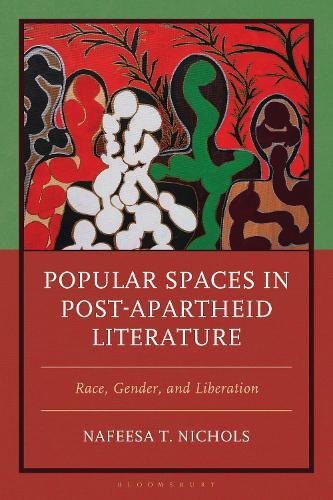
Popular Spaces in Post-Apartheid Literature is a timely and original contribution to the study of spatial politics in contemporary African literature. Through close readings of four post-apartheid literary texts, Nichols offers a compelling framework for understanding how geography continues to be racialized and gendered, even in the wake of formal political transformation. She also provides a nuanced exploration of geography as a means of understanding how systems of power regulate movement, foregrounding ways in which white supremacy is sustained through spatial logics. Drawing from feminist and Black geographies, Nichols interrogates how mobility—both physical and socio-economic—is surveilled, constrained, and coded through intersecting structures of race, gender, and class. This book is a valuable resource for scholars and advanced students interested in the intersections of space, power, and postcolonial identity in Southern Africa and beyond. * Blair M. Proctor, Assistant Professor of African History, State University of New York, New Paltz, USA *
Popular Spaces in Post-Apartheid Literature is a timely and original contribution to the study of spatial politics in contemporary African literature. Through close readings of four post-apartheid literary texts, Nichols offers a compelling framework for understanding how geography continues to be racialized and gendered, even in the wake of formal political transformation. She also provides a nuanced exploration of geography as a means of understanding how systems of power regulate movement, foregrounding ways in which white supremacy is sustained through spatial logics. Drawing from feminist and Black geographies, Nichols interrogates how mobility—both physical and socio-economic—is surveilled, constrained, and coded through intersecting structures of race, gender, and class. This book is a valuable resource for scholars and advanced students interested in the intersections of space, power, and postcolonial identity in Southern Africa and beyond. * Blair M. Proctor, Assistant Professor of African History, State University of New York, New Paltz, USA * This book is a refreshing and exciting reflection on South Africa in a second transitionary moment within political, social, and emotional history. It also extends our understanding of the euphoria of South Africa’s official transition and the ways in which culture has contributed to and shaped the period. Nichols’ exploration of space transcends the official script of representations of post-apartheid life. She brings the crevices of these texts to life, showing that geographies of South African life are intertwined, complex, and evermore, in flux. A fascinating book that’s edgy and brave, making it an important contribution to literature about South Africa in a post-apartheid era. * Dee Marco, Senior Lecturer of Film and Television Studies, University of Cape Town, South Africa *
Author Information
Nafeesa T. Nichols is Associate Professor of Literature at Western Norway University of Applied Sciences, Norway.