Overview
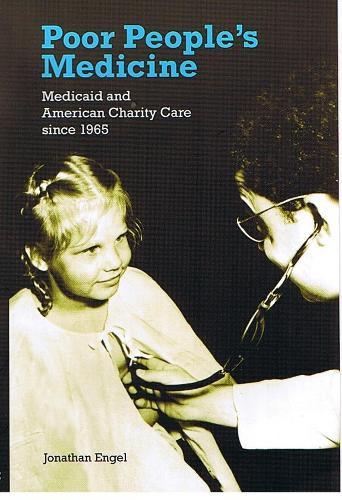
Poor People’s Medicine is a detailed history of Medicaid since its beginning in 1965. Federally aided and state-operated, Medicaid is the single most important source of medical care for the poorest citizens of the United States. From acute hospitalization to long-term nursing-home care, the nation’s Medicaid programs pay virtually the entire cost of physician treatment, medical equipment, and prescription pharmaceuticals for the millions of Americans who fall within government-mandated eligibility guidelines. The product of four decades of contention over the role of government in the provision of health care, some of today’s Medicaid programs are equal to private health plans in offering coordinated, high-quality medical care, while others offer little more than bare-bones coverage to their impoverished beneficiaries.Starting with a brief overview of the history of charity medical care, Jonathan Engel presents the debates surrounding Medicaid’s creation and the compromises struck to allow federal funding of the nascent programs. He traces the development of Medicaid through the decades, as various states attempted to both enlarge the programs and more finely tailor them to their intended targets. At the same time, he describes how these new programs affected existing institutions and initiatives such as public hospitals, community clinics, and private pro bono clinical efforts. Along the way, Engel recounts the many political battles waged over Medicaid, particularly in relation to larger discussions about comprehensive health care and social welfare reform. Poor People’s Medicine is an invaluable resource for understanding the evolution and present state of programs to deliver health care to America’s poor.
Full Product Details
Author: Jonathan Engel
Publisher: Duke University Press
Imprint: Duke University Press
Dimensions:
Width: 15.50cm
, Height: 2.80cm
, Length: 23.90cm
Weight: 0.617kg
ISBN: 9780822336839
ISBN 10: 0822336839
Pages: 344
Publication Date: 22 February 2006
Audience:
Professional and scholarly
,
Professional & Vocational
Format: Hardback
Publisher's Status: Active
Availability: In Print

This item will be ordered in for you from one of our suppliers. Upon receipt, we will promptly dispatch it out to you. For in store availability, please contact us.
Reviews
As debate about Medicaid's future rages in Washington, D.C., and state capitols around the country, Jonathan Engel's book provides much-needed perspective on how our nation has provided health care to the poor over the years. As he shows, second-tier medicine for the poor and uninsured has been a stable feature of the American health care system, and efforts to close the gap between rich and poor cannot but face an uphill battle. -Alan Weil, Executive Director, National Academy for State Health Policy Medicaid is a vital program, and providing medical care to the poor is a critical issue in contemporary health policy, but there long has been a gap between Medicaid's significance and academic attention to its historical evolution. There has not been nearly enough scholarship of the sort represented in Poor People's Medicine, scholarship that sketches out the history of Medicaid, key changes in the program, and, crucially, the development of other medical care programs for the poor. -Jonathan Oberlander, coeditor of The Social Medicine Reader, second edition The book reflects extensive research and abounds with details, and its descriptions of historic events are enlivened by quotations from concurrent observers... There is plenty to learn from Poor People's Medicine about the successes and shortcomings of our public policies toward making health care available to people who cannot otherwise afford it. -- Harriet L. Komisar, JAMA
I suspect dissatisfied consumers of the health care system will find much ammunition here, and policymakers and health educators will certainly find the book indispensable. Engel has a knack for crafting a well-written story out of complex and sometimes arcane legislation. He never fails to see the forest for the trees, yet he is able to add ample supporting evidence and specific, detailed documentation when helpful and appropriate. Let us hope psychologists also find their way to this book;<br>many will find it relevant. <br>--Grant J. Rich, Contemporary Psychology
The book reflects extensive research and abounds with details, and its descriptions of historic events are enlivened by quotations from concurrent observers. . . . There is plenty to learn from Poor People's Medicine about the successes and shortcomings of our public policies toward making health care available to people who cannot otherwise afford it. --Harriet L. Komisar, JAMA
Medicaid is a vital program, and providing medical care to the poor is a critical issue in contemporary health policy, but there long has been a gap between Medicaid's significance and academic attention to its historical evolution. There has not been nearly enough scholarship of the sort represented in Poor People's Medicine , scholarship that sketches out the history of Medicaid, key changes in the program, and, crucially, the development of other medical care programs for the poor. --Jonathan Oberlander, coeditor of The Social Medicine Reader , second edition
Author Information
Jonathan Engel is Associate Professor and Chair of Public and Healthcare Administration at Seton Hall University.