Overview
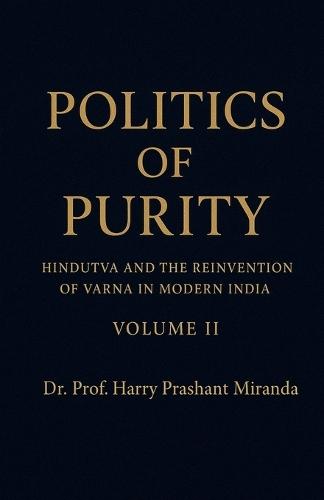
The impetus for this book emerged from both a personal and scholarly journey-a journey marked by observation, inquiry, and reflection on the profound ways in which social hierarchies shape identity, politics, and culture in India. Growing up in a society where the legacies of Varna and caste were not abstract historical constructs but lived realities, I became acutely aware of the tensions between inherited social structures and the ideals of equality, justice, and democracy.¹ As a scholar-practitioner, I have spent decades examining the intersections of religion, politics, and social stratification. The rise of Hindutva in contemporary India, coupled with the enduring resonance of caste in everyday life, compelled me to investigate the ways in which historical ideas of Varna are continually reinterpreted, instrumentalized, and contested.² This book seeks to unravel these complex dynamics, tracing the transformation of Varna from a philosophical notion into a political instrument that shapes both cultural narratives and electoral strategies. My motivation is also deeply ethical. The persistence of social hierarchies, discrimination, and exclusion challenges the promise of India's democratic and constitutional ideals.3 By documenting the historical evolution, political appropriation, and contemporary contestation of Varna, I aim to illuminate not only the mechanisms of inequality but also the sites of resistance, reform, and hope. From the Bhakti saints to Ambedkarite movements, from grassroots activism to legal interventions, the stories of struggle and resilience form a central thread in this narrative.⁴ This work is intended for a diverse readership: scholars of Indian history and politics, students of social theory, policymakers, and thoughtful general readers interested in understanding the deep structures of inequality that continue to shape India.⁵ My approach blends historical scholarship with a semi-literary narrative style, seeking to make the material both analytically rigorous and accessible, providing context, case studies, and human stories that reveal the lived dimensions of caste and identity. Finally, this book is a call to reflection. Understanding the past is not merely an academic exercise; it is essential for shaping a future in which equality, justice, and human dignity are not aspirational ideals but lived realities.⁶ By engaging with the history, politics, and culture of Varna, readers are invited to confront uncomfortable truths, recognize enduring patterns of privilege and exclusion, and consider the possibilities of an India that transcends inherited hierarchies to embrace an inclusive, ethical, and democratic vision.
Full Product Details
Author: Arry Prashant Miranda
Publisher: Dr.Harry Prashant Miranda
Imprint: Dr.Harry Prashant Miranda
Volume: 2
Dimensions:
Width: 14.00cm
, Height: 0.80cm
, Length: 21.60cm
Weight: 0.154kg
ISBN: 9798235495449
Pages: 128
Publication Date: 28 April 2026
Audience:
General/trade
,
General
Format: Paperback
Publisher's Status: Active
Availability: Available To Order

We have confirmation that this item is in stock with the supplier. It will be ordered in for you and dispatched immediately.
Author Information
. Author Background Dr.Prof.Harry Prashant Miranda has been in consulting practice for the last Ten years in helping organizations to improve their performance, primarily through the analysis of existing organizational operations & results and development of plans for improvement. Organizations may draw upon the services of management consultants for a number of reasons, including gaining external (and presumably objective) advice and access to the consultants' specialized expertise. As a result of his exposure to and relationships with numerous organizations, he also aware of industry """", although the transferability of such practices from one organization to another may be limited by the specific nature of situation under consideration. He provides to organizations, assistance, development of coaching skills, technology implementation, strategy development, or operational improvement services. As a Management consultant he brings his own proprietary or frameworks to guide the identification of problems, and to serve as the basis for recommendations for more effective or ways of performing work tasks. Visiting faculty at International & Indian Universities Passionate about guiding individuals toward inner peace, Dr.Prof.Harry Prashant Miranda has been involved in teaching, workshops, writing, etc. and draws inspiration from a wide range of spiritual and psychological traditions. This book is a culmination of years of study and practical experience in helping others cultivate a more peaceful and fulfilling life.