|
|
|||
|
||||
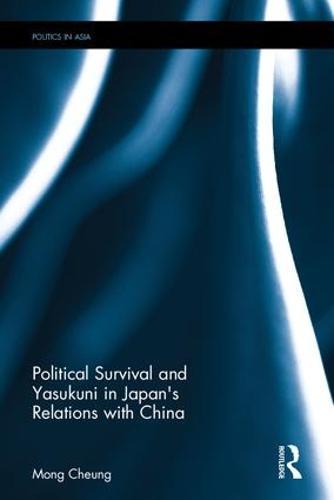
OverviewWhat role does the political survival of prime ministers play in Japan’s relations with China over the Yasukuni issue? Three Japanese prime ministers, including Nakasone Yasuhiro, Hashimoto Ryutaro and Abe Shinzo, complied with China’s demands and stopped visiting the controversial Shrine in 1986, 1997 and 2007, respectively. By contrast, the Yasukuni controversy intensified between 2001 and 2006 when a popular Prime Minister Koizumi Junichiro was determined to pay regular homage to the Yasukuni Shrine annually. Prime Minister Abe, who previously demonstrated restraint over the issue in his first term between 2006 and 2007, visited the Yasukuni unexpectedly in 2013 but not in 2014 or 2015. To explain this variation, this book presents an alternative interpretation of Japan’s official responses toward China’s pressure over the Yasukuni issue between 1985 and 2015 by applying a political survival approach that highlights the domestic political legitimacy of the Japanese prime minister or the ruling party. This book will be of great interest to students and researchers of Sino-Japanese relations, Japan’s foreign policy and international relations. Full Product DetailsAuthor: Mong Cheung (Waseda University, Japan)Publisher: Taylor & Francis Ltd Imprint: Routledge Dimensions: Width: 15.60cm , Height: 1.50cm , Length: 23.40cm Weight: 0.385kg ISBN: 9781138945708ISBN 10: 1138945706 Pages: 165 Publication Date: 07 July 2016 Audience: College/higher education , General/trade , Tertiary & Higher Education , General Format: Hardback Publisher's Status: Active Availability: In Print This item will be ordered in for you from one of our suppliers. Upon receipt, we will promptly dispatch it out to you. For in store availability, please contact us. Table of Contents1. Introduction 2. Political Survival and Japan’s Policy towards China on Yasukuni 3. Understanding Yasukuni: A Historical Overview 4. Refraining from Yasukuni Visit: China-Japan Yasukuni Controversy during the Nakasone (1985-86) and Hashimoto (1996-97) Administrations 5. Differing Responses: China-Japan Yasukuni Controversy during the Koizumi (2001-06) and Abe (2006-07) Administrations 6. Policy Variations: China-Japan Yasukuni Controversy during the Second Abe Administration (2012-15) 7. ConclusionReviewsAuthor InformationMong Cheung is Associate Professor in the Institute of Contemporary Chinese Studies at Waseda University, Japan. Tab Content 6Author Website:Countries AvailableAll regions |
||||