|
|
|||
|
||||
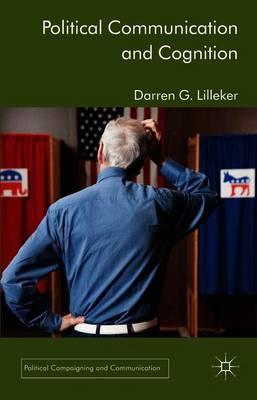
OverviewPolitical Communication and Cognition draws on a range of theories from communication psychology to explain how citizens receive communication about politics, how communication might make a citizen think and importantly what stimulates political participation, whether simply paying attention, chatting online or going to vote. Full Product DetailsAuthor: D. LillekerPublisher: Palgrave Macmillan Imprint: Palgrave Macmillan Dimensions: Width: 14.00cm , Height: 1.90cm , Length: 21.60cm Weight: 4.188kg ISBN: 9780230363625ISBN 10: 0230363628 Pages: 239 Publication Date: 25 July 2014 Audience: Professional and scholarly , Professional & Vocational Format: Hardback Publisher's Status: Active Availability: In Print This item will be ordered in for you from one of our suppliers. Upon receipt, we will promptly dispatch it out to you. For in store availability, please contact us. Table of Contents1. Thinking Politics – An Introduction 2. Strategic Political Communication 3. Schema Theory for Understanding Political Cognition 4. Political Conditioning 5. Peripheral Cues and Personality Politics 6. Proximity Politics and Valence 7. Emotion Involvement and Deep Cognition 8. Thinking Twice 9. Political Participation in a Digital Age 10. Voting and Voter Decision Making 11. Modeling Political CognitionReviewsAuthor InformationDarren G. Lilleker is Associate Professor in Political Communication in The Media School, Bournemouth University. Dr Lilleker's expertise is in the professionalization and marketisation of politics, in which he has published widely including Key Concepts in Political Communication (2006), and Political Campaigning, Elections and the Internet (2011) and has co-edited The Marketing of Political Parties (2006), Voters or Consumers (2008) and Political Marketing in Comparative Perspective (2005). Tab Content 6Author Website:Countries AvailableAll regions |
||||