Overview
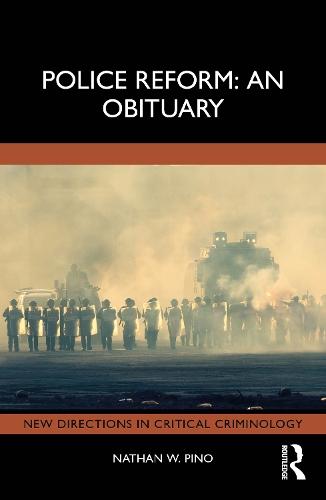
The fight against police brutality and impunity is a global struggle. This book argues that police reform efforts around the world should be extirpated and replaced with locally developed and led non-carceral alternatives that can produce community safety, social justice, and quality of life over the long-term from a decolonial, feminist, anti-capitalist, and abolitionist perspective. The book introduces the concept of artificial insecurity, defined as a condition in societies under racial capitalism whereby the social structures that promote safe, secure communities are weakened or removed, and the survival strategies of individuals are criminalized, coercing people to seek protection from policing and other carceral institutions that are undemocratic, violent, and fail to provide security, thus maintaining coloniality and inequality. Academics and other reformers should refuse to engage further in police reform efforts, and should instead seek ruptural social changes democratically based on an uncompromising abolitionist politics that produces genuine community safety and decolonizes economies in the face of hostility from politicians, police, and academic allies and collaborators with police. The book provides alternative policies and practices to reduce crime and promote community safety that do not rely on criminal justice systems. Since the book concerns current, important debates regarding police defunding and abolition, it will be a useful resource for students and scholars of criminology, policymakers, local stakeholders, non-governmental organizations, and activists involved in various social justice movements around the world.
Full Product Details
Author: Nathan W. Pino
Publisher: Taylor & Francis Ltd
Imprint: Routledge
Weight: 0.510kg
ISBN: 9781032546445
ISBN 10: 1032546441
Pages: 262
Publication Date: 10 March 2026
Audience:
College/higher education
,
Tertiary & Higher Education
Format: Paperback
Publisher's Status: Active
Availability: Manufactured on demand

We will order this item for you from a manufactured on demand supplier.
Reviews
Building on his decades of research on police reforms in northern and southern policing systems, Pino makes a critical, compelling, and accessible contribution to the expanding debates on police reform and abolition. The book convincingly demonstrates how the police – created to uphold colonialism and racial neoliberal capitalism – cannot be reformed. Given its conceptual and empirical depth and breadth, this text will be of interest to students, academics, and activists globally. Zoha Waseem, University of Warwick We need to stop living the lie that police reform can work.” Nathan Pino’s excellent book demonstrates eloquently why this statement is a political necessity for community safety and transformative justice across the global north/south. The book is theoretically informed, empirically rich and a wake-up call to “academic apologists and collaborators.” Chris Cunneen, University of Technology Sydney Pino has assembled a broad international compendium of cutting-edge research to lay out the power of an abolitionist analysis and the pitfalls of academic complicity with the project of police reform. Alex Vitale, Brooklyn College and CUNY Graduate Center
We need to stop living the lie that police reform can work.” Nathan Pino’s excellent book demonstrates eloquently why this statement is a political necessity for community safety and transformative justice across the global north/south. The book is theoretically informed, empirically rich and a wake-up call to “academic apologists and collaborators. Chris Cunneen, University of Technology Sydney Pino has assembled a broad international compendium of cutting-edge research to lay out the power of an abolitionist analysis and the pitfalls of academic complicity with the project of police reform. Alex Vitale, Brooklyn College and CUNY Graduate Center Building on his decades of research on police reforms in northern and southern policing systems, Pino makes a critical, compelling, and accessible contribution to the expanding debates on police reform and abolition. The book convincingly demonstrates how the police – created to uphold colonialism and racial neoliberal capitalism – cannot be reformed. Given its conceptual and empirical depth and breadth, this text will be of interest to students, academics, and activists globally. Zoha Waseem, University of Warwick
""We need to stop living the lie that police reform can work.” Nathan Pino’s excellent book demonstrates eloquently why this statement is a political necessity for community safety and transformative justice across the global north/south. The book is theoretically informed, empirically rich and a wake-up call to “academic apologists and collaborators."" Chris Cunneen, University of Technology, Sydney Pino has assembled a broad international compendium of cutting-edge research to lay out the power of an abolitionist analysis and the pitfalls of academic complicity with the project of police reform. Alex Vitale, Brooklyn College and CUNY Graduate Center Building on his decades of research on police reforms in northern and southern policing systems, Pino makes a critical, compelling, and accessible contribution to the expanding debates on police reform and abolition. The book convincingly demonstrates how the police – created to uphold colonialism and racial neoliberal capitalism – cannot be reformed. Given its conceptual and empirical depth and breadth, this text will be of interest to students, academics, and activists globally. Zoha Waseem, University of Warwick
""We need to stop living the lie that police reform can work.” Nathan Pino’s excellent book demonstrates eloquently why this statement is a political necessity for community safety and transformative justice across the global north/south. The book is theoretically informed, empirically rich and a wake-up call to “academic apologists and collaborators.” Chris Cunneen, University of Technology Sydney Pino has assembled a broad international compendium of cutting-edge research to lay out the power of an abolitionist analysis and the pitfalls of academic complicity with the project of police reform. Alex Vitale, Brooklyn College and CUNY Graduate Center Building on his decades of research on police reforms in northern and southern policing systems, Pino makes a critical, compelling, and accessible contribution to the expanding debates on police reform and abolition. The book convincingly demonstrates how the police – created to uphold colonialism and racial neoliberal capitalism – cannot be reformed. Given its conceptual and empirical depth and breadth, this text will be of interest to students, academics, and activists globally. Zoha Waseem, University of Warwick
Author Information
Nathan W. Pino is Professor of Sociology and Honorary Professor of International Studies at Texas State University, Texas, USA. Dr. Pino’s research interests focus primarily on the relationships between globalization, development, crime, and crime governance/control, with a focus on policing and police reform in developing countries. He has published over 20 book chapters and 45 articles in reputed academic journals. He has also coauthored six books: Democratic Policing in Transitional and Developing Countries (2006), Globalization, Police Reform, and Development: Doing it the Western Way? (2012), The Death and Resurrection of Deviance: Current Ideas and Research (2014), Rethinking Serial Murder, Spree Killing, and Atrocities: Beyond the Usual Distinctions (2015), The Emerald Handbook of Crime, Justice, and Sustainable Development (2021), and Unravelling the Crime Development Nexus (2022).