Overview
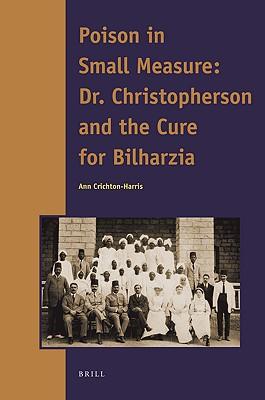
In 1917, in Khartoum, Dr. J.B. Christopherson experimentally treated seventy bilharzia patients with injections of antimony tartrate, an early chemotherapy. His was the first successful treatment. Antimony had never been tried on bilharzia patients before, or so he believed. This biography examines the turbulent life of this medical pioneer, his fight for priority and his struggle for professional survival amid the politics of exclusion in General Wingate's Sudan. His was a career full of paradoxes: acclaimed for intercepting a smallpox outbreak, building a hospital and satellite clinics, he battled accusations and removal as director of the Medical Department. From the Boer War, two decades in Sudan, his capture and release in Serbia to his time in France in WW1, controversy seldom left him.
Full Product Details
Author: Ann Crichton-Harris
Publisher: Brill
Imprint: Brill
Dimensions:
Width: 16.00cm
, Height: 1.80cm
, Length: 24.00cm
Weight: 0.796kg
ISBN: 9789004175419
ISBN 10: 9004175415
Pages: 448
Publication Date: 02 June 2009
Audience:
Professional and scholarly
,
Professional & Vocational
Format: Paperback
Publisher's Status: Active
Availability: In Print

This item will be ordered in for you from one of our suppliers. Upon receipt, we will promptly dispatch it out to you. For in store availability, please contact us.
Reviews
""The British Empire provided a wonderful outlet for those wishing for a life of adventure, danger and professional satisfaction. Many of them also seemed prone to engage in vicious disputes. That the career of Jack Christopherson, best known for his discovery of the first cure for bilharzia (schistosomiasis), could be described as a battlefield-like turbulence enabled the author to tell a rollicking tale of human foibles as well as a piece of serious medical history."" - Prof. John Farley, author of Bilharzia. A History of Imperial Tropical Medicine ""The ambiguous reputation of a family hero drove Ann Crichton-Harris to investigate a scientific discovery in early twentieth-century Sudan. Springing from intelligent curiosity, this elegantly written book relies on archival material, official reports, medical texts, and family letters. It features one man’s struggle against a debilitating disease and his conflict with jealous detractors. Sensitive to the problems of colonialism, she has recreated the ideas and aspirations that fed priority disputes in a time of medical optimism."" - Jacalyn Duffin, Hannah Professor of the History of Medicine, Queen’s University, Kingston, Canada ""Christopherson’s niece, Toronto writer Ann Crichton-Harris, spent eight years in an attempt to understand why the pride of her family, 'the kindly old uncle' was so thorough ignored by his contemporaries and by history. [..] To her credit, Poison in Small Measure: Dr Christopherson and the Cure for Bilharzia is not an attempt to bring delayed fame to a deceased family member; rather it aims to provide an understanding of the relation between science and personality in the world of scientific fame and recognition. 'Christopherson was in Sudan for the better part of 18 years,' Crichton-Harris writes, 'and during that time three major personal conflicts interfered with his career path.'"" - Tom Koch, PhD Bioethicist, Toronto, Ont., in: The Canadian Medical Association Journal ""In this delightful book, Ann Crichton-Harris, an independent scholar based in Toronto, chronicles her eight-year journey to reconstruct the life and work of her great-uncle, John B. Christopherson, a nearly forgotten pioneer in the treatment of bilharzias. Along the way, the reader enters into a complex world of petty careerism, colonial rivalries, bald-faced racism, humanitarian concern, and dedication to duty. Those nostalgic for the British Empire will find much to enjoy in this book. It recreates the contradictions of empire with its rigid rules and protocol, intolerance and dogged heroism. The author shares her love for research: we learn of her interviews over tea and fruitcake, the search (sometimes in vain) for memoirs, and the detective-like sorting through clues in private letters, memorabilia, dusty volumes of published articles, and archives. [..] The reader who suspects or fears that this book is another paean to a notable family member learns otherwise before the book even begins. Yusuf Fadl Hasan, a professor of history at the University of Khartoum, in a brief foreword, quotes Christopherson's words: ""The Mohammedan Religion has never done anything in the World except engender a selfish peace of mind to the individual and a total disregard for other peoples' feelings. It breeds wars for nations by its intolerance. It has never invented anything, nor am I aware that any Mohammedan has initiated peaceful work of any kind at any time. It is the opposite to the Christian religion of Charity, Peace, diligence and Usefulness"" (p. x). Hasan then praises Crichton-Harris for her response to this view: ""Christopherson's knowledge of history let him down with respect to both the Muslim's achievements in mathematics, ophthalmology and optics, and to the infamous work of his fellow Christians—the Inquisition and the Crusades for a start. It is almost certain that he had many Muslim friends and acquaintances among his assistant medical men, yet he thought nothing of writing in such a manner"" (p. 313). Yet Christopherson later complained that ""[a] native officer never does an ounce of work that he is not made to do"" and ""the native women are so indolent and ignorant that it is hopeless at present to try and train them as nurses"" (p. 369). He was finally able to hire two British nurses, who did not disappoint him. The author, however, insists that Christopherson, like his contemporaries, believed that he was on a mission to make Sudan a better place for its people and that he had considerable regard for his native colleagues. [..] Crichton-Harris documents Christopherson's great discovery at the outset of her book. In 1917, in the men's ward of Khartoum Civil Hospital, he found that injecting tartar emetic (antimony), already used as a treatment for leishmaniasis, into the vein of a bilharzia patient killed the eggs of the bilharzia helminth. He then spent many years researching the correct dosage of tartar emetic since it was a poison that could kill the patient. He published his results in a series of articles but did not receive the recognition that he expected. He was nominated for a Nobel Prize in 1922, did not receive it, and, according to the author, sank from history's view. Apparently he clashed with key personalities such as Andrew Balfour, director of the Wellcome Laboratory in Khartoum, and Major P. R Phipps, private secretary of Sudan's governor-general, Sir Reginald Wingate. Still, personality conflicts happen in all walks of life, and it is not quite clear why Christopherson's led to his sinking into historical oblivion. Perhaps he lacked the all-important patron who would broadcast his achievements at every opportunity. [..] The book is loaded with details of mundane daily life, family squabbles, and likes and dislikes that stray far from the overall theme of the book. All kinds of relatives and their activities crowd the book. But it is fun to read. It is empirical narrative history at its best and will interest specialists in the history of tropical medicine, bilharzia, and Sudan and Britain in the imperial age. The author has successfully restored her great-uncle to his rather conflicted place in the history of tropical medicine (itself a problematic term) and in 2001 had the satisfaction of witnessing the Sudanese authorities at Khartoum Civil Hospital unveil a plaque in his honor'."" - Nancy Gallagher, University of California, Santa Barbara, in: Bull. Hist. Med., 2011, 85
'The British Empire provided a wonderful outlet for those wishing for a life of adventure, danger and professional satisfaction. Many of them also seemed prone to engage in vicious disputes. That the career of Jack Christopherson, best known for his discovery of the first cure for bilharzia (schistosomiasis), could be described as a battlefield-like turbulence enabled the author to tell a rollicking tale of human foibles as well as a piece of serious medical history.' Prof. John Farley, author of Bilharzia. A History of Imperial Tropical Medicine. 'The ambiguous reputation of a family hero drove Ann Crichton-Harris to investigate a scientific discovery in early twentieth-century Sudan. Springing from intelligent curiosity, this elegantly written book relies on archival material, official reports, medical texts, and family letters. It features one man's struggle against a debilitating disease and his conflict with jealous detractors. Sensitive to the problems of colonialism, she has recreated the ideas and aspirations that fed priority disputes in a time of medical optimism.' Jacalyn Duffin, Hannah Professor of the History of Medicine, Queen's University, Kingston, Canada Tom Koch, PhD Bioethicist, Toronto, Ont. in The Canadian Medical Association Journal: Christopherson's niece, Toronto writer Ann Crichton-Harris, spent eight years in an attempt to understand why the pride of her family, the kindly old uncle was so thorough ignored by his contemporaries and by history. To her credit, Poison in Small Measure: Dr Christopherson and the Cure for Bilharzia is not an attempt to bring delayed fame to a deceased family member; rather it aims to provide an understanding of the relation between science and personality in the world of scientific fame and recognition. Christopherson was in Sudan for the better part of 18 years, Crichton-Harris writes, and during that time three major personal conflicts interfered with his career path. Ann Crichton-Harris. Poison in Small Measure: Dr. Christopherson and the Cure for Bilharzia. Leiden, the Netherlands: Brill. 2009. xx + 428 pp. Ill. $99.00 (978-90-04-17541-9). 'In this delightful book, Ann Crichton-Harris, an independent scholar based in Toronto, chronicles her eight-year journey to reconstruct the life and work of her great-uncle, John B. Christopherson, a nearly forgotten pioneer in the treatment of bilharzias. Along the way, the reader enters into a complex world of petty careerism, colonial rivalries, bald-faced racism, humanitarian concern, and dedication to duty. Those nostalgic for the British Empire will find much to enjoy in this book. It recreates the contradictions of empire with its rigid rules and protocol, intolerance and dogged heroism. The author shares her love for research: we learn of her interviews over tea and fruitcake, the search (sometimes in vain) for memoirs, and the detective-like sorting through clues in private letters, memorabilia, dusty volumes of published articles, and archives. The reader who suspects or fears that this book is another paean to a notable family member learns otherwise before the book even begins. Yusuf Fadl Hasan, a professor of history at the University of Khartoum, in a brief foreword, quotes Christopherson's words: The Mohammedan Religion has never done anything in the World except engender a selfish peace of mind to the individual and a total disregard for other peoples' feelings. It breeds wars for nations by its intolerance. It has never invented anything, nor am I aware that any Mohammedan has initiated peaceful work of any kind at any time. It is the opposite to the Christian religion of Charity, Peace, diligence and Usefulness (p. x). Hasan then praises Crichton-Harris for her response to this view: Christopherson's knowledge of history let him down with respect to both the Muslim's achievements in mathematics, ophthalmology and optics, and to the infamous work of his fellow Christians-the Inquisition and the Crusades for a start. It is almost certain that he had many Muslim friends and acquaintances among his assistant medical men, yet he thought nothing of writing in such a manner (p. 313). Yet Christopherson later complained that [a] native officer never does an ounce of work that he is not made to do and the native women are so indolent and ignorant that it is hopeless at present to try and train them as nurses (p. 369). He was finally able to hire two British nurses, who did not disappoint him. The author, however, insists that Christopherson, like his contemporaries, believed that he was on a mission to make Sudan a better place for its people and that he had considerable regard for his native colleagues. Crichton-Harris documents Christopherson's great discovery at the outset of her book. In 1917, in the men's ward of Khartoum Civil Hospital, he found that injecting tartar emetic (antimony), already used as a treatment for leishmaniasis, into the vein of a bilharzia patient killed the eggs of the bilharzia helminth. He then spent many years researching the correct dosage of tartar emetic since it was a poison that could kill the patient. He published his results in a series of articles but did not receive the recognition that he expected. He was nominated for a Nobel Prize in 1922, did not receive it, and, according to the author, sank from history's view. Apparently he clashed with key personalities such as Andrew Balfour, director of the Wellcome Laboratory in Khartoum, and Major P. R Phipps, private secretary of Sudan's governor-general, Sir Reginald Wingate. Still, personality conflicts happen in all walks of life, and it is not quite clear why Christopherson's led to his sinking into historical oblivion. Perhaps he lacked the all-important patron who would broadcast his achievements at every opportunity. The book is loaded with details of mundane daily life, family squabbles, and likes and dislikes that stray far from the overall theme of the book. All kinds of relatives and their activities crowd the book. But it is fun to read. It is empirical narrative history at its best and will interest specialists in the history of tropical medicine, bilharzia, and Sudan and Britain in the imperial age. The author has successfully restored her great-uncle to his rather conflicted place in the history of tropical medicine (itself a problematic term) and in 2001 had the satisfaction of witnessing the Sudanese authorities at Khartoum Civil Hospital unveil a plaque in his honor'. Nancy Gallagher University of California, Santa Barbara,/i> 154 Book Reviews Bull, Hist. Med., 2011, 85
'The British Empire provided a wonderful outlet for those wishing for a life of adventure, danger and professional satisfaction. Many of them also seemed prone to engage in vicious disputes. That the career of Jack Christopherson, best known for his discovery of the first cure for bilharzia (schistosomiasis), could be described as a battlefield-like turbulence enabled the author to tell a rollicking tale of human foibles as well as a piece of serious medical history.' Prof. John Farley, author of Bilharzia. A History of Imperial Tropical Medicine. 'The ambiguous reputation of a family hero drove Ann Crichton-Harris to investigate a scientific discovery in early twentieth-century Sudan. Springing from intelligent curiosity, this elegantly written book relies on archival material, official reports, medical texts, and family letters. It features one man's struggle against a debilitating disease and his conflict with jealous detractors. Sensitive to the problems of colonialism, she has recreated the ideas and aspirations that fed priority disputes in a time of medical optimism.' Jacalyn Duffin, Hannah Professor of the History of Medicine, Queen's University, Kingston, Canada Tom Koch, PhD Bioethicist, Toronto, Ont. in The Canadian Medical Association Journal: Christopherson's niece, Toronto writer Ann Crichton-Harris, spent eight years in an attempt to understand why the pride of her family, the kindly old uncle was so thorough ignored by his contemporaries and by history. To her credit, Poison in Small Measure: Dr Christopherson and the Cure for Bilharzia is not an attempt to bring delayed fame to a deceased family member; rather it aims to provide an understanding of the relation between science and personality in the world of scientific fame and recognition. Christopherson was in Sudan for the better part of 18 years, Crichton-Harris writes, and during that time three major personal conflicts interfered with his career path. Ann Crichton-Harris. Poison in Small Measure: Dr. Christopherson and the Cure for Bilharzia. Leiden, the Netherlands: Brill. 2009. xx + 428 pp. Ill. $99.00 (978-90-04-17541-9). 'In this delightful book, Ann Crichton-Harris, an independent scholar based in Toronto, chronicles her eight-year journey to reconstruct the life and work of her great-uncle, John B. Christopherson, a nearly forgotten pioneer in the treatment of bilharzias. Along the way, the reader enters into a complex world of petty careerism, colonial rivalries, bald-faced racism, humanitarian concern, and dedication to duty. Those nostalgic for the British Empire will find much to enjoy in this book. It recreates the contradictions of empire with its rigid rules and protocol, intolerance and dogged heroism. The author shares her love for research: we learn of her interviews over tea and fruitcake, the search (sometimes in vain) for memoirs, and the detective-like sorting through clues in private letters, memorabilia, dusty volumes of published articles, and archives. The reader who suspects or fears that this book is another paean to a notable family member learns otherwise before the book even begins. Yusuf Fadl Hasan, a professor of history at the University of Khartoum, in a brief foreword, quotes Christopherson's words: The Mohammedan Religion has never done anything in the World except engender a selfish peace of mind to the individual and a total disregard for other peoples' feelings. It breeds wars for nations by its intolerance. It has never invented anything, nor am I aware that any Mohammedan has initiated peaceful work of any kind at any time. It is the opposite to the Christian religion of Charity, Peace, diligence and Usefulness (p. x). Hasan then praises Crichton-Harris for her response to this view: Christopherson's knowledge of history let him down with respect to both the Muslim's achievements in mathematics, ophthalmology and optics, and to the infamous work of his fellow Christians-the Inquisition and the Crusades for a start. It is almost certain that he had many Muslim friends and acquaintances among his assistant medical men, yet he thought nothing of writing in such a manner (p. 313). Yet Christopherson later complained that [a] native officer never does an ounce of work that he is not made to do and the native women are so indolent and ignorant that it is hopeless at present to try and train them as nurses (p. 369). He was finally able to hire two British nurses, who did not disappoint him. The author, however, insists that Christopherson, like his contemporaries, believed that he was on a mission to make Sudan a better place for its people and that he had considerable regard for his native colleagues. Crichton-Harris documents Christopherson's great discovery at the outset of her book. In 1917, in the men's ward of Khartoum Civil Hospital, he found that injecting tartar emetic (antimony), already used as a treatment for leishmaniasis, into the vein of a bilharzia patient killed the eggs of the bilharzia helminth. He then spent many years researching the correct dosage of tartar emetic since it was a poison that could kill the patient. He published his results in a series of articles but did not receive the recognition that he expected. He was nominated for a Nobel Prize in 1922, did not receive it, and, according to the author, sank from history's view. Apparently he clashed with key personalities such as Andrew Balfour, director of the Wellcome Laboratory in Khartoum, and Major P. R Phipps, private secretary of Sudan's governor-general, Sir Reginald Wingate. Still, personality conflicts happen in all walks of life, and it is not quite clear why Christopherson's led to his sinking into historical oblivion. Perhaps he lacked the all-important patron who would broadcast his achievements at every opportunity. The book is loaded with details of mundane daily life, family squabbles, and likes and dislikes that stray far from the overall theme of the book. All kinds of relatives and their activities crowd the book. But it is fun to read. It is empirical narrative history at its best and will interest specialists in the history of tropical medicine, bilharzia, and Sudan and Britain in the imperial age. The author has successfully restored her great-uncle to his rather conflicted place in the history of tropical medicine (itself a problematic term) and in 2001 had the satisfaction of witnessing the Sudanese authorities at Khartoum Civil Hospital unveil a plaque in his honor'. Nancy Gallagher University of California, Santa Barbara,/i> 154 Book Reviews Bull, Hist. Med., 2011, 85
Author Information
Ann Crichton-Harris is an independent scholar with an interest in medical history and colonial history. She is the author of several books, the last: Seventeen Letters to Tatham: A WW1 Surgeon in East Africa (Keneggy West Books, Toronto. 2001).