Overview
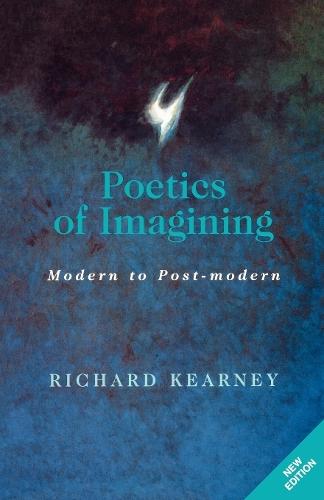
What is Imagination? What is the relationship between aesthetics and ethics in a contemporary civilization dominated by the image? How can we reconcile the right to imagine with the right to justice? Are the claims of artistic creativity and moral responsibility compatible? With an extended foreword and an afterword chapter, and fascinating new material on the narrative imagination, Poetics of Imagining: Modern to Post-modern provides a critically developed and accessible account of the major theories of imagination in modern European thought. It analyses and assesses the decisive contributions made to our understanding of the imaginary life by phenomenology (Husserl, Sartre, Merleau-Ponty, Bachelard), hermeneutics (Heidegger, Ricoeur), and post-modernism (Vattima, Kristeva, Lyotard). Richard Kearney achieves this with a coherent and committed approach, which displays his own passionate concern for the claims of imagination in our post-modern world of fragmentation and fracture. This is essential reading for those interested in current leading debates on the role of imagining in continental philosophy, ethics, psychoanalysis, art theory and literary criticism.
Full Product Details
Author: Richard Kearney
Publisher: Fordham University Press
Imprint: Fordham University Press
Edition: 2nd
Dimensions:
Width: 14.00cm
, Height: 2.50cm
, Length: 21.60cm
Weight: 0.541kg
ISBN: 9780823218714
ISBN 10: 0823218716
Pages: 260
Publication Date: 01 August 1998
Audience:
Professional and scholarly
,
College/higher education
,
General/trade
,
Professional & Vocational
,
Tertiary & Higher Education
Format: Hardback
Publisher's Status: Active
Availability: In Print

This item will be ordered in for you from one of our suppliers. Upon receipt, we will promptly dispatch it out to you. For in store availability, please contact us.
Reviews
Analyzes and assesses the decisive contributions made to our understanding of the imaginary life of phenomenology (Husserl, Sartre, Merleau-Ponty, Bachelard), hermeneutics (Heidegger, RicAur), and postmodernism (Vattimo, Kristeva, Lyotard)<br>. . . superb and highly recommended.
Analyzes and assesses the decisive contributions made to our understanding of the imaginary life of phenomenology (Husserl, Sartre, Merleau-Ponty, Bachelard), hermeneutics (Heidegger, RicAur), and postmodernism (Vattimo, Kristeva, Lyotard). . . superb and highly recommended.
Analyzes and assesses the decisive contributions made to our understanding of the imaginary life of phenomenology (Husserl, Sartre, Merleau-Ponty, Bachelard), hermeneutics (Heidegger, Ric ur), and postmodernism (Vattimo, Kristeva, Lyotard) . . . superb and highly recommended. * -The Midwest Book Review *
Analyzes and assesses the decisive contributions made to our understanding of the imaginary life of phenomenology (Husserl, Sartre, Merleau-Ponty, Bachelard), hermeneutics (Heidegger, Ric/ur), and postmodernism (Vattimo, Kristeva, Lyotard) ... superb and highly recommended. -The Midwest Book Review
Author Information
Richard Kearney is the Charles Seelig Professor of Philosophy at Boston College. He is the author of over 20 books, among them the trilogy The God Who May Be (Indiana University Press, 2001), On Stories (Routledge, 2002), and Strangers, Gods, and Monsters (Routledge, 2003), as well as works including Debates in Continental Philosophy (Fordham University Press, 2004), and Anatheism (Columbia, 2011). In 2008 he launched the Guestbook Project, an ongoing artistic, academic, and multi-media experiment in hospitality.