Overview
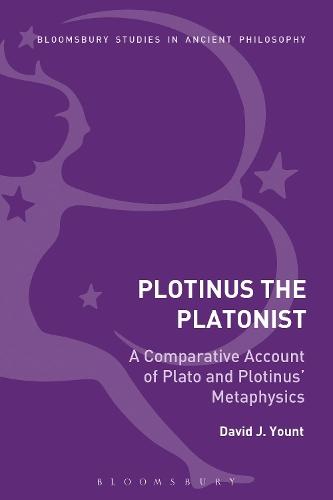
In this insightful new book David J. Yount argues, against received wisdom, that there are no essential differences between the metaphysics of Plato and Plotinus. Yount covers the core principles of Plotinian thought: The One or Good, Intellect, and All-Soul (the Three Hypostases), Beauty, God(s), Forms, Emanation, Matter, and Evil. After addressing the interpretive issues that surround the authenticity of Plato’s works, Plotinus: The Platonist deftly argues against the commonly held view that Plotinus is best interpreted as a Neo-Platonist, proposing he should be thought of as a Platonist proper. Yount presents thorough explanations and quotations from the works of each classical philosopher to demonstrate his thesis, concluding comprehensively that Plato and Plotinus do not essentially differ on their metaphysical conceptions. This is an ideal text for Plato and Plotinus scholars and academics, and excellent supplementary reading for upper-level undergraduates students and postgraduate students of ancient philosophy.
Full Product Details
Author: David J. Yount
Publisher: Bloomsbury Publishing PLC
Imprint: Bloomsbury Academic
Dimensions:
Width: 15.60cm
, Height: 2.10cm
, Length: 23.40cm
Weight: 0.590kg
ISBN: 9781472575210
ISBN 10: 1472575210
Pages: 304
Publication Date: 23 October 2014
Audience:
College/higher education
,
Tertiary & Higher Education
Format: Hardback
Publisher's Status: Active
Availability: Manufactured on demand

We will order this item for you from a manufactured on demand supplier.
Reviews
To the unseasoned reader of late ancient philosophy, the book offers a good introduction to the main concepts, principles, and structure of what lies beyond the realm of sense-perception. ... It is warmly welcomed. * Classics Ireland * Virtually no-one has examined in detail how far Plotinus' metaphysics accurately represents the developed thought of Plato himself. Yount has made a bold and challenging attempt to do just that. * John Rist, Father Kurt Pritzl, O.P., Chair in Philosophy, The Catholic University of America, USA * This book is plainly a labour of love, based on protracted and deep consideration of the works of both Plato and Plotinus, and a formidable command of the secondary authorities. Even if it will not convince all readers on all points, it will certainly provide all of us with much food for thought, and is warmly to be welcomed for that. * John Dillon, Professor and Emeritus Fellow, Department of Classics, Trinity College Dublin, Ireland * Yount makes a vigorous and painstakingly constructed case for a claim that was never questioned in late antiquity and is now widely viewed as wrongheaded: Plotinus was the consummate exegete of the Platonic revelation . * Lloyd P. Gerson FRSC, Professor of Philosophy, University of Toronto, Canada * This is a very welcome, scholarly addition to the growing literature on Plotinus as a serious philosopher, whose work contributed so much to our understanding of Plato as well as to philosophical practice. * Stephen R. L. Clark, Emeritus Professor, Department of Philosophy, University of Liverpool, UK * This book is a concise but thorough treatment of a central issue in Plotinus scholarship - his fidelity to Plato's original texts and principles. Dr. Yount makes a compelling case for rethinking the relationship between Plotinus' so-called Neoplatonism and Classical Platonism. In so doing, he also provides a clear textually grounded introduction to Plotinus' and indirectly to Plato's philosophies. * Michael Wagner, Professor of Philosophy, University of San Diego, USA *
Virtually no-one has examined in detail how far Plotinus' metaphysics accurately represents the developed thought of Plato himself. Yount has made a bold and challenging attempt to do just that. John Rist, Father Kurt Pritzl, O.P., Chair in Philosophy, The Catholic University of America, USA This book is plainly a labour of love, based on protracted and deep consideration of the works of both Plato and Plotinus, and a formidable command of the secondary authorities. Even if it will not convince all readers on all points, it will certainly provide all of us with much food for thought, and is warmly to be welcomed for that. John Dillon, Professor and Emeritus Fellow, Department of Classics, Trinity College Dublin, Ireland Yount makes a vigorous and painstakingly constructed case for a claim that was never questioned in late antiquity and is now widely viewed as wrongheaded: Plotinus was the consummate exegete of the Platonic revelation . Lloyd P. Gerson FRSC, Professor of Philosophy, University of Toronto, Canada
To the unseasoned reader of late ancient philosophy, the book offers a good introduction to the main concepts, principles, and structure of what lies beyond the realm of sense-perception. ... It is warmly welcomed. Classics Ireland Virtually no-one has examined in detail how far Plotinus' metaphysics accurately represents the developed thought of Plato himself. Yount has made a bold and challenging attempt to do just that. John Rist, Father Kurt Pritzl, O.P., Chair in Philosophy, The Catholic University of America, USA This book is plainly a labour of love, based on protracted and deep consideration of the works of both Plato and Plotinus, and a formidable command of the secondary authorities. Even if it will not convince all readers on all points, it will certainly provide all of us with much food for thought, and is warmly to be welcomed for that. John Dillon, Professor and Emeritus Fellow, Department of Classics, Trinity College Dublin, Ireland Yount makes a vigorous and painstakingly constructed case for a claim that was never questioned in late antiquity and is now widely viewed as wrongheaded: Plotinus was the consummate exegete of the Platonic revelation . Lloyd P. Gerson FRSC, Professor of Philosophy, University of Toronto, Canada This is a very welcome, scholarly addition to the growing literature on Plotinus as a serious philosopher, whose work contributed so much to our understanding of Plato as well as to philosophical practice. Stephen R. L. Clark, Emeritus Professor, Department of Philosophy, University of Liverpool, UK This book is a concise but thorough treatment of a central issue in Plotinus scholarship - his fidelity to Plato's original texts and principles. Dr. Yount makes a compelling case for rethinking the relationship between Plotinus' so-called Neoplatonism and Classical Platonism. In so doing, he also provides a clear textually grounded introduction to Plotinus' and indirectly to Plato's philosophies. Michael Wagner, Professor of Philosophy, University of San Diego, USA
Author Information
David J. Yount is Professor of Philosophy and former chair of Philosophy and Religious Studies at Mesa Community College, USA.