|
|
|||
|
||||
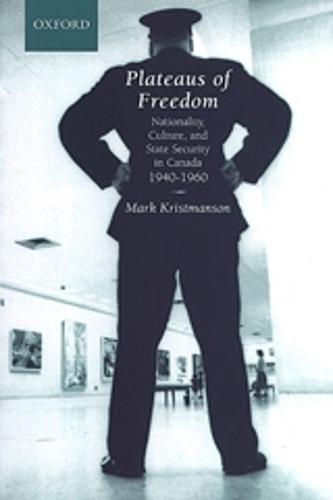
Overview'Canadians are not accustomed to thinking of censorship, secret intelligence, and propaganda as a single entity. Much less do they consider that these covertly militaristic activities have anything to do with culture.' So writes Mark Krismanson in this important study of the intertwining activities and careers of those involved in Canada's security agencies and in the state-sanctioned culture industry during the delight of the Cold War. The connections between secret intelligence and culture might appear to be merely coincidental. Both the spies and the arts people worked with words, with symbols and hidden meanings, with ideas. They had regular informal luncheons together in Ottawa. Some members of the intelligence community even found careers in the arts. Less than a decade after defecting, the Russian Igor Gouzenko wrote a pulp fiction Cold War spy novel- for which he received a Governor General's award. And Peter Dwyer, Britain's top security official in North America during World War II, was a playwright who after the war worked in Canada's intelligence community before drafting the founding for the Canada Council and becoming its first director. But Plateaus of Freedom details much more than a casual relationship between security and the arts. As Kristmanson demonstrates, 'the censorship-intelligence-propaganda complex that proliferated in Canada after World War II played a counterpoint between national culture and state security, with the result that freedom, especially intellectual freedom, plateaued on the principle of nationality.' The security and cultural policy measures examined here, from the RCMP investigations at the National Film Board that led to numerous firings, to the harassment of the extraordinary African-American singer and Soviet sympathizer Paul Robeson, 'attest to the fragility and the enduring power of art to effect social change'. Full Product DetailsAuthor: Mark KristmansonPublisher: Oxford University Press, Canada Imprint: Oxford University Press, Canada Dimensions: Width: 14.90cm , Height: 1.30cm , Length: 22.80cm Weight: 0.530kg ISBN: 9780195418033ISBN 10: 0195418034 Pages: 319 Publication Date: 01 November 2002 Audience: College/higher education , Professional and scholarly , Undergraduate , Postgraduate, Research & Scholarly Format: Paperback Publisher's Status: Out of Print Availability: In Print Limited stock is available. It will be ordered for you and shipped pending supplier's limited stock. Table of ContentsINTRODUCTION; 1 Characterizations of Tracy Philipps; 2 Love Your Neighbour: The RCMP and the National Film Board 1948-53; 3 Remembering to Forget; 4 State Security and Cultural Adminstration: The Case of Peter Dwyer; 5 Pulp History: REpossesing the Gouzenko Myth; 6 I Came to Sing: Paul Robeson's 'Third Space'; CONCLUSIONReviewsAuthor InformationMark Kristmanson recieved his doctorate in Humanities from Concordia University in Montreal. He has worked widely in the arts in Canada as a writer/director, administrator, and consultant. Tab Content 6Author Website:Countries AvailableAll regions |
||||