|
|
|||
|
||||
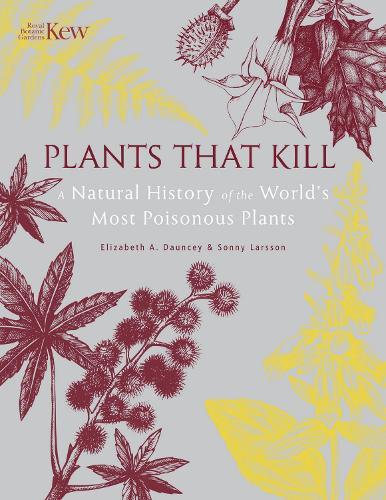
OverviewPlants That Kill is not a field guide, clinical care manual, or pharmacology textbook—it is a fascinating and beautifully presented natural history of the world’s most poisonous plants, the extraordinary strategies they employ for survival, and the impact these have on humans, other animals, and on other plants. Some of these seriously harmful and potentially lethal plants can cause their effects if eaten only once, others when consumed repeatedly over a longer period. For some, their effects are felt after skin or eye contact, or following inhalation. These extraordinary plants occur on all continents, and in many different plant families, producing a range of chemicals as part of their strategy for survival. The positive uses that humans and other animals have found for these plants and the chemicals they contain are also an important part of the story. This great diversity is showcased and brought to life through fascinating examples, beautiful illustrations andclear, explanatory diagrams. Anyone with an interest in plants, or with more ecological or pharmacological inclinations, will be fascinated and engaged by this book. Full Product DetailsAuthor: Elizabeth Dauncey , Sonny LarssonPublisher: Royal Botanic Gardens Imprint: Kew Publishing ISBN: 9781842466575ISBN 10: 1842466577 Pages: 224 Publication Date: 05 April 2018 Audience: General/trade , General Format: Hardback Publisher's Status: Active Availability: In Print This item will be ordered in for you from one of our suppliers. Upon receipt, we will promptly dispatch it out to you. For in store availability, please contact us. Table of ContentsReviewsAuthor InformationElizabeth Dauncey has a degree in Botany and a PhD in Plant Taxonomy. She spent most of her career working for the Poisons Unit of Guy’s & St Thomas’Hospital NHS Trust in London. Since 2012, she has worked for Kew’s Medicinal Plant Names Services. Sonny Larsson worked as an associate professor in pharmacognosy at Uppsala University and Luleå University of Technology, before taking up a position as a phytochemist. He has also worked at the Botanical Garden, Natural History Museum of Denmark, studying the evolution of chemical characters in plants. Tab Content 6Author Website:Countries AvailableAll regions |
||||