Overview
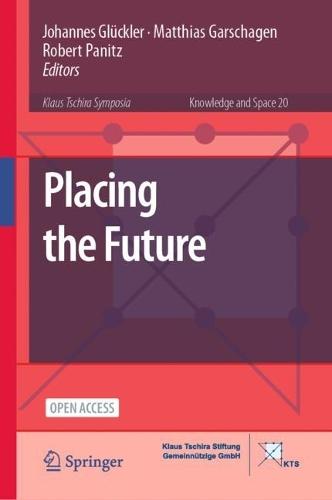
This open access book offers a fresh perspective on the uncertainties of the future that humanity faces. Leading scholars from the fields of future studies, planning, geography, history, sociology, design, and the humanities sensitize for the intricate role of geography in building knowledge to anticipate probable, to imagine alternative, and to enact desirable futures. Part I, knowing the future, explores strategies for anticipating possible futures, such as foresight methods, scenarios, and guiding images. This section underscores the importance of cultivating future consciousness to confront societal denial of looming threats like environmental crises. Part II, envisioning the future, delves into various ways societies imagine their futures, exploring topics like the future of food, post-growth economies, extra-terrestrial futures, and even human self-extinction to reveal how futurist scenarios can inform decision making and proactive planning. Part III, enacting the future, focuses on the performative aspects of futuring. The authors in this section examine practices—such as designing, performing, advising, and governing—that are aimed at transforming desired futures into present realities. As part of a series on the interdisciplinary nexus between knowledge and space, this book is an essential resource for researchers, policy makers, planners, students, and practitioners in the fields of sustainability, future studies, regional development, and governance.
Full Product Details
Author: Johannes Glückler ,
Matthias Garschagen ,
Robert Panitz
Publisher: Springer International Publishing AG
Imprint: Springer International Publishing AG
Edition: 2025 ed.
Volume: 20
ISBN: 9783031768408
ISBN 10: 303176840
Pages: 342
Publication Date: 08 May 2025
Audience:
Professional and scholarly
,
College/higher education
,
Professional & Vocational
,
Postgraduate, Research & Scholarly
Format: Hardback
Publisher's Status: Active
Availability: Manufactured on demand

We will order this item for you from a manufactured on demand supplier.
Author Information
Johannes Glückler is Professor and Chair of Economic Geographies of the Future at LMU Munich, Germany. Previously, he was a professor of economic and social geography at Heidelberg University between 2008 and 2023. In his research he develops a relational perspective of social networks, institutions, and governance in the study of the geography of knowledge, innovation, and regional development. He is a founding board member of the German Society for Social Network Research (DGNet) and co-founder of the M.Sc. Governance of Risk and Resources at the Heidelberg Center for Latin America in Santiago de Chile. Matthias Garschagen is Chair Professor of Human Geography and Human-Environment-Relations at LMU Munich, Germany, and Honorary Professor at RMIT University in Melbourne, Australia, in the School of Global, Urban and Social Studies. His research focuses on risk, vulnerability, adaptation and transformation in the context of environmental hazards and climate change, particularly in cities. He has served as lead author in various reports of the Intergovernmental Panel on Climate Change (IPCC) and was the scientific lead of the World Risk Report by the United Nations University. Robert Panitz is a Junior Professor of Technology and Innovation Management at the University of Koblenz, Germany. Previously, he served as an Interim Professor at the University of Bremen and worked as a Postdoc at Heidelberg University. He is a member of the German Society for Social Network Research (DGNet). His research focuses on the social and organizational structures and processes that foster innovation and technology development, as well as the organizational and social effects of these advancements. Methodologically, he has a particular interest in social network analysis.